
 Products
 Bars
Bars
 Beads & Spheres
 Bolts & Nuts
 Crucibles
 Discs
Discs
 Fibers & Fabrics
 Films
Films
 Flake
Flake
 Foams
Foams
 Foil
Foil
 Granules
 Honeycombs
 Ink
Ink
 Laminate
 Lumps
Lumps
 Meshes
 Metallised Film
 Plate
Plate
 Powders
 Rod
Rod
 Single Crystals
 Sputtering Target
 Tubes
Tubes
 Washer
 Wires
Wires
 Converters & Calculators
 Write for Us



Case Study: Stanford Advanced Materials' Precision-Customized Tantalum Tubes

Introduction
Stanford Advanced Materials (SAM), a trustworthy supplier of high-performance metals, recently assisted a customer who required ultra-high-precision tantalum tubes for use in a particular application. The application necessitated extremely tiny sizes, ultrathin thickness,etc. SAM delivered workable solutions via detailed technical communication with stringent standards for manufacturing and safe packaging.
The Challenge
The customer came to SAM with three main technical requirements:
- Custom Size Feasibility – The client had asked the minimum size at which a 2 mm OD × 1.4 mm ID × 4 mm L tantalum tube could be produced without having to expand tolerances out of specification.
- Minimum Wall Thickness Capability –The client requested the lowest wall thickness possible without compromising structural integrity.
- Inner Wall Roughness Control –They also asked if SAM could manage the inner surface finish.
The Solution
SAM's technical personnel responded with elaborate and relevant answers:
- Shortest Custom Length – For 2 mm OD × 1.4 mm ID tantalum tubing, the shortest custom length possible is 20 mm. Anything shorter could endanger bending or loss of dimensional integrity while being manufactured.
- Minimum Wall Thickness – SAM can make wall thickness as low as 0.2–0.25 mm on 3.4 mm OD tubes, down to an inner diameter of Φ2.9–Φ3.0 mm. This is at or a little above the maximum for stable production in tantalum.
- Inner Wall Roughness – Although normal mechanical machining produces a fairly rough inner wall surface, SAM can improve surface finish by optional secondary operations such as precision reaming or chemical polishing.
The Results
The consultation proved to deliver some crucial findings:
- Definite Technical Limits – The customer received exact values of shortest length, wall thickness limitations, and achievable surface roughness.
- Flexible Surface Finish – SAM offered variable finishing capabilities, enabling the customer to make cost versus performance trade-off decisions.
- Packaging & Transport – SAM also employs specialized cases and anti-vibration inserts to protect thin-walled tubes during shipping. Each order is visually checked and moisturized protected prior to packaging in export-quality cartons.
What Are Tantalum Tubes?
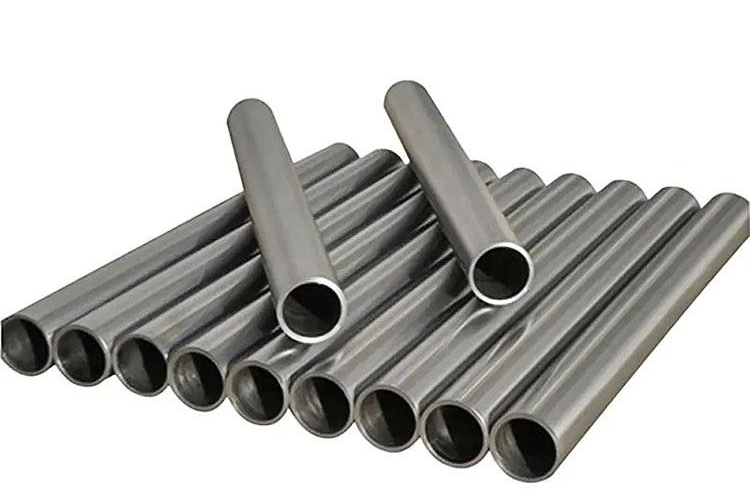
Tantalum tubes are cylindrical, hollow parts made of high-purity tantalum, a refractory metal with a melting point of 3,017°C and a density of 16.6 g/cm³. They are prized for their exceptional corrosion resistance — even to highly aggressive acids such as hydrochloric and sulfuric acid — and mechanical stability at extreme heat. Tantalum is one of the few metals that forms a protective oxide coating that protects it from chemical assault and therefore is an attractive metal for extended use in extreme chemical and biomedical environments.
Methods of production of tantalum tubes are seamless extrusion, deep drawing, welding, and precision machining. Seamless tubes provide the same strength throughout their length, but welded tubes can be made in larger diameters. In small high-precision component production, mechanical machining or EDM (electrical discharge machining) is used. Dimensional ranges vary very greatly: outer diameters (OD) are between 1 mm and greater than 50 mm, wall thicknesses are from as low as 0.2 mm, and lengths are from short sections shorter than 20 mm to continuous tubing longer than 1 meter.
Applications of Tantalum Tubes
Tantalum tubes find application in environments where corrosion, high temperature, or failure of bioreactivity is not feasible. Typical applications include:
- Chemical Processing – Reactor linings, acid distribution lines, and heat exchangers in HCl, H₂SO₄, or HF-processing plants. Tantalum may outdo titanium, zirconium, and nickel alloys in these environments, reducing downtime for maintenance.
- Electronics – High-performance capacitor anodes, semiconductor sputtering targets, and shielding sensitive circuits.
- Medical – Orthopedic and dental implant applications, stents for vascular use, and surgical equipment. Biocompatibility avoids the possibility of adverse reactions upon implant in the human body.
- Aerospace and Defense – Fuel system hardware for high-temperature, rocket nozzle liner pieces, and sensor-sensitive sheathing for high-radiation applications.
- Laboratory and Research – Vacuum systems tubing, corrosive media sample holders, and specialty reaction vessels.
What Are Precision-Customized Tantalum Tubes?
Accuracy-specialized tantalum tubing is engineered to meet particular customer specifications wherein off-the-shelf items would not be able to provide. The customization may be in the shape of extremely close tolerances, extremely slender wall thickness, or high surface finish, or special dimensional needs to enable seamless integration into complex assemblies.
Stanford Advanced Materials provides tantalum tubing solutions that are customized to exact dimensions, tolerances, and performance requirements. The materials are manufactured to international standards to ensure consistent and reliable quality. In addition to this, customers benefit from access to SAM's technical expertise, with guidance based on real production capability and real application needs.
Conclusion
SAM utilizes technical expertise and partnering to manufacture precision-fabricated tantalum tubes to precise specifications. From establishing the dimensional parameters to advising on surface finish feasibility, SAM ensures customers receive not only products but complete technical solutions.
 Chin Trento