Products
 Bars
Bars
 Beads & Spheres
 Bolts & Nuts
 Crucibles
 Discs
Discs
 Fibers & Fabrics
 Films
Films
 Flake
Flake
 Foams
Foams
 Foil
Foil
 Granules
 Honeycombs
 Ink
Ink
 Laminate
 Lumps
Lumps
 Meshes
 Metallised Film
 Plate
Plate
 Powders
 Rod
Rod
 Single Crystals
 Sputtering Target
 Tubes
Tubes
 Washer
 Wires
Wires
 Converters & Calculators
 Write for Us



Case Study: Titanium Foam for PEM Water Electrolyzers

Introduction
Stanford Advanced Materials (SAM), a trusted source of advanced materials and specialty metals, recently supported a university research project in the United States that required high-quality titanium foam as part of a PEM (Proton Exchange Membrane) water electrolyzer.
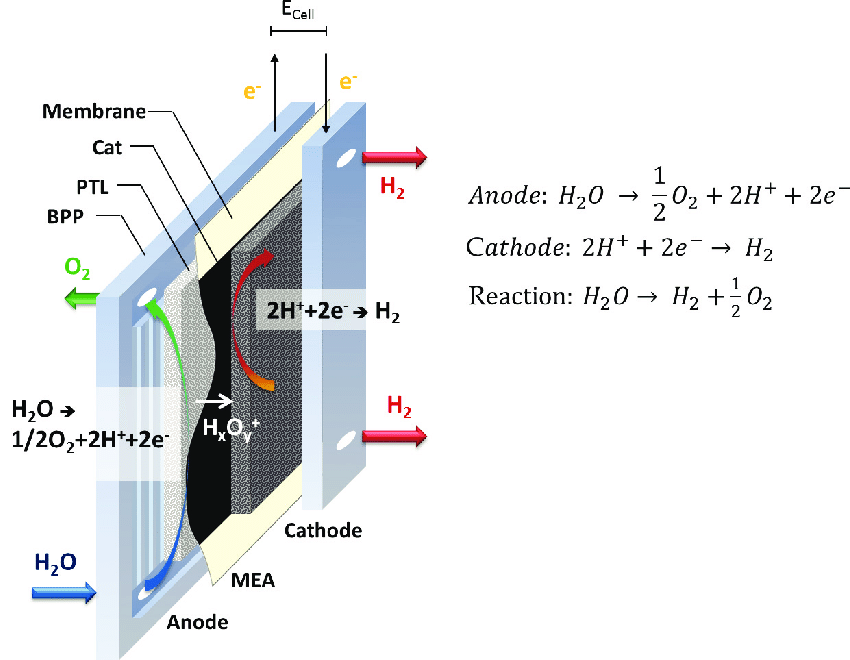 [1]
[1]
The Challenge
The research team approached SAM with the following requirements:
- Material Suitability for PEM Research – The titanium foam had to demonstrate stability when exposed to highly acidic operation conditions that are typical with PEM electrolyzers.
- Structural Integrity and Porosity – The foam had to be mechanically stable while still delivering suitable pore networks to facilitate gas diffusion and catalyst dispersion.
- Research-Scale Sample Dimensions – The test required an experimental setup and testing of a sheet of titanium foam (20 cm × 20 cm × 5 mm) in the laboratory.
The Solution
SAM's technical advisor recommended the use of TI1816 Titanium Foam, an ultra-high-quality porous titanium product widely used in energy and electrochemical applications.
SAM's titanium foam contains a naturally occurring oxide layer that protects it against corrosion under acidic environments. The supplied foam showed high surface area and open porosity, which increased catalyst utilization while promoting effective hydrogen and oxygen release.
The Results
The research group was successful in implementing SAM's titanium foam in its R&D activities involving PEM water electrolyzers. The primary results were:
- Titanium Foam Validation as an Appropriate Substrate – The material demonstrated the potential to serve as an electrode support, meeting structural and corrosion-resistant requirements.
- Enhanced Research Effectiveness – The precise dimensions allowed direct integration into test assemblies without additional machining.
- Enabling Clean Energy R&D – With the procurement of titanium foam from SAM, the project continued its purpose to optimize electrolyzer efficiency and hydrogen production performance.
What Is Titanium Foam?
Titanium foam is a three-dimensional, porous light metal that combines the mechanical and chemical advantages of titanium with the unique performance features of a foam structure. It is made using methods such as powder metallurgy with space-holder techniques, freeze-casting, or additive manufacturing (3D printing), which allow for control over porosity, pore size, and structural homogeneity.
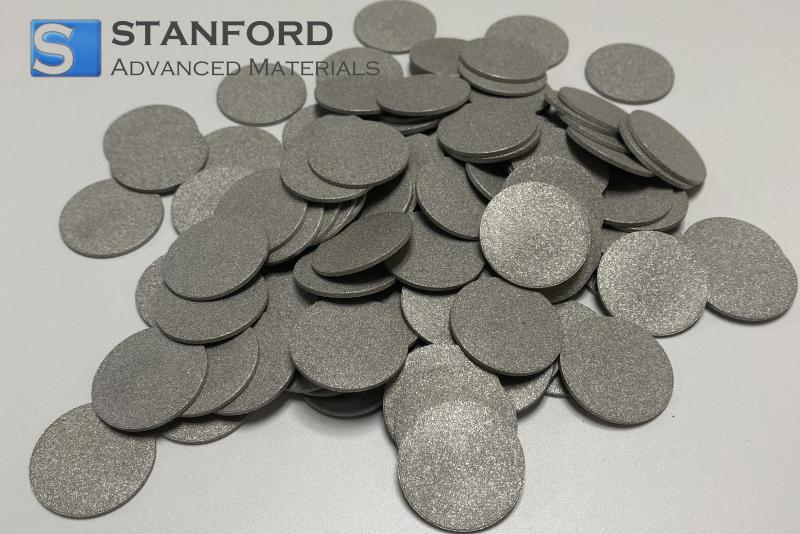
Structural Features
Titanium foam typically possesses porosity in the range of 40% to 80%, and this can be adjusted according to the desired application. The pore size can be tailored from tens of microns to several millimeters, allowing for tailored mass transport characteristics. Despite being open-structured, titanium foam compressive strength and stiffness over density are very high, making it tough under load. The metal structure being continuous provides good electrical conductance and consequently is suitable as an electrode support or current collector.
Key Features
- Corrosion Resistance – The TiO₂ coating of Titanium is resistant to acid and oxidative degradation.
- High Specific Surface Area – Offers ample reaction sites to facilitate electrochemical reactions and deposition of catalysts.
- Permeability to Gas and Fluids – Pores are connected such that gas release as well as water transport can be effective.
- Low-Density Structure – Lower density compared to solid titanium but retains required strength.
- Biocompatibility – Non-toxic and compatible with biological systems, hence equally utilized in biomedical applications.
Applications of Titanium Foam
- Energy and Electrochemistry: Titanium foam serves as anode substrates, catalyst supports, and current collectors in PEM water electrolyzers and as flow fields and gas diffusion layers in fuel cells. It is also used as conductive scaffolds in lithium-ion and solid-state batteries.
- Biomedical Engineering: Titanium foam in bone scaffolds and bone implants improves osteointegration and in dental prostheses and surgical implants due to its biocompatibility and toughness.
- Chemical Processing and Catalysis: It is applied as a catalyst support in hydrogenation and oxidation reactions and in electrochemical filters and reactors requiring corrosion resistance.
- Aerospace and Defense: Titanium foam provides lightweight, corrosion-resistant structural members and thermal management composites for aerospace applications.
Why Titanium Foam and Not Other Material?
In the selection of electrode and substrate materials for PEM water electrolyzers, there are several options, but titanium foam has certain advantages:
|
Material |
Strengths |
Weaknesses / Notes |
|
Graphite Plates |
Good conductivity |
Brittle, costly to machine |
|
Stainless Steel Foams |
Low cost, easy to process |
Corrodes in acidic PEM, needs coatings |
|
Nickel Foams |
Excellent conductivity |
Unstable in acidic PEM |
|
Titanium Foam |
Corrosion-resistant, strong, conductive |
Ideal for long-term acidic PEM use |
For more information and advanced materials, please check Stanford Advanced Materials (SAM).
What Is SAM's TI1816 Titanium Foam?
TI1816 Titanium Foam is a unique porous titanium material provided by Stanford Advanced Materials. Delivered in special sheet dimensions, thicknesses, and porosity rates to meet special customer requirements, it is manufactured to high purity and structural homogeneity and is particularly suited for demanding environments such as electrolysis, catalysis, and biomedical research.
Conclusion
Through this collaboration, Stanford Advanced Materials provided tailored-made titanium foam for research in PEM water electrolyzer. From meeting the project's structural and corrosion resistances requirements to providing precise dimensions, SAM established itself as a reliable collaborator for both industry and academic customers.
Reference:
[1] Lettenmeier, Philipp & Gago, Aldo & Friedrich, K.. (2017). Protective Coatings for Low-Cost Bipolar Plates and Current Collectors of Proton Exchange Membrane Electrolyzers for Large Scale Energy Storage from Renewables. 10.5772/intechopen.68528.
 Chin Trento