Products
 Bars
Bars
 Beads & Spheres
 Bolts & Nuts
 Crucibles
 Discs
Discs
 Fibers & Fabrics
 Films
Films
 Flake
Flake
 Foams
Foams
 Foil
Foil
 Granules
 Honeycombs
 Ink
Ink
 Laminate
 Lumps
Lumps
 Meshes
 Metallised Film
 Plate
Plate
 Powders
 Rod
Rod
 Single Crystals
 Sputtering Target
 Tubes
Tubes
 Washer
 Wires
Wires
 Converters & Calculators
 Write for Us



Indium Foil for Synchrotron Thermal Interface and Vacuum Sealing Applications

Customer Background
Our customer is a well-established national laboratory engaged in synchrotron radiation experiments. Their work demands materials that perform under extreme conditions, particularly for thermal management and vacuum sealing. The laboratory operates cutting facilities and precision equipment, relying on materials that meet strict purity and surface quality standards. With a long history of research and a global reputation, the lab continually invests in reliable material solutions to improve experimental efficiency and data accuracy.
The facility's experiments require indium foil as a thermal interface material in vacuum environments. The indium foil must form a consistent, compliant layer between components while ensuring hermetic sealing under extreme conditions. This application is critical, as any variation in material quality could compromise thermal control and sealing integrity during high-energy beam exposure.
Challenge
The laboratory faced a complex set of challenges:
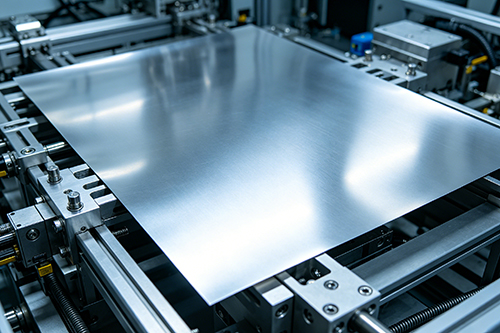
- The indium foil needed to be rolled to a precise thickness of 0.5 mm, with a large-area format of 300 x 300 mm sheets. Achieving uniformity across such dimensions is inherently tricky.
- Purity was paramount. The foil had to maintain a minimum purity level beyond 99.99%, with some applications calling for up to 99.999%.
- Surface quality was non-negotiable. Even microscopic surface defects could lead to suboptimal bonding, impacting vacuum sealing performance.
- The application in a synchrotron setting imposed additional constraints: the material had to ensure optimal thermal interfacing while withstanding high-energy radiation and temperature fluctuations.
- Additionally, the supply chain timeline was rigid. Any delays could disrupt the facility's scheduled experimental runs, requiring both precision and punctuality from the supplier.
Our team encountered similar cases before, and we understood that even minute deviations could result in significant performance issues. During early discussions, we recognized that maintaining consistency over large sheet sizes while adhering to high purity was the main constraint, along with the challenge of post-production surface finish quality.
Why They Chose SAM
The laboratory's selection process was meticulous. They evaluated multiple suppliers and eventually chose Stanford Advanced Materials (SAM) because of our extensive expertise and robust quality control measures. Our 30+ years in advanced materials and our experience with over 10,000 materials for global customers stood out. They appreciated our ability to customize materials to meet very specific technological requirements.
From the outset, our engineering team had detailed discussions to understand the precise tolerances and operational conditions required for the application. We noted early on that subtle variations in rolling processes could accumulate over large formats. This observation allowed us to tailor our process controls accordingly. Our commitment to maintaining a vacuum-grade surface finish and a purity level between 99.99% and 99.999% made it a natural choice for their high-stakes application.
Solution Provided
Our solution was both comprehensive and multi-faceted. First, we assessed the entire production process to ensure adherence to stringent quality requirements. Here's a breakdown of the approach:
We began with high-purity indium metal ore that was refined to achieve purity levels consistently above 99.99%. To meet the technical requirements, we developed a controlled rolling process for indium. The rolling procedure was adjusted to produce sheets measuring 300 x 300 mm with an exact thickness of 0.5 mm. We installed in-line measurement systems to confirm that the thickness maintained a tolerance within ±0.02 mm, which was essential to guarantee uniform thermal interface behavior under operational stress.
Given the large area of the sheets, maintaining a defect-free surface was a critical challenge. Our team applied a specialized surface treatment in a controlled atmosphere. The process minimized oxidation and micro-defects to produce a vacuum-grade surface finish that reliably supports thermal and vacuum applications. During initial testing, we noticed slight irregularities at the sheet edges. By tweaking the rolling pressure distribution and refining the surface treatment timing, these variations were successfully mitigated.
Packaging also received special attention. The sheets were vacuum-sealed immediately after processing in inert gas environments to prevent any post-production contamination or oxidation. Each batch was individually labeled with detailed data on material purity, thickness, and surface finish metrics, ensuring traceability and compliance with operational standards.
Results & Impact
The impact of our custom solution was immediately evident in the laboratory's operations. The indium foil delivered consistent performance during rigorous experimental cycles. Some of the notable outcomes included:
· Uniformity in Thickness: The 0.5 mm thickness was maintained with a variance of only ±0.02 mm across the entire 300 x 300 mm sheet, leading to a reliable thermal interface.
· Purity Assurance: With purity levels consistently between 99.99% and 99.999%, the material met the high standards required for synchrotron radiation environments. This level of purity helped minimize any risk of contamination in the extremely sensitive vacuum systems.
· Superior Surface Finish: The vacuum-grade surface finish significantly improved the bonding layer necessary for effective vacuum sealing. Early operational data suggested that the smoother surface reduced micro-leakage issues during sustained tests.
· Timely Delivery: Our agile supply chain and rigorous quality processes ensured that the production timeline was met without any compromise on quality. This punctuality allowed the lab to stick to its experimental schedule, crucial for high-cost facilities.
Our adjustments during the production phase, influenced by real-world testing data, played a significant role in fine-tuning the indium foil's performance. We observed that even minor process enhancements led to better overall reliability.
Key Takeaways
This project underscored several important points for advanced materials applications:
- Precision in rolling techniques is critical for large-area material fabrication. Even slight deviations can impact the overall performance in thermal and vacuum environments.
- Maintaining high material purity and ensuring a vacuum-grade surface finish require detailed attention to process controls and environmental conditions. Our approach demonstrated that with proper in-line adjustments, these requirements can be met effectively.
- Close collaboration with our clients allows for real-time process modifications. Working together meant that our observations during initial runs directly informed the final production parameters, leading to a superior quality product.
- Meeting strict deadlines in high-stakes research environments is as much about technical capability as it is about project management. Our robust planning and agile execution ensured that the lab's critical timelines were observed.
In summary, our work with the synchrotron radiation facility highlighted the value of tailored material processes in scientific applications. Through careful engineering controls and proactive adjustments, we provided indium foil that met and exceeded the demanding requirements of thermal interface and vacuum sealing applications. The project stands as an example of how detailed technical insight paired with responsive production processes leads to reliable, high-quality performance in advanced materials.
 Dr. Samuel R. Matthews