
 Products
 Bars
Bars
 Beads & Spheres
 Bolts & Nuts
 Crucibles
 Discs
Discs
 Fibers & Fabrics
 Films
Films
 Flake
Flake
 Foams
Foams
 Foil
Foil
 Granules
 Honeycombs
 Ink
Ink
 Laminate
 Lumps
Lumps
 Meshes
 Metallised Film
 Plate
Plate
 Powders
 Rod
Rod
 Single Crystals
 Sputtering Target
 Tubes
Tubes
 Washer
 Wires
Wires
 Converters & Calculators
 Write for Us



Medical Grade versus Cosmetic Grade Hyaluronic Acid

Introduction
Hyaluronic acid is a substance found naturally in the body. It acts as a lubricant and keeps tissues moist. Over time, scientists have used hyaluronic acid in various treatments and beauty products. Some of these products use hyaluronic acid that is classified as medical grade. Others use a form known as cosmetic grade. Each type has its own set of properties and uses.
What Is Medical Grade Hyaluronic Acid?
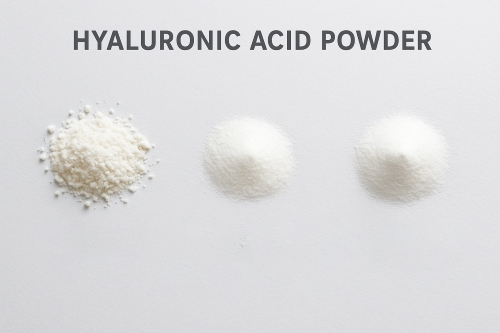
Medical grade hyaluronic acid is of high purity. It is produced under strict conditions. Laboratories use good quality raw materials. The production process meets regulatory standards. The quality is controlled at every stage. This grade is often found in treatments that require injections. It is used in joint therapies and certain eye procedures. Many doctors use medical grade hyaluronic acid to treat pain and discomfort in osteoarthritis. Also, some skin treatments depend on its superior quality. Its structure is similar to what the body naturally produces. Hence, the body accepts it well. In some cases, it is used along with other therapies. Simple tests and evaluations support its application in medicine.
What Is Cosmetic Grade Hyaluronic Acid?
Cosmetic grade hyaluronic acid is mainly used in beauty products. It appears in lotions, creams, and serums. The aim is to help skin look younger and more hydrated. The production process does not use the same level of strict controls that medical grade production demands. Cosmetic grade hyaluronic acid is refined to a level that is safe for use on the skin. Companies make it less expensive than its medical grade counterpart. In some cases, the source materials may have impurities that do not harm the skin. The particle size in cosmetic forms can vary. Some forms are designed to sit on the skin's surface. Others try to penetrate deeper. However, their effect is mostly cosmetic. They help the outer part of the skin retain moisture. This leads to a plumper, more youthful look.
Medical Grade vs Cosmetic Grade Hyaluronic Acid: What Are the Differences?
The first difference lies in quality. Medical grade hyaluronic acid is purer. It passes through rigorous testing and strict quality standards. Cosmetic grade hyaluronic acid is refined enough for skin use but does not meet all medical standards.
The second difference is in application. Medical grade is used in treatments that require injections. This usage calls for a substance that the body accepts quickly. Its high purity helps to reduce side effects. Cosmetic grade is used in everyday products. These products include creams for facial use and serums meant to hydrate skin. Their use is more superficial, although effective for everyday care.
Another difference is in cost. Medical grade hyaluronic acid is typically more expensive. Its production process is more controlled. Cosmetic grade formulations are made in larger batches. They are affordable for consumers who seek regular skin care products.
There is also a difference in molecular weight and viscosity. Medical grade products offer consistency that focuses on using high molecular weight. This is crucial for joint treatments or other medical applications. Cosmetic grade products come in a variety of molecular weights. Some are tailored to sit on the skin while others are designed to be more penetrating. Therefore, choices depend on the intended effect.
An example of the application is seen in the treatment of osteoarthritis. The injection of medical grade hyaluronic acid can help cushion joints. In cosmetic applications, the ingredient is part of a cream that gives skin a smoother appearance. Each is designed with its own purpose in mind, whether to aid in healing or to improve beauty.
Further reading: Sodium Hyaluronate Products of Different Technical Specifications: Molecular Weight and Viscosity
Conclusion
Both forms of hyaluronic acid hold important roles in modern health and beauty care. Medical grade hyaluronic acid is reserved for treatments that require high-quality, injectable formulations. Cosmetic grade hyaluronic acid does well in daily applications to help skin retain moisture and appear vibrant. For more HA products, please visit Stanford Advanced Materials (SAM).
Frequently Asked Questions
F: Is medical grade hyaluronic acid safe for joint injections?
Q: Yes, it has high purity and is designed for intra-articular use.
F: Can cosmetic grade hyaluronic acid cause skin irritation?
Q: It is generally safe but may cause irritation in sensitive skin.
F: Do both grades help with skin hydration?
Q: Yes, both types help, but cosmetic grade is mainly for surface hydration.
 Chin Trento