
 Products
 Bars
Bars
 Beads & Spheres
 Bolts & Nuts
 Crucibles
 Discs
Discs
 Fibers & Fabrics
 Films
Films
 Flake
Flake
 Foams
Foams
 Foil
Foil
 Granules
 Honeycombs
 Ink
Ink
 Laminate
 Lumps
Lumps
 Meshes
 Metallised Film
 Plate
Plate
 Powders
 Rod
Rod
 Single Crystals
 Sputtering Target
 Tubes
Tubes
 Washer
 Wires
Wires
 Converters & Calculators
 Write for Us



Alumina Ceramic: Common Types and Specifications

The Short Answer
Alumina (aluminum oxide, Al2O3) is the most widely used advanced ceramic. It's hard, strong, wear-resistant, electrically insulating, and withstands high temperatures and chemical attack.
The key differentiator of alumina ceramics is purity. They are typically specified by their Al2O3 content: 96%, 99.5%, and 99.9% are the most common grades.
Higher purity means better performance—but also higher cost and longer lead times. The right choice depends on your application: 96% for general industrial parts, 99.5% for electronics and vacuum applications, and 99.9% for semiconductor processing and precision optics.
If you don't need the extreme properties of high-purity alumina, save your money and use 96%. Stanford Advanced Materials (SAM) supplies all three grades in custom shapes and sizes.
What Is Alumina Ceramic?
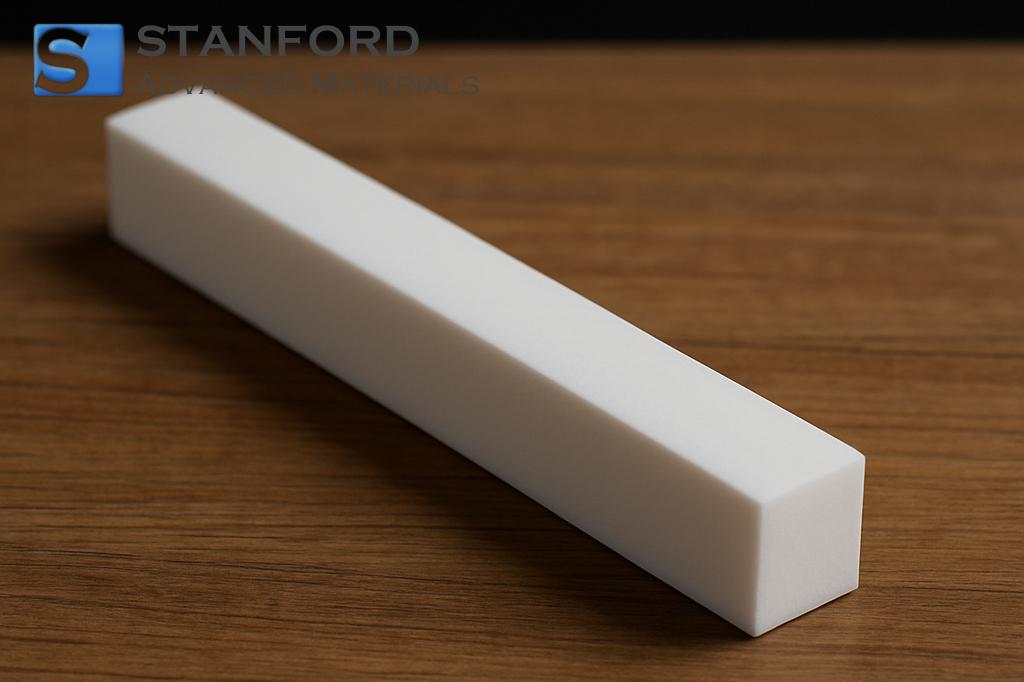
Alumina is made from aluminum oxide powder that is pressed into shape and then sintered (heated until the particles fuse). The result is a dense, hard, white, or off-white material.
Key properties that make alumina valuable:
|
Property |
Typical Range |
Why It Matters |
|
Hardness |
1,500 - 2,000 HV |
Wear resistance, abrasion resistance |
|
Flexural strength |
300 - 400 MPa |
Structural integrity under load |
|
Dielectric strength |
10 - 15 kV/mm |
Electrical insulation in high-voltage applications |
|
Volume resistivity |
>10^14 Ω·cm |
Insulation even at elevated temperatures |
|
Max operating temperature |
1,500 - 1,700°C |
High-temperature applications |
|
Thermal conductivity |
25 - 35 W/m·K |
Heat dissipation |
|
Density |
3.7 - 3.9 g/cm^3 |
Lightweight compared to metals |
These properties improve with purity—but only up to a point.
The Three Common Grades
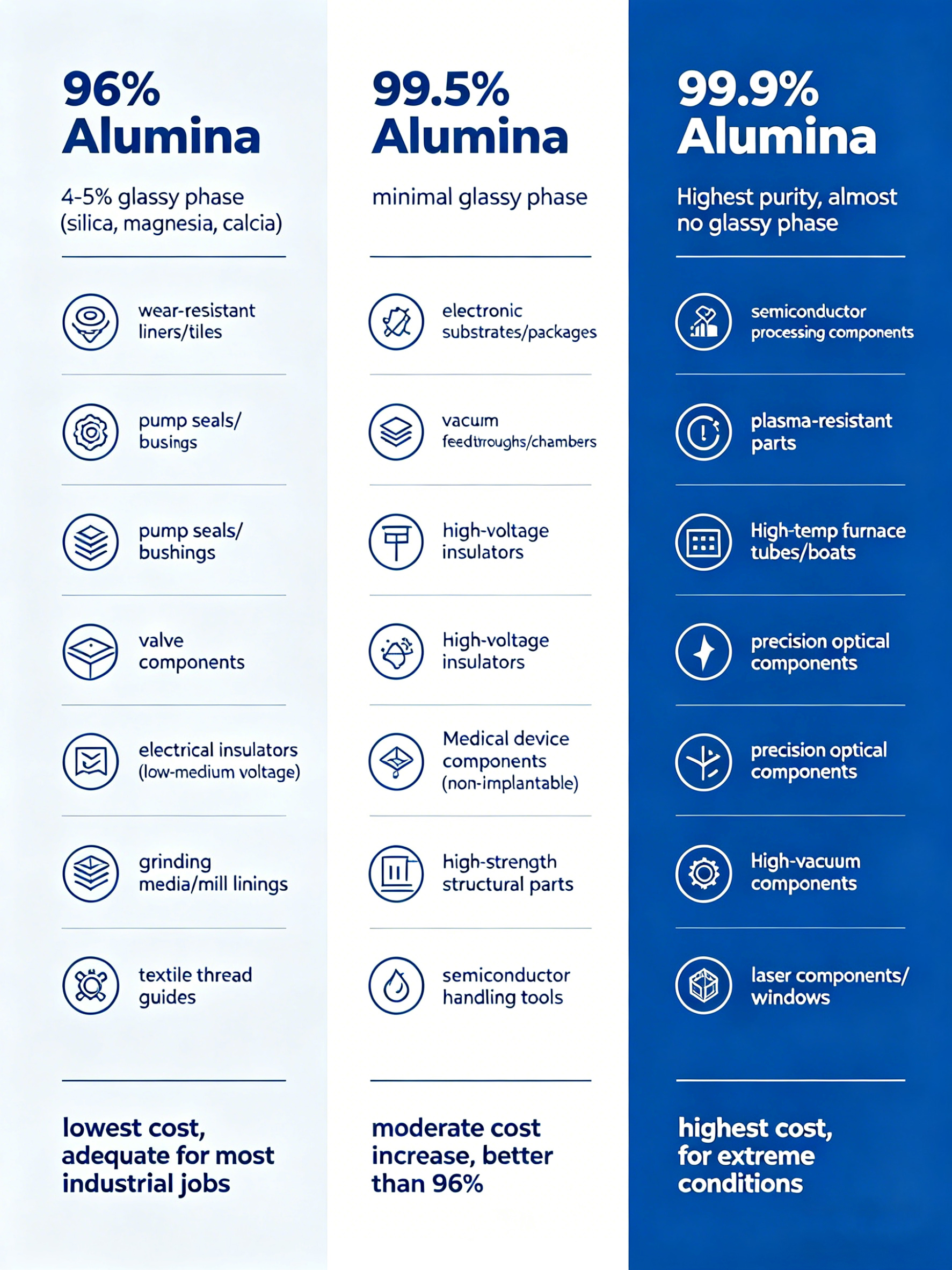
96% Alumina (95-96% Al2O3)
This is the standard grade. It contains 4-5% glassy phase (usually silica, magnesia, or calcia) that acts as a sintering aid.
Characteristics:
-
Good mechanical strength (300-350 MPa)
-
Good wear resistance
-
Adequate electrical insulation
-
Lower cost than higher purities
-
Shorter lead times
Typical applications:
-
Wear-resistant liners and tiles
-
Pump seals and bushings
-
Valve components
-
Electrical insulators (low to medium voltage)
-
Grinding media and mill linings
-
Thread guides for textile machinery
For most industrial jobs, 96% delivers adequate performance at the lowest cost. If your application doesn't demand high purity, stop here.
99.5% Alumina (99.5-99.7% Al2O3)
This grade has minimal glassy phase, offering significantly better properties than 96% at a moderate cost increase.
Characteristics:
-
Higher strength (350-400 MPa)
-
Higher hardness (1,600-1,800 HV)
-
Better wear resistance
-
Higher dielectric strength (12-15 kV/mm)
-
Lower outgassing (important for vacuum)
-
Better chemical resistance
Typical applications:
-
Electronic substrates and packages
-
Vacuum feedthroughs and chamber components
-
High-voltage insulators
-
Medical device components (non-implantable)
-
Structural parts requiring high strength
-
Semiconductor handling tools
When you need better performance than 96% can deliver, but 99.9% is overkill, this is the right choice.
99.9% Alumina (99.9%+ Al2O3)
This is the highest purity commercially available grade. The glassy phase is almost eliminated.
Characteristics:
-
Maximum strength (400+ MPa)
-
Maximum hardness (1,800-2,000 HV)
-
Exceptional wear resistance
-
Highest dielectric strength (15+ kV/mm)
-
Extremely low outgassing
-
Excellent chemical inertness
-
Good transparency in thin sections (translucent to semi-transparent)
Typical applications:
-
Semiconductor processing components (etch and deposition chambers)
-
Plasma-resistant parts
-
High-temperature furnace tubes and boats
-
Precision optical components
-
High-vacuum components
-
Laser components and windows
Semiconductor manufacturing is the largest user of this grade. For extreme conditions—aggressive plasma, high vacuum, or demanding chemical environments—there's no substitute.
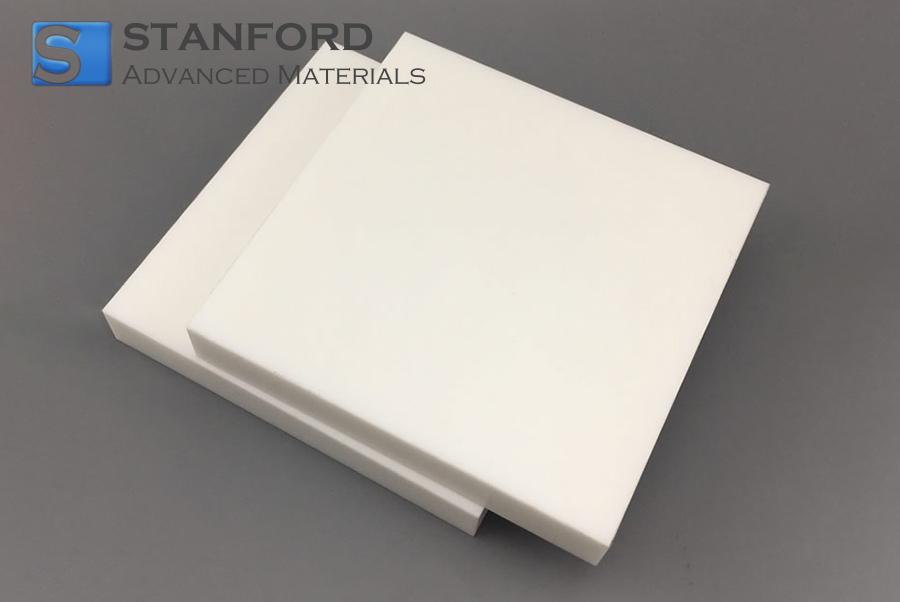
Comparison Table
|
Property |
96% Alumina |
99.5% Alumina |
99.9% Alumina |
|
Purity |
95-96% |
99.5-99.7% |
99.9%+ |
|
Density (g/cm^3) |
3.70-3.75 |
3.85-3.90 |
3.90-3.95 |
|
Flexural strength (MPa) |
300-350 |
350-400 |
400-450 |
|
Hardness (HV) |
1,500-1,600 |
1,600-1,800 |
1,800-2,000 |
|
Dielectric strength (kV/mm) |
10-12 |
12-15 |
15-18 |
|
Volume resistivity (Ω·cm at 25°C) |
>10^14 |
>10^14 |
>10^15 |
|
Max temp (continuous °C) |
1,500 |
1,600 |
1,700 |
|
Relative cost |
1x (reference) |
2-3x |
5-10x |
Pricing varies significantly by purity, quantity, and part complexity. For a competitive quote based on your specific application, send us an inquiry with your specifications.
Application Mapping
|
Application Area |
Recommended Grade |
Why |
|
Wear liners, grinding media |
96% |
Cost-effective, good wear resistance |
|
Electrical insulators (general) |
96% |
Adequate insulation, low cost |
|
Pump seals, bushings, valves |
96% or 99.5% |
Depends on wear and chemical exposure |
|
High-voltage insulators |
99.5% |
Higher dielectric strength |
|
Vacuum chamber components |
99.5% or 99.9% |
Low outgassing is critical |
|
Semiconductor etch/deposition parts |
99.9% |
Plasma resistance, purity |
|
High-temperature furnace furniture |
99.5% or 99.9% |
Maximum thermal stability |
|
Precision optical components |
99.9% |
Transparency, purity |
|
Medical instruments (non-implant) |
99.5% |
Biocompatibility, cleanability |
How to Choose
Ask yourself these questions in order.
1. What is your operating environment?
-
Normal atmosphere, room temperature to moderate heat → 96% is fine
-
High vacuum or aggressive plasma → 99.5% or 99.9% (low outgassing is critical)
-
High-temperature furnace (>1,500°C) → 99.5% or 99.9%
-
Semiconductor processing chamber → 99.9%
2. Do you need electrical insulation?
-
Low to medium voltage, general insulation → 96% works
-
High voltage or high-frequency → 99.5%
-
Critical insulation with no failure tolerance → 99.9%
3. What is your wear requirement?
-
Moderate wear (pump seals, bushings) → 96% is adequate
-
High wear (abrasive environments, particle handling) → 99.5% or 99.9%
4. Is cost a primary constraint?
-
Yes, and 96% meets your needs → stop there
-
No, and you need the best performance → 99.9%
5. Do you need the part quickly?
-
Yes → 96% has the shortest lead times
-
No → higher purities are available but take longer
Common Misconceptions
"Higher purity is always better."
Not if you don't need it. 96% alumina costs less, has shorter lead times, and is available from more suppliers. For many industrial applications, it works perfectly.
"All alumina ceramics are the same."
Different manufacturers use different sintering aids and processes. Properties can vary significantly, especially for 96% grade. Always request data sheets.
"Alumina is brittle and weak."
Alumina is brittle—it does not deform before failure. But its compressive strength and hardness are excellent. Design for compressive loads and avoid impact or thermal shock.
"Alumina cannot be machined."
Difficult after sintering (requires diamond tooling), but doable. Most parts are pressed and sintered to near-net shape, then ground to final dimensions. Some suppliers offer green machining (before sintering) for complex shapes.
What to Include in Your Quote Request
To help us provide an accurate and competitive quote, please include the following information with your request:
-
Purity grade – 96%, 99.5%, or 99.9%
-
Dimensions and tolerances – As-molded, as-sintered, or precision ground (tighter tolerances cost more)
-
Surface finish – As-fired (rough), ground, or polished
-
Quantity – Prototype, low-volume, or production
-
Certifications – Material test report, purity analysis, dimensional inspection
Example: Alumina ceramic, 99.5%, 25mm diameter × 10mm height, ground finish ±0.05mm, quantity 100, with material certificate.
SAM provides certified material test reports based on your requirements.
The Bottom Line
|
Alumina Grade |
Best For |
|
96% |
General industrial parts where cost matters and requirements are moderate |
|
99.5% |
Electronics, vacuum, high-strength parts where better performance is needed but 99.9% is overkill |
|
99.9% |
Semiconductor, high-vacuum, precision optics where extreme conditions demand the best |
Start with 96% unless you have a specific reason to go higher. Many engineers over-specify purity and pay too much. Match the grade to the application.
Not sure which grade fits your application? Send us your drawing or specification. We will recommend a purity level and provide a competitive quote based on your quantity.
About the Supplier
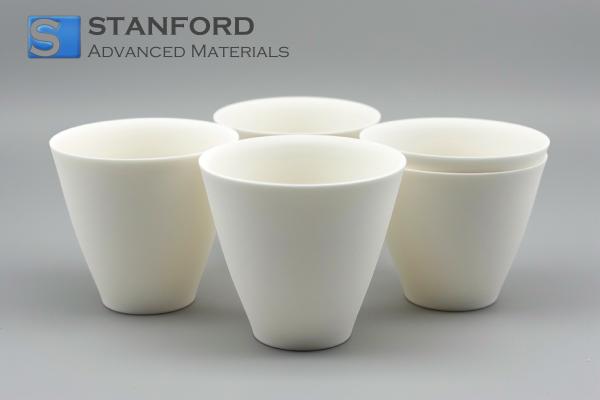
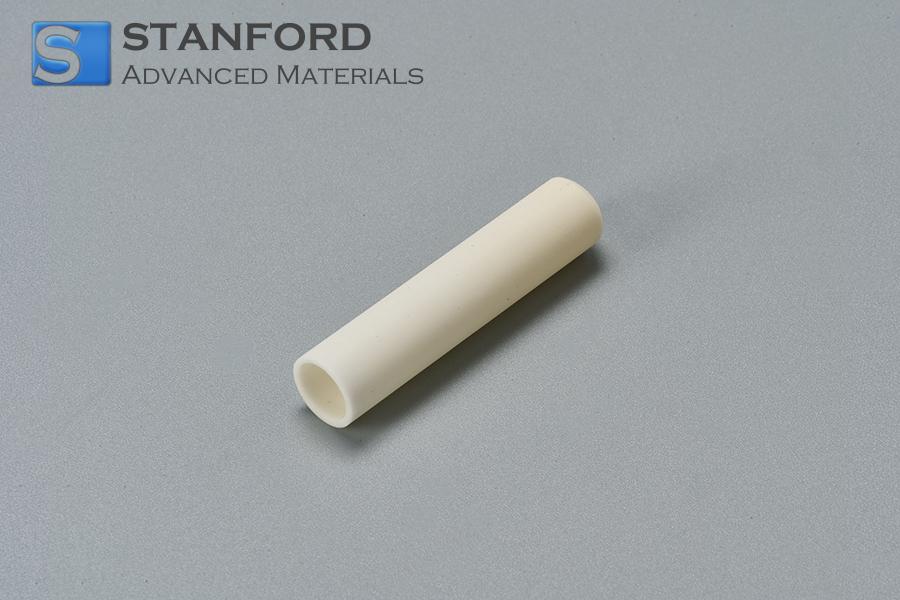
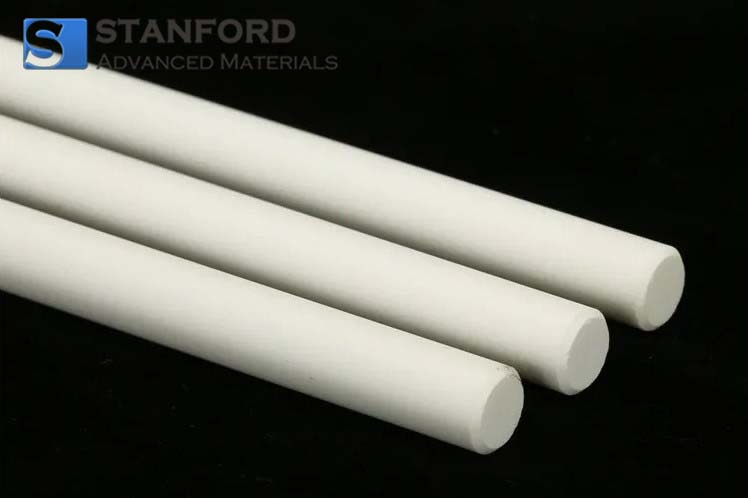
Stanford Advanced Materials (SAM) has been supplying alumina ceramic components since 1994. We offer 96%, 99.5%, and 99.9% grades in custom-fabricated shapes—rods, plates, tubes, crucibles, and precision-machined parts. Contact our engineering team for application-specific recommendations.
References
-
ASTM C1161-18. (2018). Standard test method for flexural strength of advanced ceramics at ambient temperature. ASTM International.
-
Carter, C.B., & Norton, M.G. (2019). Ceramic materials: Science and engineering (2nd ed.). Springer.
-
Richerson, D.W. (2020). Modern ceramic engineering: Properties, processing, and use in design (4th ed.). CRC Press.
 Dr. Samuel R. Matthews