
 Products
 Bars
Bars
 Beads & Spheres
 Bolts & Nuts
 Crucibles
 Discs
Discs
 Fibers & Fabrics
 Films
Films
 Flake
Flake
 Foams
Foams
 Foil
Foil
 Granules
 Honeycombs
 Ink
Ink
 Laminate
 Lumps
Lumps
 Meshes
 Metallised Film
 Plate
Plate
 Powders
 Rod
Rod
 Single Crystals
 Sputtering Target
 Tubes
Tubes
 Washer
 Wires
Wires
 Converters & Calculators
 Write for Us



The Most Common Ceramic Components in Semiconductor Fabrication

Five ceramic materials run the semiconductor industry. Alumina. Aluminum nitride. Silicon carbide. Quartz. Zirconia. Most fabs use them daily but rarely stop to consider whether they are using the right one.
Over the past 20 years, I have walked through more cleanrooms than I can count. The same lessons keep coming up.
Quick Take
Alumina is what most fabs start with. You will find it everywhere. Aluminum nitride goes where heat needs to escape. Silicon carbide is for plasma resistance and rigidity. Quartz is for high-temperature transparency. Zirconia is for toughness and wear resistance.
If you do not have a special requirement, start with alumina. It covers about 80% of applications.
Five Ceramics at a Glance
| Material | Best For | Key Property | Typical Components | Limitation |
|---|---|---|---|---|
| Alumina (Al₂O₃) | General-purpose insulation | High dielectric strength, good thermal conductivity | Chambers, windows, feedthroughs, wafer handling | Lower thermal conductivity than AlN |
| Aluminum Nitride (AlN) | Heat dissipation | Very high thermal conductivity (170-200 W/m·K) | Heater bodies, electrostatic chucks, heat spreaders | Higher cost, more brittle |
| Silicon Carbide (SiC) | Plasma resistance, rigidity | Extreme hardness, low particle generation | Focus rings, dummy wafers, susceptors, chamber liners | Expensive, difficult to machine |
| Quartz (SiO₂) | High-temperature transparency | Optical clarity at high temps, low thermal expansion | Viewports, bell jars, furnace tubes, pedestals | Softens above 1,100°C |
| Zirconia (ZrO₂) | Toughness, wear resistance | High fracture toughness, thermal shock resistance | Guide pins, rollers, valves, precision fixtures | High density, expensive |
Alumina
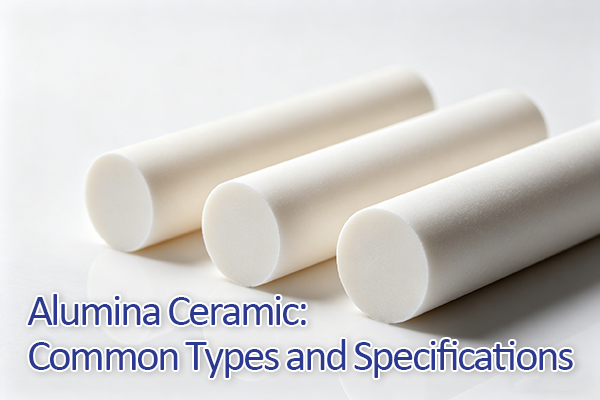
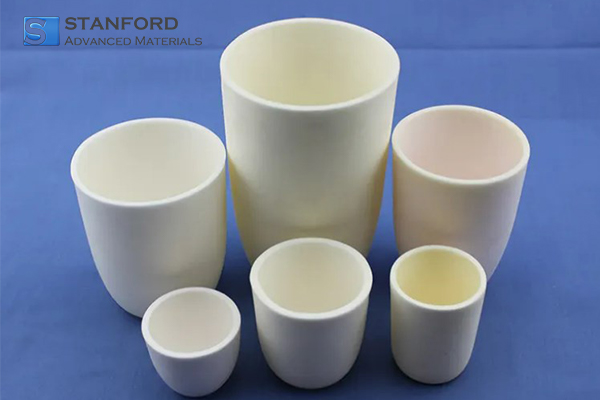
Alumina is the standard. You will find it in nearly every fab — in ceramic chambers, RF feedthrough windows, wafer handling arms, lift pins, and deposition shields. The industry has used it for decades and knows how to process it, machine it, and bond it. Supply chains are mature. Prices are stable.
Typical purity of alumina used in this sector ranges from 95% to 99.6%. Higher purity gives better plasma resistance but costs significantly more.
I have seen fabs specify ultra-high-purity alumina for a chamber liner when 96% would have lasted just as long. Match the grade to the plasma chemistry, not to a blanket requirement.
Aluminum Nitride
Heat has to go somewhere. Aluminum nitride exists because moving heat is critical in plasma processing. You will find it in electrostatic chuck bodies, heater plates, heat spreaders, and RF windows.
With a thermal conductivity of 170-200 W/m·K, AlN conducts heat almost as well as some metals. But it remains an electrical insulator. That combination — conducting heat, blocking electricity — is rare.
AlN is more brittle than alumina. I have seen chucks crack during installation because an engineer treated it like alumina. It is not. Handle it differently. And it is about three to five times more expensive than alumina. Use it only where heat dissipation is the limiting factor.
Silicon Carbide
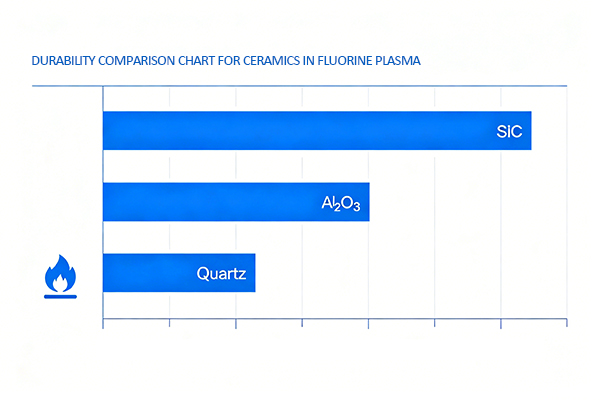
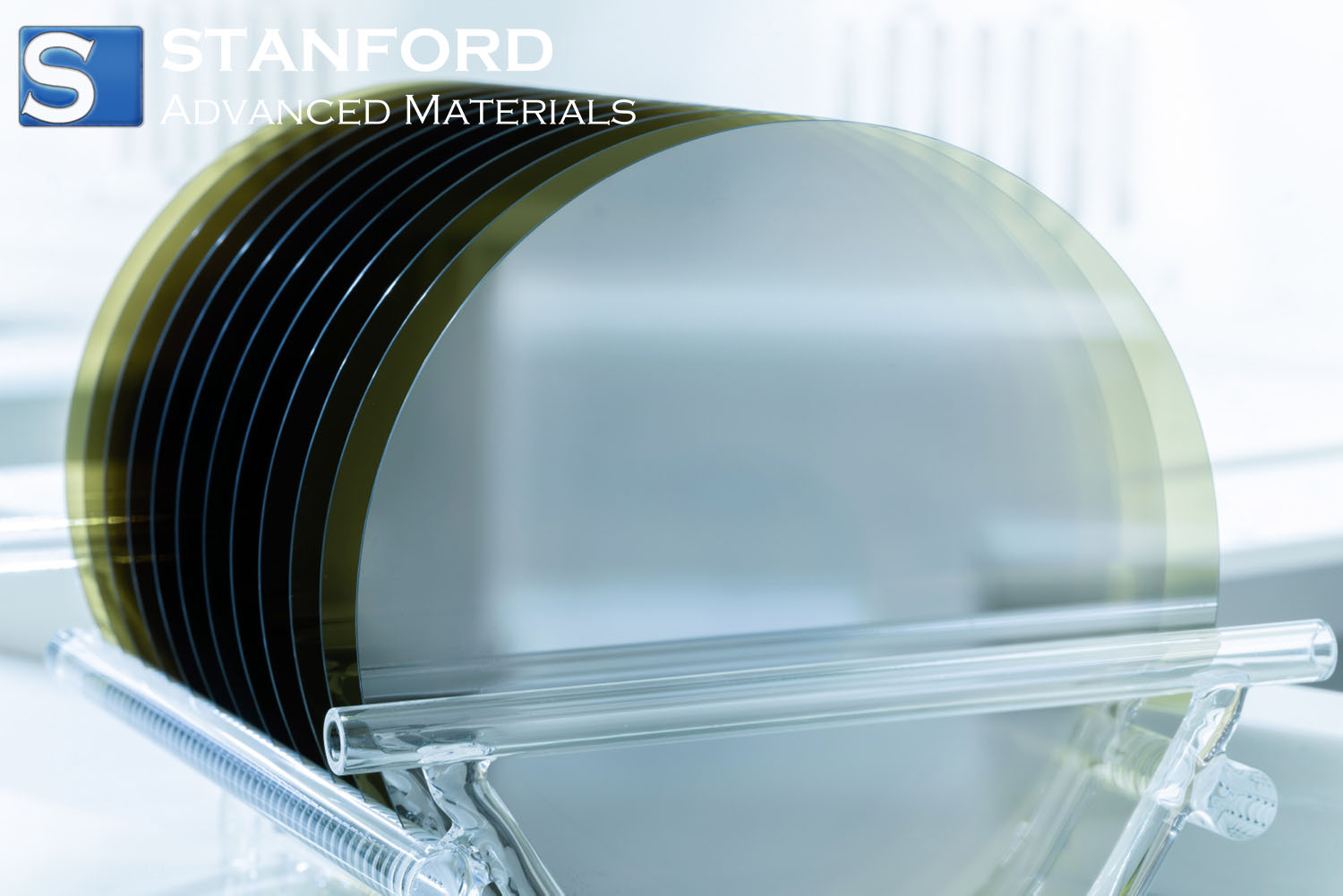
Nothing else survives plasma like silicon carbide. Fluorine-based plasmas attack almost everything, but SiC holds up better than any other ceramic on this list. You will see it in focus rings, dummy wafers, susceptors, chamber liners, and gas distribution plates.
SiC is also extremely hard — nearly as hard as diamond — and generates very few particles. At advanced nodes, that matters.
Once SiC is sintered, it can only be shaped with diamond tooling. If you need complex geometries, ask about green machining (cutting before sintering) or specify near-net shape. SiC is expensive — often five to ten times the cost of alumina. But in high-density plasma environments, it lasts much longer. Do the math on the total cost of ownership before defaulting to alumina.
Quartz
Quartz is not a ceramic in the same sense as alumina or SiC. It is amorphous silica. But it is everywhere in semiconductor manufacturing — in furnace tubes, bell jars, wafer boats, viewports, and pedestals.
What makes quartz special is its optical clarity at high temperatures. You can see through quartz while it is at 1,000°C. That is why it is used for viewports and thermal processing tubes.
Quartz softens above 1,100°C. Do not use it in applications that exceed this limit. For higher temperatures, switch to alumina or SiC.
Purity matters. Semiconductor-grade quartz is typically 99.99% or better. Trace metal contamination from a quartz tube will ruin a gate oxide. I have seen it happen.
Zirconia
Things move. Things wear. Zirconia is what you use when that happens. You will find it in guide pins, rollers, valves, bearings, and precision fixtures.
Zirconia has high fracture toughness and resists crack propagation better than any other material on this list. Use it where components move against each other or experience mechanical shock.
Yttria-stabilized zirconia (YSZ) is the standard for structural applications. Do not buy unstabilized zirconia for semiconductor use — it will crack during thermal cycling. Zirconia is expensive, comparable to SiC, but in wear applications, it lasts much longer than alumina.
How to Choose?
| If your main concern is... | Start with... | Then consider... |
|---|---|---|
| General insulation, low cost | Alumina | — |
| Heat dissipation | Aluminum Nitride | — |
| Plasma resistance, low particles | Silicon Carbide | High-purity alumina |
| High-temperature optical access | Quartz | — |
| Wear resistance, toughness | Zirconia | — |
| High-temperature (>1,100°C) | Alumina or SiC | Not quartz |
When in doubt, start with alumina. It is the industry default for a reason. Switch to AlN when heat is the problem. Switch to SiC when plasma is the problem.
What to Specify When Ordering
To get an accurate quote, include these five things:
- Material — Alumina, AlN, SiC, quartz, or zirconia
- Purity / Grade — e.g., 99.6% alumina, yttria-stabilized zirconia
- Dimensions — Drawing or detailed sketch
- Quantity — One prototype or 1,000 production units
- Application — What chamber, what temperature, what plasma chemistry
Good request:
"Alumina chamber liner, 99.6%, drawing attached, quantity 10, for an Oxford RIE etch chamber using CF4 plasma."
Bad request:
"Please quote ceramic parts."
The first request gives us everything we need. The second one arrives incomplete, and we move on to the next customer.
To Sum Up
Alumina covers most applications. Use it unless you have a reason not to.
Aluminum nitride is for heat dissipation. Silicon carbide is for plasma resistance. Quartz is for high-temperature transparency. Zirconia is for wear resistance.
Do not over-specify. I have seen fabs pay five times more for SiC when alumina would have worked. I have also seen quartz tubes fail because someone ignored the 1,100°C limit.
Match the material to the problem, not to a specification sheet.
If you are not sure which ceramic fits your chamber, send me the conditions. I will tell you what works — and what will crack, melt, or contaminate your wafers.
*Stanford Advanced Materials (SAM) has been supplying ceramic components to semiconductor fabs since 1994. With warehouses in the US, Canada, Europe, and Asia-Pacific, we ship worldwide. Contact our team — tell us your chamber conditions, and we will send you the right material.*
 Dr. Samuel R. Matthews