
 Products
 Bars
Bars
 Beads & Spheres
 Bolts & Nuts
 Crucibles
 Discs
Discs
 Fibers & Fabrics
 Films
Films
 Flake
Flake
 Foams
Foams
 Foil
Foil
 Granules
 Honeycombs
 Ink
Ink
 Laminate
 Lumps
Lumps
 Meshes
 Metallised Film
 Plate
Plate
 Powders
 Rod
Rod
 Single Crystals
 Sputtering Target
 Tubes
Tubes
 Washer
 Wires
Wires
 Converters & Calculators
 Write for Us



5 Common Types of Catalytic Material

Catalysts are a crucial aspect of achieving higher reaction rates without their own consumption. In industries like petrochemical refining and pharma, the proper selection of catalytic material has a huge impact on efficiency, pricing, and product quality. Herein, five types of catalyst materials will be discussed: precious metals, metal oxides, zeolites, enzymes, and organometallic complexes.
1. Precious Metals
Among the best and widely employed catalysts are valuable metals, which include palladium, platinum, rhodium, and gold, because of their catalytic activity along with stability.
For example, platinum finds widespread application in catalytic converters of motor vehicles to reduce poisonous emissions such as nitrogen oxides (NOx), carbon monoxide (CO), and hydrocarbons (HC). Palladium dominates hydrogenation and oxidation reactions, important to both the chemical and pharmaceutical industries. Rhodium has specialist application in selective hydrogenation, while gold, although less recognized in the past to act as a catalyst, has emerged to be vital in oxidation reactions and environmental catalysis.
2. Metal Oxides
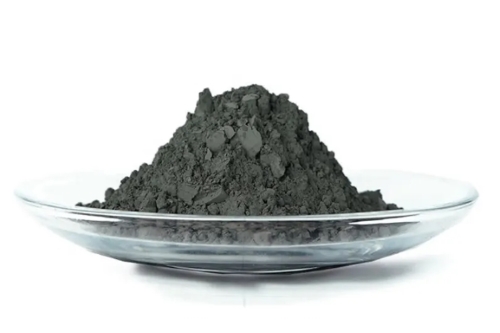
Metal oxides are prominent owing to their robustness, reasonable costs, and ease of production. Examples include TiO₂, Al₂O₃, and CeO₂.
However, titanium dioxide finds broad applications in environmental uses, such as the photocatalytic degradation of pollutants. Unlike this, aluminum oxide plays a more supportive role to metals by increasing their catalytic activity. Cerium oxide has become well known due to its ability to store and release oxygen in automotive exhaust treatment and industrial oxidation processes.
3. Zeolites
Zeolites are crystalline aluminosilicate materials with the characteristic feature of their microporous structures. The latter ensure selectivity in catalytic processes, where only some molecules of specific sizes and shapes can enter these systems and interact therein. Optimal thermal and pressure stability has made zeolites crucially important in the process of petrochemical refining, especially in fluid catalytic cracking, where heavier hydrocarbons are transformed into gasoline and other lighter fractions. In addition, strong ion-exchange properties make zeolites effectively catalyze wastewater treatment processes.
4. Enzymes
Enzymes, nature's biological catalysts, offer unparalleled specificity and efficiency under mild operational conditions. They catalyze biochemical reactions rapidly and selectively with minimum energy input and waste generation. In pharmaceutical synthesis, enzymes catalyze complex transformations with a dramatic improvement in yield and purity. The food industry utilizes enzymes in a variety of processes, including fermentation, dairy, and biofuel production. Their eco-friendly nature significantly contributes to sustainable chemical production.
5. Organometallic Complexes
These are organometallic catalysts, like metallocenes and transition-metal complexes, which bridge organic and inorganic at molecular levels of precision in catalytic reactions. They show very good flexibility and selectivity in a wide range of synthetic transformations, especially polymerization and asymmetric synthesis. These complexes are used on an industrial scale for the manufacture of fine chemicals, pharmaceuticals, and polymers, with well-defined molecular configurations that translate into functional properties.
Materials Comparison Table for Catalyst Field
The following table compares some common catalytic materials in terms of key properties, advantages, and typical applications:
|
Catalyst Type |
Key Properties |
Advantages |
Typical Applications |
|
Precious Metals |
High activity, durability, stability |
Excellent performance, reusable |
Automotive, chemical manufacturing |
|
Metal Oxides |
High surface area, stability |
Economical, robust |
Petrochemicals, pollution control |
|
Zeolites |
Porous structure, shape selectivity |
High selectivity, thermal stability |
Petroleum refining, wastewater treatment |
|
Enzymes |
Biological specificity, mild conditions |
Highly selective, eco-friendly |
Pharmaceuticals, food processing |
|
Organometallic Complexes |
Tunable electronic properties |
Precise control, versatile |
Polymerization, fine chemical synthesis |
For more information, please visit Stanford Advanced Materials (SAM).
Frequently Asked Questions
What are the advantages of using precious metal catalysts?
The desirable catalytic action of precious metals includes high thermal stability and longevity of the catalyst for application in automotive and industrial chemical reactions.
Why are zeolites preferred in petrochemical refining?
These zeolites possess excellent thermal stability, selective porosity, and shape selectivity that optimize reaction efficiency and product specificity in refining processes.
How do enzymes differ from traditional chemical catalysts?
Enzymes work at mild conditions, with incredible selectivity and minimal side reactions, and significantly contribute to environmental sustainability.
What makes organometallic complexes versatile catalysts?
Their tunable electronic properties enable specific reaction control, therefore their versatility in synthetic processes including polymerization and fine chemical syntheses.
Are metal oxide catalysts economical in large-scale use?
Yes, indeed, certain metal oxide catalysts, such as aluminum oxide and titanium dioxide, are inexpensive, robust, and therefore well-suited for large-scale industrial use, like pollution control.
 Chin Trento