Products
 Bars
Bars
 Beads & Spheres
 Bolts & Nuts
 Crucibles
 Discs
Discs
 Fibers & Fabrics
 Films
Films
 Flake
Flake
 Foams
Foams
 Foil
Foil
 Granules
 Honeycombs
 Ink
Ink
 Laminate
 Lumps
Lumps
 Meshes
 Metallised Film
 Plate
Plate
 Powders
 Rod
Rod
 Single Crystals
 Sputtering Target
 Tubes
Tubes
 Washer
 Wires
Wires
 Converters & Calculators
 Write for Us



Everything You Need to Know About Nuclear Power

Nuclear Energy 101
Nuclear energy is generated through what's called atom splitting, or atomic fission, where lots of energy is released. In layman's terms, in an atom's nucleus, there exists a small particle that can be released, splitting the atom. In this way, lots of energy can be generated, which can be put to use for producing electricity. It may be pretty complicated, but essentially, it is like burning fuel in an engine, just that the "fuel" for this process is the atom's nucleus.
Nuclear power has long provided a means of producing energy without the release of carbon, which is associated with the burning of fossil fuels. This is why it is one of the easiest means of reducing the emissions of green-house gases, which contribute to climate change. Interestingly, while it may seem daunting in theory, the reaction is made possible by the capabilities of modern technology.
How Nuclear Reactors Work
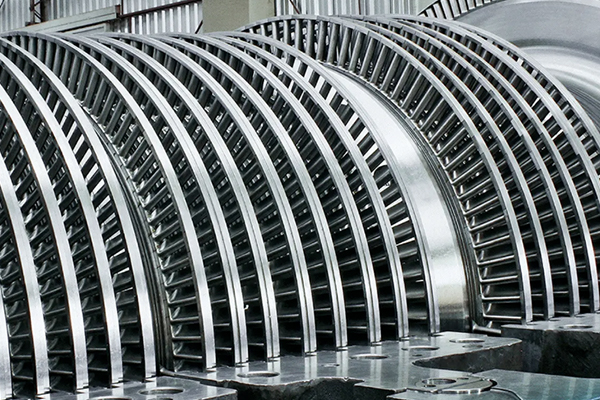
The nuclear reactor is designed in a manner that monitors the fission reaction in a controlled way. The nuclear fuel consisting of plutonium or highly purified uranium is carefully positioned in the reactor. The fuel reacts through a process of nuclear fission and provides heat when the conditions are favorable. The heat makes water vapor that turns the turbines connected to generators to generate electricity.
The control rods, containing materials that absorb neutrons, like boron and cadmium, are used in the nuclear core to control the reaction. These rods function to slow down or make the reaction steady when needed. The safety measures in the nuclear power plant prevent overheating and other dangers in the reactor. They have several safety systems, like backup systems to cool the plant, to evade overheating and other dangers.
The process of nuclear fission is akin to a finely controlled campfire. Just as adding or removing logs controls the fire, inserting or withdrawing control rods moderates the reaction in the core. This allows the reactor to operate smoothly and safely and keeps energy production at a constant level.
Benefits and Challenges
One of its advantages is its massive production of electricity from a small amount of fuel relative to fossil fuels. It should be noted that a small volume of fuel is enough to power millions of homes with electricity. Another advantage of nuclear energy over fossil fuels is that it does not emit any carbon dioxide because it does not burn fossil fuels.
Not all of the promise of nuclear power is without its drawbacks, either. Some people are uneasy about the idea of splitting atoms; the potential dangers with it range from the possibility of accidents to the long-term management of nuclear waste, which remains radioactive for several thousand years. While safety features in modern reactors have greatly improved, the handling of nuclear materials will always demand rigorous security and technological innovation in moving forward.
Added to this is the public perception. It's the fear of accidents, radioactive contamination-all those things that, statistically speaking, are most unlikely to happen, due to the stringent international safety standards. Thus, people need education and clear communication to understand that, if properly managed, nuclear power remains reliable and effective as an energy source.
In a word, nuclear energy is both a robust weapon in our energy mix: while on the one hand, it cuts our dependence on fossil fuel and therefore helps in containing climate change, on the other hand, it also entails caution because of the challenges that come with working with radioactive materials. As new reactor designs come up, along with evolved safety measures, we can harness increasing nuclear power to create a cleaner, sustainable world.
Material Comparison: Zirconium vs. Hafnium for Nuclear Applications
The following table emphasizes differences and complementarity between zirconium and hafnium in different nuclear applications:
|
Property |
Zirconium |
Hafnium |
|
Neutron Absorption |
Low |
High |
|
Primary Application |
Nuclear fuel cladding |
Control rods |
|
Corrosion Resistance |
Excellent |
Excellent |
|
Thermal Conductivity |
Good |
Moderate |
|
Melting Point |
1855°C |
2233°C |
|
Cost |
Moderate |
High |
|
Reactor Safety Role |
Structural integrity |
Reaction control |
For further information, please refer to Stanford Advanced Materials.
Frequently Asked Questions
On what principle is nuclear power based?
Nuclear power arises from fission, the splitting of atoms to produce heat, which is used to make steam to turn turbines and electrical generators.
How do control rods work in a nuclear reactor?
This is because control rods absorb excess neutrons to regulate the reaction. They can be inserted or withdrawn to manage the fission process safely.
What are the environmental benefits of nuclear power?
Nuclear power emits very low carbon compared with fossil fuels, offering a cleaner path to reducing climate impact while providing reliable electricity.
 Chin Trento