Products
 Bars
Bars
 Beads & Spheres
 Bolts & Nuts
 Crucibles
 Discs
Discs
 Fibers & Fabrics
 Films
Films
 Flake
Flake
 Foams
Foams
 Foil
Foil
 Granules
 Honeycombs
 Ink
Ink
 Laminate
 Lumps
Lumps
 Meshes
 Metallised Film
 Plate
Plate
 Powders
 Rod
Rod
 Single Crystals
 Sputtering Target
 Tubes
Tubes
 Washer
 Wires
Wires
 Converters & Calculators
 Write for Us



Everything You Should Know About Metals and Alloys

Description
Metals and alloys are used in various industries. Their applications involve construction, transportation, electronics, and medicine. Their strength, conductivity, and durability, make them important in modern life. This article covers the features and uses of metal and alloys.
--What Are Metals
Metals have high electrical and thermal conductivity, malleability, ductility, and a shiny appearance. They are found in nature as ores. You can get them through mining and refining processes.
Metals are broadly categorized into ferrous metals (there are iron, such as steel) and non-ferrous metals (such as copper, aluminum, and titanium).
--What Are Alloys
An alloy is a mixture of two or more metals. It can also be a combination of a metal element and non-metallic elements. These elements are mixed to improve strength, durability, corrosion resistance, or other properties. Alloys are created through melting and mixing the base metal with other elements.
--Properties of Metals and Alloys
- Physical – High density, melting point, and conductivity (thermal & electrical).
- Mechanical – Strength, hardness, ductility, malleability, and toughness.
- Chemical – Corrosion resistance, reactivity, and oxidation resistance.
- Magnetic – Some metals are ferromagnetic (Fe, Ni, Co); others are non-magnetic.
- Workability – Formability, weldability, and machinability vary by metal and alloy.
--Applications of Metals and Alloys
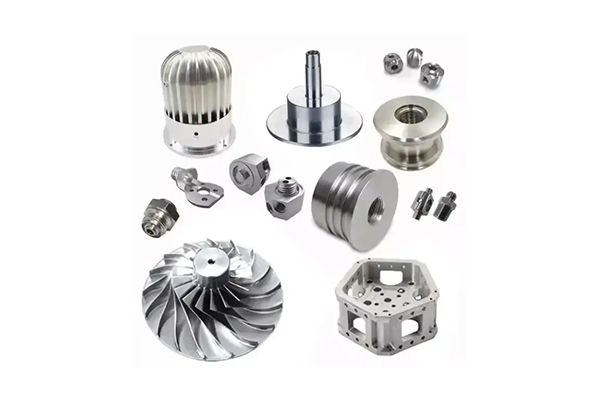
Metals and alloys are used in many places. In construction, steel and aluminum help build buildings, bridges, and roads. In cars, aluminum alloys make engine parts, wheels, and body panels lighter. In medicine, titanium alloys are used for bone implants and surgical tools because they are strong and safe for the body.
Types of Metals and Alloys
--Precious Metals
Precious metals are known for their beauty, durability, and rarity. These metals include gold, silver, and platinum, which have been historically used for coins, jewelry, and as a store of value. They also possess corrosion resistance and conductivity. So, they come with many industrial uses.
Gold is one of the most famous precious metals. It is used in electronics, dentistry, and as an investment commodity.
Silver, while often used in jewelry and coins, is particularly valuable in electrical components, solar panels, and medical applications.
Platinum is rarer and more expensive. Yet, it is used in automotive catalytic converters, chemical processing, and laboratory equipment.
--Refractory Metals
Refractory metals are known for their high melting points, hardness, and resistance to heat and wear. There are tungsten, molybdenum, tantalum, and niobium. These metals are able to withstand extreme temperatures and harsh environments, such as in aerospace, nuclear reactors, and high-performance engines.
Tungsten comes with a melting point of over 3,400°C, so it is ideal for use in light bulb filaments and aerospace applications.
Molybdenum is commonly used in steel alloys.
Tantalum is used in electronics and medical implants for its excellent corrosion resistance.
Niobium is often used in superconducting materials.
--Super Alloys
Super alloys work in tough conditions, like very hot temperatures high pressures, and harsh chemical settings. These alloys have a main metal such as nickel, cobalt, or iron. They often mix with other elements like chromium, aluminum, and titanium to boost their qualities.
Nickel-based super alloys are especially important in the aerospace industry. These alloys are used in turbine blades, engine components, and jet engines.
Cobalt-based super alloys are often used in gas turbines and chemical plants.
Iron-based super alloys can be found in power generation equipment.
Frequently Asked Questions
1. Why are alloys stronger than pure metals?
Because the mix of atoms makes it harder for the layers in the metal to slide over each other — which is what causes bending or breaking.
2. Can alloys rust?
Some can, like plain carbon steel. But many, like stainless steel or bronze, are made to resist rust and corrosion.
3. Are all metals magnetic?
Nope. Only a few, like iron, nickel, and cobalt, are naturally magnetic. Most others, like aluminum or copper, are not.
 Chin Trento