
 Products
 Bars
Bars
 Beads & Spheres
 Bolts & Nuts
 Crucibles
 Discs
Discs
 Fibers & Fabrics
 Films
Films
 Flake
Flake
 Foams
Foams
 Foil
Foil
 Granules
 Honeycombs
 Ink
Ink
 Laminate
 Lumps
Lumps
 Meshes
 Metallised Film
 Plate
Plate
 Powders
 Rod
Rod
 Single Crystals
 Sputtering Target
 Tubes
Tubes
 Washer
 Wires
Wires
 Converters & Calculators
 Write for Us



The Future of EV Batteries: What's Coming Next?

As electric vehicles (EVs) become more mainstream, the demand for better, faster-charging, and longer-lasting batteries is growing. Researchers and manufacturers are working on next-generation battery technologies to enhance performance, safety, and sustainability. Here's what's coming next in the world of EV batteries.
Main Facts
1. Solid-State Batteries
Solid-state batteries replace the liquid electrolyte in traditional lithium-ion batteries with a solid material, improving safety and energy density. Benefits include:
- Higher Energy Density: More power in a smaller, lighter battery.
- Faster Charging: Potential to charge in minutes rather than hours.
- Longer Lifespan: Reduced degradation over time.
Major automakers, including Toyota and BMW, are investing heavily in solid-state technology, with mass production expected by the late 2020s.
2. Lithium-Iron-Phosphate (LFP) Improvements
LFP batteries are gaining popularity due to their affordability and durability. Advances in LFP chemistry are increasing energy density, making them more competitive with traditional lithium-ion batteries while remaining safer and longer-lasting.
3. Sodium-Ion Batteries
Sodium-ion batteries use abundant sodium instead of lithium, reducing reliance on scarce raw materials. They offer:
- Lower Costs: No need for expensive lithium or cobalt.
- Better Cold Weather Performance: More stable in low temperatures.
While their energy density is lower than lithium-ion, companies like CATL and BYD are working on commercializing them for entry-level EVs and grid storage.
4. Ultra-Fast Charging Solutions
Emerging battery designs, including silicon-anode technology, promise ultra-fast charging times, reducing recharge durations to under 10 minutes. This will make EV charging as convenient as refueling gas-powered cars.
5. Longer-Lasting and Recyclable Batteries
Battery recycling and second-life applications are becoming priorities to reduce environmental impact. Future EV batteries will be designed for easy recycling, with companies like Redwood Materials and Tesla focusing on sustainable battery supply chains.
6. Wireless and Smart Charging
Wireless EV charging and vehicle-to-grid (V2G) technology are expected to improve convenience and grid efficiency, enabling EVs to supply power back to homes and cities.
Related Products
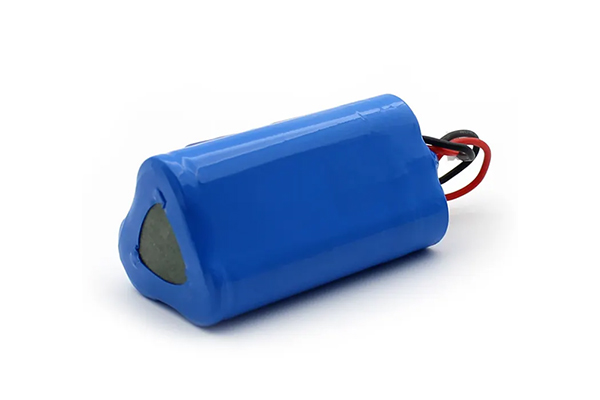
Lithium-Ion (Li-ion) Batteries
Li-ion batteries currently dominate the EV market due to their high energy density, relative lightness, and high life cycles. The batteries operate through the exchange of lithium ions from the cathode to anode, generating electrical energy crucial for propelling a vehicle. Li-ion batteries have several advantages including fast charging, high performance, and increased range per charge, making them the new standard for car manufacturers around the world.
But Li-ion technology itself is threatened with the safety concern, thermal regulation, and restricted resources. Resource-consuming processes go into lithium manufacturing, and heat and battery hazards remain among the key concerns resulting in research alternative technologies.
Nickel-Metal Hydride (NiMH) Batteries
The NiMH batteries were earlier highly promising with regard to EV development, mainly due to their reliability and low cost of manufacture. The NiMH batteries use the principle of hydrogen storage within metal hydride alloys and include the advantages of the batteries having a better safety profile than the Li-ion counterpart, low overheating risks that cannot be ignored, and easy thermal management.
However, these batteries are much less energy-dense and also heavier in weight, resulting in lower range capability, i.e., the range while driving. It is also seen that the batteries used by Hybrids are being gradually replaced by better Li-ion and recently introduced Solid-State batteries, which offer much better performance.
Solid-State Batteries
The general belief is that Solid-State batteries are the future of EV battery technology. In contrast to Li-ion batteries using liquid electrolytes, Solid-State batteries utilize solid electrolytes, hence massively improving safety through reduced flammability and liquid electrolyte spillage. These have higher energy densities that enable longer driving ranges, faster charging, and improved thermal stability.
Leading automobile manufacturers have already invested heavily in the development of Solid-State batteries and foresee their availability in the mass market within a decade. However, there are hurdles to overcome, such as scalability, manufacturing complexity, and high upfront production costs. Research is ongoing to try and overcome these challenges so that Solid-State batteries can become a competitive alternative to current battery technologies.
Frequently Asked Questions
Why is the Solid-State battery safer compared to Lithium-Ion batteries?
The main feature of a 'Solid-State' battery is that it has a 'Solid-State' electrolyte, thus removing any possible chance of an explosion, as experienced in Lithium-Ion technology due
Relevance of Nickel-Metal Hydride in Electric Vehicle Application?
NiMH cells are of interest to hybrid electric cars because of the lower cost and safety reliability but are less common in pure-electric cars given the energy density.
Will Solid-State Batteries replace Lithium-Ion Batteries entirely?
Although Solid State Batteries have a lot of promise, replacement of existing systems hinges on the ability to overcome the manufacturing complexities.
What are the environmental advantages of moving away from Lithium-Ion battery technology?
The shift to alternatives such as Solid State or others might minimize the negative effects of Lithium extraction on the environment, which include water scarcity, pollution, and destruction of the landscape.
When will Solid-State Batteries become commercially viable for EVs?
Solid-State Batteries have been forecasted to become commercial feasible in the coming decade, with various manufacturers predicting notable market introductions by 2030.

 Chin Trento