Products
 Bars
Bars
 Beads & Spheres
 Bolts & Nuts
 Crucibles
 Discs
Discs
 Fibers & Fabrics
 Films
Films
 Flake
Flake
 Foams
Foams
 Foil
Foil
 Granules
 Honeycombs
 Ink
Ink
 Laminate
 Lumps
Lumps
 Meshes
 Metallised Film
 Plate
Plate
 Powders
 Rod
Rod
 Single Crystals
 Sputtering Target
 Tubes
Tubes
 Washer
 Wires
Wires
 Converters & Calculators
 Write for Us



Aluminum Oxide: Properties, Applications, and Production

Introduction
Aluminum oxide (Al₂O₃), commonly known as alumina, is renowned for its exceptional hardness, thermal stability, and chemical resistance. These properties make it indispensable in a wide range of industries, including abrasives, electronics, medical devices, and more. This article will introduce the properties, applications, and production methods of aluminum oxide. Hope that you have a better understanding of why it is such a critical material in modern technology and manufacturing.
What Is Aluminum Oxide
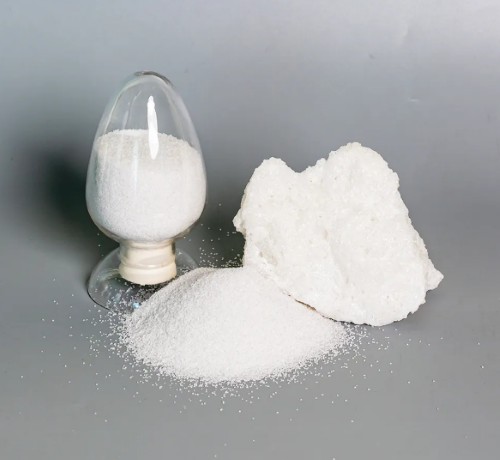
Aluminum oxide is a crystalline compound composed of aluminum and oxygen. It occurs naturally as corundum, a mineral that forms the basis of gemstones like rubies and sapphires. Industrially, it is synthesized through refining processes and is widely utilized in ceramics, electronics, and protective coatings due to its durability and wear resistance.
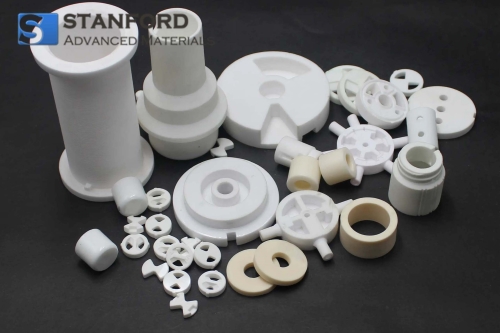
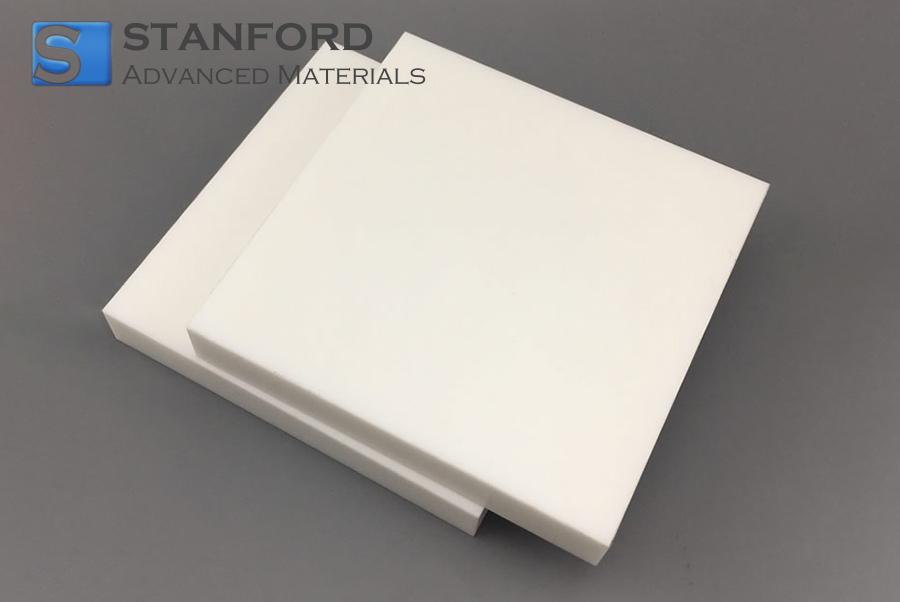
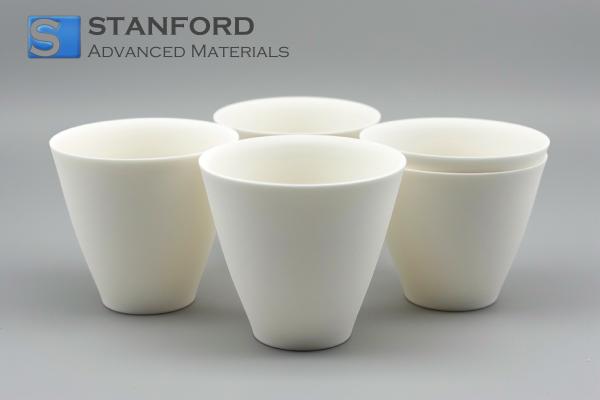
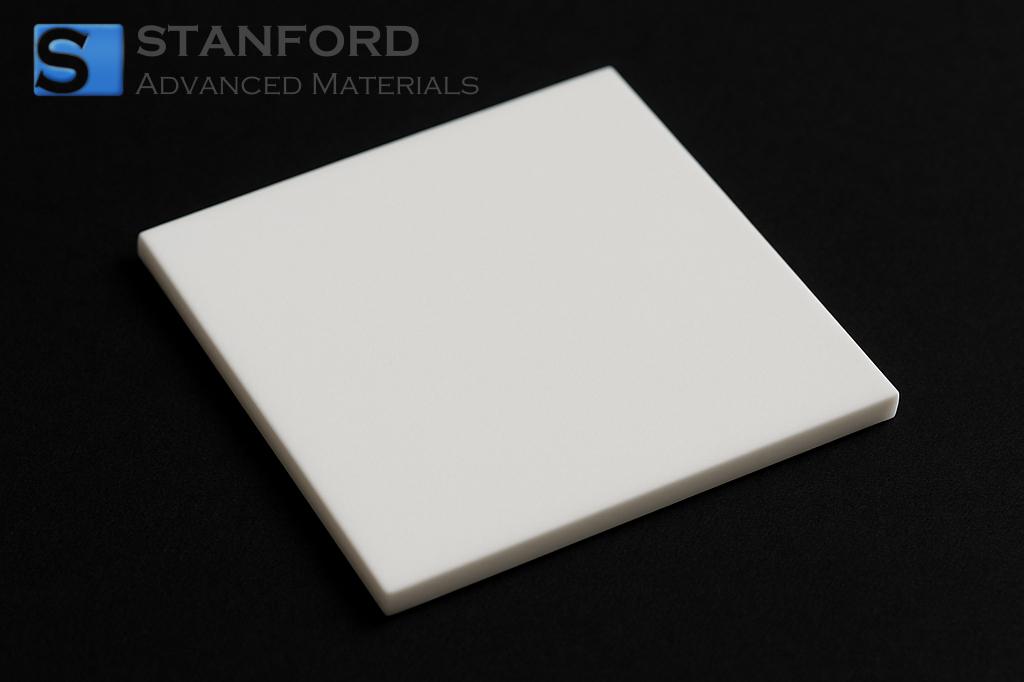
Stanford Advanced Materials (SAM) offers a range of aluminum oxide ceramic products for various applications:
- Alumina ceramics are used in industries such as aerospace, automotive, and electronics for electrical insulators and structural components.
- Alumina substrates and packages provide thermal management and electrical insulation for electronic devices.
- The material’s hardness and abrasion resistance make it ideal for grinding and polishing applications.
Properties and Characteristics
Aluminum oxide boasts a unique combination of properties that make it highly valuable across multiple sectors:
- High Hardness and Strength: With a Mohs hardness of 9, Al₂O₃ is one of the hardest materials, second only to diamond. Its compressive strength of approximately 2,000 MPa makes it suitable for abrasives, cutting tools, and wear-resistant coatings.
- Excellent Thermal Stability: Al₂O₃ has a melting point of 2,072°C (3,762°F) and remains stable at high temperatures, making it ideal for furnace linings, high-temperature insulation, and refractory applications.
- Chemical Inertness: It is highly resistant to corrosion and does not react with most acids or bases. Its solubility in water is less than 0.0001 g per 100 mL at room temperature, ensuring durability in chemically harsh environments.
- Electrical Insulation: With a dielectric strength of approximately 15 kV/mm, Al₂O₃ is an excellent electrical insulator, widely used in electronic components, circuit substrates, and semiconductors.
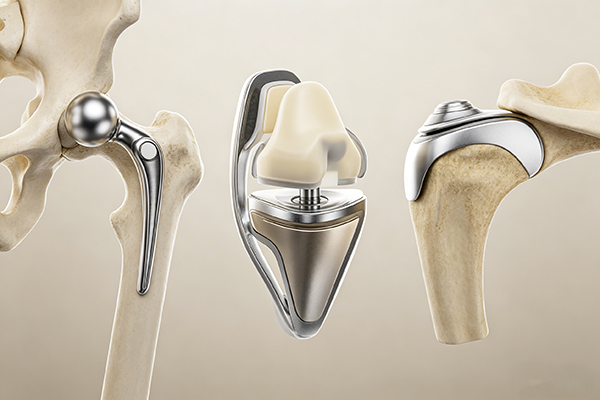
- Biocompatibility: Its non-toxic and non-reactive nature makes it suitable for medical and dental applications, such as hip replacements, dental implants, and bone graft substitutes. It also exhibits excellent wear resistance in biological environments, enhancing the longevity of implants.
Summary Table: Chemical, Physical, Thermal, and Mechanical Properties
|
Property Category |
Property |
Value/Description |
|
Chemical Properties |
Chemical Formula |
|
|
Molecular Weight |
101.96 g/mol |
|
|
Solubility in Water |
< 0.0001 g/100 mL (practically insoluble) |
|
|
Chemical Resistance |
Resistant to most acids and bases; inert in harsh chemical environments |
|
|
Biocompatibility |
Non-toxic, non-reactive; suitable for medical and dental applications |
|
|
Physical Properties |
Density |
3.95–4.1 g/cm³ |
|
Color |
White or colorless (pure form); can vary with impurities (e.g., rubies, sapphires) |
|
|
Crystal Structure |
Hexagonal (corundum structure) |
|
|
Mohs Hardness |
9 (second only to diamond) |
|
|
Surface Finish |
Smooth, polishable |
|
|
Thermal Properties |
Melting Point |
2,072°C (3,762°F) |
|
Thermal Conductivity |
20–30 W/m·K |
|
|
Thermal Expansion |
6–8 × 10⁻⁶ /K |
|
|
Thermal Stability |
Excellent; stable at high temperatures |
|
|
Mechanical Properties |
Compressive Strength |
~2,000 MPa |
|
Flexural Strength |
300–400 MPa |
|
|
Tensile Strength |
200–300 MPa |
|
|
Elastic Modulus |
300–400 GPa |
|
|
Fracture Toughness |
3–4 MPa·m¹/² |
|
|
Electrical Properties |
Dielectric Strength |
~15 kV/mm |
|
Dielectric Constant |
~9–10 (at 1 MHz) |
|
|
Electrical Resistivity |
>10¹⁴ Ω·cm (excellent insulator) |
Applications of Aluminum Oxide
Aluminum oxide is utilized in a wide array of industries due to its exceptional properties. Key applications include:
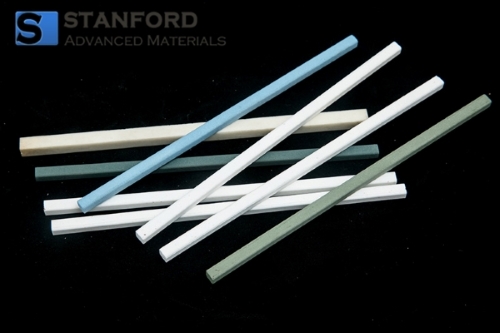
- Abrasives and Cutting Tools: Its hardness makes it ideal for sandpaper, grinding wheels, and cutting tools used in polishing and surface finishing.
- Refractories and Ceramics: As a high-temperature-resistant material, it is used in kiln linings, furnace insulation, and advanced ceramics.
- Electronics and Semiconductors: Its electrical insulating properties make it essential for circuit boards, semiconductors, and capacitor dielectrics.
- Medical and Dental Applications: Its biocompatibility enables its use in dental implants, artificial joints, and other medical devices.
- Catalysts and Chemical Processing: Alumina serves as a catalyst or catalyst support in petrochemical refining and chemical reactions.
- Glass and Coatings: It is used in scratch-resistant coatings for glass, optics, and protective coatings for metals.
Production of Aluminum Oxide
Aluminum oxide is primarily produced through the Bayer process and calcination.
- Bayer Process:
1. Crushing and Grinding: Bauxite ore is ground into a fine powder.
2. Digestion: The powder is mixed with a hot, concentrated sodium hydroxide solution, dissolving the aluminum oxide and leaving impurities behind.
3. Clarification: The solution is filtered to remove impurities.
4. Precipitation: Aluminum hydroxide is precipitated by cooling and seeding the solution with aluminum hydroxide crystals.
5. Calcination: The aluminum hydroxide is heated to high temperatures (1,000–1,200°C) to remove water and produce pure aluminum oxide.
Bauxite Ore
↓
Crushing & Grinding
↓
Powder
↓
Digestion
(Mix with Sodium Hydroxide)
↓
Dissolved Al2O3 & Impurities
↓
Clarification
(Filter Impurities)
↓
Clear Solution
↓
Precipitation
(Cool & Seed with Al(OH)3 Crystals)
↓
Aluminum Hydroxide Precipitate (Al(OH)3)
↓
Calcination
(Heat to 1000-1200°C)
↓
Pure Aluminum Oxide (Al2O3)
- Calcination Process:
This involves heating aluminum hydroxide or other aluminum compounds to remove bound water and convert them into aluminum oxide. It is often used in conjunction with the Bayer process to refine the final product.
- Alternative Methods:
- Fused Alumina Production: Aluminum oxide is melted and rapidly cooled to form a hard, crystalline material used in abrasives and ceramics.
- Chemical Vapor Deposition (CVD): Used to create thin films of aluminum oxide for electronic and optical applications.
Conclusion
Aluminum oxide is a vital material with applications spanning abrasives, electronics, medical devices, and chemical processing. Its unique combination of hardness, thermal stability, chemical resistance, and electrical insulation ensures its continued importance in advancing modern technology and manufacturing. As industries evolve, alumina remains a cornerstone material, driving innovation and efficiency across diverse sectors.
 Chin Trento