
 Products
 Bars
Bars
 Beads & Spheres
 Bolts & Nuts
 Crucibles
 Discs
Discs
 Fibers & Fabrics
 Films
Films
 Flake
Flake
 Foams
Foams
 Foil
Foil
 Granules
 Honeycombs
 Ink
Ink
 Laminate
 Lumps
Lumps
 Meshes
 Metallised Film
 Plate
Plate
 Powders
 Rod
Rod
 Single Crystals
 Sputtering Target
 Tubes
Tubes
 Washer
 Wires
Wires
 Converters & Calculators
 Write for Us



Indium Tin Oxide Targets for Mobile Phone and Tablet Display Screens

Introduction
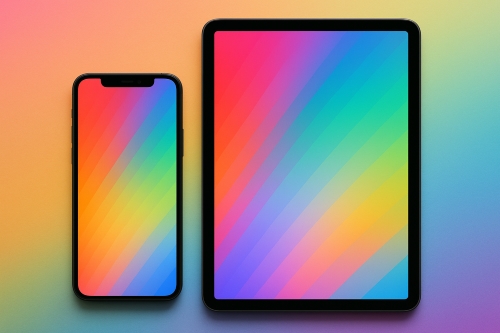
Indium tin oxide is a crucial material in the majority of modern displays. Tablets and smartphones use this material to produce bright and clear screens. We will discuss the properties of indium tin oxide, target manufacturing, and what role it plays in screen displays.
Material Properties of Indium Tin Oxide
Indium tin oxide, or ITO, is a transparent conducting oxide. It offers a blend of electrical conductivity and optical transparency. Quantitatively, its electrical resistivity is typically in the range 10^-4 ohm-cm, while optical transmittance is above 80% throughout the visible spectrum. The values allow the material to function effectively in applications such as in touch screens and displays. Both light transmission and electric current are required in display screens used in mobile phones and tablets.
Thin-Film Deposition onto Display Screens
Thin-film deposition entails the employment of sputtering target to deposit an ultra-thin layer of indium tin oxide onto substrates of glass or plastic. Engineers highlight that the thickness of the film, typically in the range of 100 to 300 nanometers, must be carefully controlled. Evenly distributed film ensures proper functioning of touch screens and display panels. The method can utilize radio frequency or direct current sputtering methods. The methods deposit large surfaces evenly, which is important in the manufacture of large screens or high-definition screens.
Applications in Tablet and Mobile Screens
Indium tin oxide films are the basis of touch screens and display panels.
In mobile phones, the films are both the transparent conductive layer and also as protection from unwanted electrical interference. The same films are used in tablets to deliver high resolution through the delivery of even brightness and contrast. Field testing in manufacturing plants shows that a simple flaw in the ITO film is enough to cause malfunctioning of the screens. Electronics giants rely mostly on the dependability of these films to meet customer needs.
Performance Requirements and Quality Standards
Performance in display screens largely depends on the quality of the film.
Crucial demands include low electric resistance, high optical transmittance, and mechanical stability. The vast majority of the manufacturers require that the ITO film be below 20 ohms per square of resistance and an optical transmittance greater than 80%. Such demands are enforced by the display market to enable the interactive screen to operate under different environmental conditions. Continuous monitoring and quality control checks during the deposition process are a normal procedure to ensure that the final product meets these conditions.
Alternative Materials and Future Directions
Display technology is a field that keeps changing.
Alternative materials are sometimes conceived in cases where the cost of indium rises or supply decreases. Zinc oxide and doped cadmium oxide are being considered for future displays. Laboratory testing has revealed that though such materials can rival some of the properties of indium tin oxide, they require further enhancement in conductivity and transparency. In the future, there could be a push towards these alternatives as science continues to stretch the envelope of material capabilities.
Conclusion
Indium tin oxide has been found to be long-lasting. It provides an ideal combination of high conductivity and optical clarity that is ideal for mobile phone and tablet screen displays. Quality standards and alternative materials are ever just beyond the next horizon as research continues.
Frequently Asked Questions
F: What is typical electrical resistivity for indium tin oxide?
Q: It is typically 10^-4 ohm-cm.
F: What is typical film thickness in display screens?
Q: Films are typically 100 to 300 nanometers thick.
F: Are there other display options for indium tin oxide?
Q: Yes, options such as zinc oxide and doped cadmium oxide are under consideration.
 Chin Trento