Products
 Bars
Bars
 Beads & Spheres
 Bolts & Nuts
 Crucibles
 Discs
Discs
 Fibers & Fabrics
 Films
Films
 Flake
Flake
 Foams
Foams
 Foil
Foil
 Granules
 Honeycombs
 Ink
Ink
 Laminate
 Lumps
Lumps
 Meshes
 Metallised Film
 Plate
Plate
 Powders
 Rod
Rod
 Single Crystals
 Sputtering Target
 Tubes
Tubes
 Washer
 Wires
Wires
 Converters & Calculators
 Write for Us



Aluminum Nitride Single Crystals: Properties, Applications, and Growth Methods

Introduction
Aluminum Nitride (AlN) single crystals offer high thermal conductivity (200–300 W/m·K), a wide bandgap of 6.2 eV, and excellent electrical insulation (>10¹³ Ω·cm). These properties make AlN valuable for power electronics, optoelectronics, and aerospace applications. Its steady and reliable performance makes it a favorite in industries. Let's have a simple look at its properties and how it is grown. Here are some common examples and cases from practice. If you are evaluating Aluminum Nitride for your next project, here is an overview of how it is grown, what it offers, and where it is used.
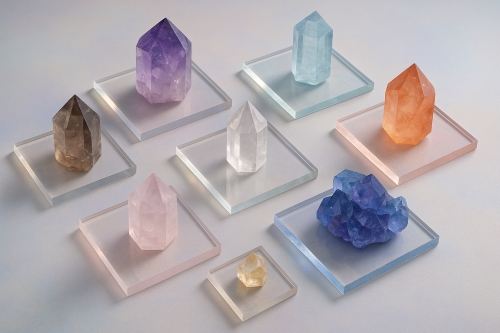
Crystal Growth of Aluminum Nitride Materials
Currently, methods for growing aluminum nitride crystals include traditional techniques such as hydride vapor phase epitaxy (HVPE) and sublimation, as well as emerging approaches like physical vapor transport (PVT). The PVT method offers advantages such as fast growth rates and high crystal quality, making it a highly promising technique for producing AlN single-crystal substrates. That said, challenges remain in understanding the growth mechanisms and processes of PVT, developing effective seed crystal strategies, and characterizing crystal defects.
|
Method |
Advantages |
Limitations |
|
PVT |
High crystal quality, scalable to large diameters |
High equipment demands |
|
HVPE |
Fast growth rate, self-separation capability |
Lattice mismatch in heteroepitaxy |
Currently, PVT is the go-to method for growing large, high-quality AlN crystals, and combining it with high-temperature annealing further improves crystal quality. HVPE stands out for its high growth rate.
Structural and Physical Characteristics
The structure of Aluminum Nitride single crystals is hexagonal. This arrangement gives the crystal its unique strength and heat conduction properties. Measurements show that thermal conductivity may reach up to 200 watts per meter per degree Celsius in optimized samples. In many cases, the physical integrity of the crystal means it can be used in both high-temperature and high-frequency applications. The physical beauty lies in its clear and well-organized lattice structure. Its flat surfaces and uniform grain size are preferred in electronics. Minor imperfections can change its behavior. Thus, strict quality control is common in laboratories that produce Aluminum Nitride.
|
Property |
Typical Value |
Unit |
Notes |
|
Crystal Structure |
Hexagonal (Wurtzite) |
— |
Highly ordered lattice |
|
Thermal Conductivity |
200–300 |
W/m·K |
Excellent for heat dissipation |
|
Dielectric Breakdown Strength |
>10 |
kV/mm |
Suitable for high-voltage insulation |
|
Dielectric Constant (εr) |
~8.5 |
— |
At 1 MHz |
|
Loss Tangent (tan δ) |
<0.0003 |
— |
Very low loss, ideal for high-frequency use |
|
Coefficient of Thermal Expansion |
4.5–5.0 |
ppm/°C |
Low and stable over wide temperature ranges |
|
Bandgap |
~6.2 |
eV |
Wide bandgap semiconductor |
|
Hardness |
~11 |
GPa |
High mechanical strength |
|
Density |
3.26 |
g/cm³ |
— |
|
Resistivity |
>10¹³ |
Ω·cm |
At room temperature; excellent insulator |
For more information, please check Stanford Advanced Materials (SAM).
Application Areas of Aluminum Nitride
Aluminum Nitride has many uses in various fields:
- Power electronics: As a heat spreader in power amplifiers and high-frequency devices, AlN helps components run cooler and perform better.
- Optoelectronics: Its optical properties make it suitable for substrates in light-emitting diodes.
- Microwave circuits: Many manufacturers use AlN substrates for their low loss and stable dielectric constant.
- Automotive and aerospace: AlN is chosen for components that must withstand heat stress and operate reliably over long lifetimes.
Global Research and Development Trends
Research in Aluminum Nitride is strong around the world. Universities and research labs in Europe, Asia, and North America are busy. Many teams now focus on refining the crystal growth process. They work on reducing defects and increasing the size of single crystals available. There are also studies on how the material interacts with other compounds when joined in devices. Industrial groups test new applications in electronics and power systems. The worldwide drive results in better standards for quality and performance. Both academic and industrial sectors share findings to advance the field further.
Conclusion
Aluminum Nitride single crystals offer a unique blend of properties. Their thermal and electrical characteristics make them useful in many areas. The crystal growth process has improved with time and precision control. The structural features support various demanding applications. Worldwide research and cooperation continue to enhance its potential. Over the years, the steady development of this material has shown its importance in modern engineering. The future looks bright with continued work and shared experiences from different research groups and industries.
For AlN substrates, wafers, and powders, visit Stanford Advanced Materials (SAM).
Frequently Asked Questions
F: What is the thermal conductivity of Aluminum Nitride single crystal?
Q: In optimized samples, thermal conductivity reaches up to 200 watts per meter per degree Celsius.
F: Why is Aluminum Nitride used in power electronics?
Q: Its high thermal conductivity and low thermal expansion make it ideal for managing heat while providing electrical insulation.
F: How do researchers improve the quality of Aluminum Nitride crystals?
Q: They control impurities, use precise high-temperature techniques, and refine growth methods through strict quality management.
 Chin Trento