
 Products
 Bars
Bars
 Beads & Spheres
 Bolts & Nuts
 Crucibles
 Discs
Discs
 Fibers & Fabrics
 Films
Films
 Flake
Flake
 Foams
Foams
 Foil
Foil
 Granules
 Honeycombs
 Ink
Ink
 Laminate
 Lumps
Lumps
 Meshes
 Metallised Film
 Plate
Plate
 Powders
 Rod
Rod
 Single Crystals
 Sputtering Target
 Tubes
Tubes
 Washer
 Wires
Wires
 Converters & Calculators
 Write for Us



Al2O3 Polishing Powder: Technical Guide for Industrial and Laboratory Use

Introduction
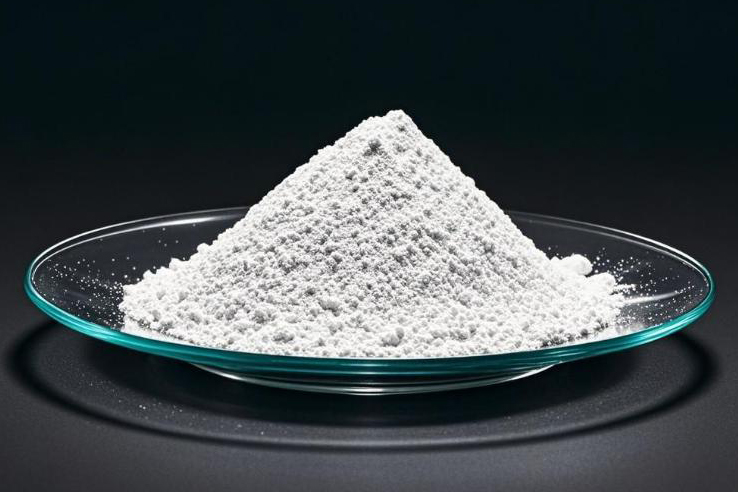
In polishing work — whether it's bringing a telescope mirror into optical tolerance or cleaning up a titanium orthopedic implant — aluminum oxide polishing powder is a staple. Known chemically as Al2O3, this ceramic abrasive comes in multiple grades and phases. The right choice can mean the difference between a uniform, high-gloss finish and a surface riddled with micro-scratches.
Crystal Phase Selection
Two crystal forms dominate the polishing use:
-
α-Al2O3 (alpha alumina): Dense corundum structure, hardness close to sapphire. Stable under heat and mechanical stress, making it a good match for glass, hard metals, and ceramics.
-
γ-Al2O3 (gamma alumina): Softer, more friable. Breaks down during use, which can help achieve a finer finish on softer metals or polymer composites.
Phase is not just a lab curiosity — it directly affects cutting rate, slurry behavior, and the final roughness you’ll get.
Particle Size and Application Matching
Industry often works with particle sizes from 5 µm down to 0.05 µm. For example:
| Nominal Size | Common Use | Example Materials | Approx. Ra Result |
|---|---|---|---|
| 5 µm | Pre-polish, scratch removal | Stainless steel, brass | ~0.3–0.4 µm |
| 1 µm | Intermediate | Glass, zirconia | ~50–100 nm |
| 0.05 µm | Final finish | Optical flats, semiconductor wafers | <10 nm |
A three-step optical sequence might go 3 µm → 1 µm → 0.05 µm, with pad changes between stages. Skipping an intermediate step usually costs more time than it saves.
Slurry Preparation and Process Control
For most polishing setups:
-
Concentration: 5–20 wt% Al2O3 powder in deionized water.
-
pH: Neutral for ceramics and glass; slightly acidic (pH 4–6) for metals prone to oxidation.
-
Pad choice: Felt or polyurethane for brittle substrates; woven cloth for ductile metals.
-
Pressure: Around 20–80 kPa for delicate parts; up to 150 kPa for heavy stock removal.
-
Rotation: 30–90 rpm platen speed is typical; higher risks of overheating thin parts.
Some optics shops use ASTM E112 particle size verification before charging a polishing lap to ensure no oversized grit enters the process.
Application Notes
-
Metals: For stainless steel finishing, γ-Al2O3 at 3 µm followed by α-Al2O3 at 1 µm works well. Avoid alkaline slurry on aluminum alloys to prevent surface etching.
-
Glass and optics: Use α-Al2O3 with filtered slurry (0.2 µm filtration) to prevent random scratches. Keep work under 30 °C to avoid thermal distortion.
-
Ceramics: Continuous slurry flow prevents localized heating and microcracking in alumina or zirconia parts.
-
Semiconductors: Ultra-high-purity (>99.99%) α-Al2O3, often in 0.05 µm grade, is standard for final wafer planarization.
Troubleshooting Common Issues
| Symptom | Possible Cause | Adjustment |
|---|---|---|
| Random deep scratch | Oversized particle contamination | Filter slurry; clean pad |
| Hazy surface | Pad glazing or over-polish | Dress pad; shorten cycle |
| Uneven gloss | Poor slurry distribution | Pre-soak pad; adjust feed rate |
| Excess pad wear | Excessive pressure | Reduce load; match pad to material |
Safety and Storage
Even though alumina ceramic is inert, its fine dust can irritate the respiratory system. Work under extraction or wear a particulate mask. For high-purity polishing, store powder in sealed containers with desiccant — Al2O3 will absorb ambient moisture over time, changing slurry behavior.
Final Remarks
Choosing the right aluminum oxide polishing powder is not just about picking a grit size from a catalog. The crystal phase, particle distribution, purity, and process parameters all contribute to the final surface. In demanding work — optical flats, precision medical devices, semiconductor wafers — those details decide whether the part meets spec.
If you need consistent, high-purity Al2O3 powder with verified specifications, Stanford Advanced Materials supplies multiple grades tailored for both laboratory and production-scale polishing. Our technical team can match the powder characteristics to your exact process, helping you reach your surface finish targets faster and with fewer rejects.
 Chin Trento