
 Products
 Bars
Bars
 Beads & Spheres
 Bolts & Nuts
 Crucibles
 Discs
Discs
 Fibers & Fabrics
 Films
Films
 Flake
Flake
 Foams
Foams
 Foil
Foil
 Granules
 Honeycombs
 Ink
Ink
 Laminate
 Lumps
Lumps
 Meshes
 Metallised Film
 Plate
Plate
 Powders
 Rod
Rod
 Single Crystals
 Sputtering Target
 Tubes
Tubes
 Washer
 Wires
Wires
 Converters & Calculators
 Write for Us



Spherical Niobium Powder in Nuclear Reactor Materials

Introduction to Niobium and Its Spherical Powder Form
Niobium is a corrosion- and strength-intensive metal. Niobium powder is currently used to make nuclear reactor components more efficient. The shape and purity qualify it to be used in components that need evenness and reliability.
Properties of Niobium for Nuclear Uses
Niobium offers some advantages for nuclear reactor use. It has a melting point of around 2477°C. Its high melting point is beneficial under high-temperature conditions. Niobium is about 8.57 g/cm³ dense and is highly conductive to heat. Experiments have found that niobium additions in reactor materials increase heat transfer. In one instance, a reactor part with niobium improved the efficiency at elevated temperature.
Low values of neutron cross-sections are also found with niobium. That is, it doesn't absorb so many neutrons when reactors are running. This feature is of considerable importance in nuclear reactor engineering. The spherical shape of the powder makes for more stable performance in sintered material. Engineers have used it in steel alloys for improved strength and stability under radiation. With these properties, niobium provides mechanical soundness in parts of reactors even in challenging conditions.
Advantages of Spherical Niobium Powder
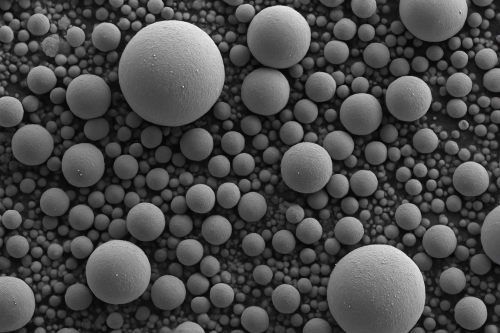
The spherical shape has the obvious advantages. Smooth, rounded form promotes more flowing when processed with powder. This means more uniform pressing or heating of components. Spherical particles also even out the packing in the space. This even packing of spaces leads to fewer areas of weakness in the final product. The irregular particles were applied in old methods, which compacted less. Now spherical niobium powder is utilized when uniform compact density is needed.
In addition, the powder's smoothness reduces friction when handled and facilitates uniform blending with other metals. Uniformity in microstructure translates to better performance and longevity under conditions in the reactor.
The degree of purity in the powder is also a positive aspect. Purity levels above 99.5% are standard with most lots. High purity inhibits unwanted reactions at the harsh conditions within the reactor. Low levels of contamination are especially essential for application in nuclear reactors where purity can affect performance.
Engineers have indicated that spherical niobium powder improves the overall quality of components being used in nuclear applications. It is an investment that pays with better safety and longer life when applied to reactor applications.
Applications in Nuclear Reactor Components
Spherical niobium powder is applied in critical reactor components. One application is in the production of alloy steels for reactor vessels. Niobium, in powder form, is added to strengthen the alloy. It also increases resistance to very high temperatures. Vessel liners and support structures in the majority of reactors are alloyed with small amounts of niobium.
Another application is fuel element cladding. The powder helps to improve the stability of materials that are utilized in cladding. It has enhanced mechanical properties at high temperatures and radiation. Common examples have shown that reactor components with niobium addition have longer service lives.
Certain studies on special reactors have quoted spherical niobium powder in renovating older prototypes. The powder, which is homogeneous, has been found to be beneficial in substituting parts of advanced reactor models. It has been utilized by engineers in experiments and general maintenance. Its stable nature allows uniform operation when running the reactor. In each application, the spherical nature of the powder ensures easy and even integration into the product. Such integration is credited with delivering the nuclear reactors' safety and efficiency.
Fabrication Techniques Using Spherical Niobium Powder
There are several various processing methods utilized with spherical niobium powder. The most common is powder metallurgy. Powder metallurgy consists of blending powder with other metal powders and pressing into shape. The product is then sintered under controlled conditions. Sintering bonds the particles together without melting the entire mass. Because the particles are spherical, sintering will result in a uniform microstructure. Engineers prefer this type for application to critical reactor parts.
Another process is mechanical alloying, where the powder gets mixed with other constituents at a high-energy state. The process gives a fine mixture of metals. It enhances composite properties. Hot isostatic pressing is used too. Under this process, heat and pressure make the particles of the powder stick together. Shape of the particle maintains the evenness. The evenness forms uniform reactor components that are capable of bearing temperatures and pressures.
These processes are highly developed and proven in industry. They have been optimized over a few decades and supported by experience and research. All the methods utilize the unique properties of spherical niobium powder, including enhanced flowability, purity, and uniform particle size distribution. In all cases, the material processing is simple and straightforward. The end product is of high quality and suitable for nuclear reactor applications.
Conclusion
Spherical niobium powder is an indispensable element of nuclear reactor material. Its high melting point, low neutron capture, and homogeneous microstructure make it a valuable friend of reactor engineering. For more niobium products, please check Stanford Advanced Materials (SAM).
Frequently Asked Questions
F: Why is spherical niobium powder suitable for reactors?
Q: Its high melting point and uniform particle shape help form high-strength, dependable reactor components.
F: How does the powder improve component manufacturing?
Q: Its spherical shape allows for a consistent packing and complete blending in such applications as powder metallurgy.
F: Can high purity spherical niobium powder affect reactor performance?
Q: Yes, since high purity minimizes unwanted reactions and enhances overall stability of the reactor components.
 Chin Trento