
 Products
 Bars
Bars
 Beads & Spheres
 Bolts & Nuts
 Crucibles
 Discs
Discs
 Fibers & Fabrics
 Films
Films
 Flake
Flake
 Foams
Foams
 Foil
Foil
 Granules
 Honeycombs
 Ink
Ink
 Laminate
 Lumps
Lumps
 Meshes
 Metallised Film
 Plate
Plate
 Powders
 Rod
Rod
 Single Crystals
 Sputtering Target
 Tubes
Tubes
 Washer
 Wires
Wires
 Converters & Calculators
 Write for Us



3D Printing Graphene Ink: Properties and Applications

Graphene ink is a blend of graphene flakes mixed with a liquid solvent and a binder. The ink has unique properties. It carries high electrical conductivity and flexibility. Researchers have worked on improving its composition to suit various printing techniques.
Composition and Properties of Graphene Ink
Graphene ink is composed mainly of graphene flakes and a supporting liquid. The liquid can be water, ethanol, or another organic solvent. A polymer binder is sometimes added to help the ink stick to surfaces after printing. The size of the graphene flakes plays a big role in the performance of the ink. Typical graphene flake sizes range from a few hundred nanometers to a few microns. This influences the conductivity and the mechanical strength of the printed structure. In some cases, the electrical conductivity can reach values around 2000 to 6000 Siemens per centimeter after proper treatment.
In practice, additives such as surfactants are used to maintain a stable dispersion. This prevents the graphene from clumping together. At a concentration of about 0.1% to 5% by weight, the ink usually offers a good balance between printability and performance. The final formulation may vary, but the basic idea remains consistent. A well-prepared graphene ink shows low viscosity that supports smooth flow during printing and high adhesion to the substrate after drying.
Printing Techniques for Graphene-Based Inks
There are several methods to print graphene ink. Inkjet printing is one of the common techniques. It allows for high resolution on substrates and works well for circuits and sensors. Screen printing is another option. It offers faster production and is good for larger areas. In some cases, aerosol jet printing is used when fine details are needed.
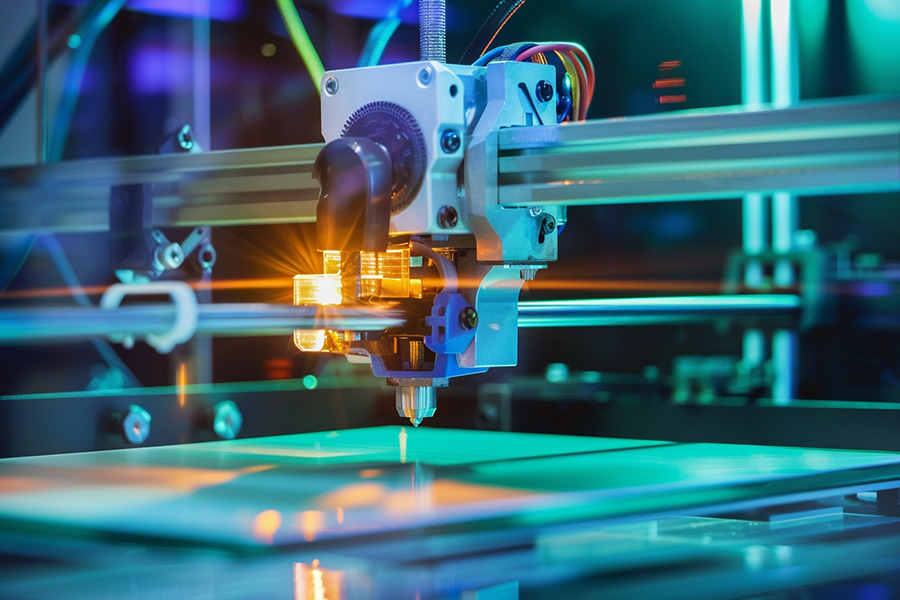
Three-dimensional printing itself has been used with graphene-based inks. In this method, layers are built on top of each other to create three-dimensional structures. The process is often adjusted to handle the low viscosity of the ink. Each printing technique has its own advantages. For example, inkjet printing is chosen for detailed work while screen printing is selected for cost-effective production.
Mechanical and Electrical Performance of Printed Structures
The printed graphene patterns demonstrate outstanding mechanical and electrical properties. The printed material is usually very thin, which is beneficial for flexibility. During bending tests on flexible materials like plastic sheets, the printed lines did not break even after several bending cycles. This is crucial for wearable technology. Several studies have demonstrated that even with bending radii of a few millimeters, the material retains high electrical conductivity.
From an electrical perspective, printed layers of graphene are outstanding conductors. After optimal processing, the sheet resistance can be reduced considerably. Some printed materials have reported sheet resistances of less than 100 ohms per square. Such low resistances are due to the overlapping of graphene flakes. After additional thermal or chemical processing, the properties can be further enhanced. These properties make graphene ink a popular choice for use in materials that require both high strength and high conductivity.
Applications in Electronics and Sensors
Electronics benefit greatly from printed graphene structures. Printed circuits, antennas, and interconnects have been made with graphene ink. The material works well for low-cost radio frequency identification tags and flexible displays. In sensor applications, graphene ink is used to print gas sensors, temperature sensors, and pressure sensors. For instance, capacitive touch sensors printed on flexible substrates have shown fast response times. With the proper design, these sensors provide clear and reliable signals.
Printed graphene structures also find roles in the production of complex circuits. They provide a solution where traditional metal inks fall short, especially on flexible surfaces. Many common cases include smart packaging and wearable electronic devices, where durability and excellent conductivity are vital.
Applications in Energy Storage and Wearable Devices
Energy storage devices have also profited from graphene ink. Printed electrodes for battery systems and supercapacitors have shown high performance. Some printed graphene electrodes boast impressive charge/discharge rates and stable cycling over hundreds of cycles. In energy storage, the high surface area of graphene is an asset. It offers space for improved electrochemical reactions.
For wearable devices, the flexibility and light weight of printed graphene circuits are a major advantage. Graphene ink is used in circuits on textiles or polymer films. In practice, printed wearable devices have been used in health monitors and smart watches. There are cases where such printed devices function well even after many cycles of stretching and bending. This makes them ideal for future applications in the fast-growing field of wearable technology.
Conclusion
Graphene ink is evolving as a key material in modern technology. Its unique composition, high electrical conductivity, and mechanical strength make it suitable for 3D printing and various advanced printing techniques. Applications in electronics, sensor technology, energy storage, and wearable devices are among the most promising.
Frequently Asked Questions
F: How stable is graphene ink formulation?
Q: Proper dispersion and surfactants help keep graphene ink stable for long periods.
F: Which printing method gives the finest detail?
Q: Inkjet printing offers finer detail compared to other techniques.
F: Do printed graphene circuits work on flexible materials?
Q: Yes, printed graphene circuits perform well on flexible substrates.


 Chin Trento