
 Products
 Bars
Bars
 Beads & Spheres
 Bolts & Nuts
 Crucibles
 Discs
Discs
 Fibers & Fabrics
 Films
Films
 Flake
Flake
 Foams
Foams
 Foil
Foil
 Granules
 Honeycombs
 Ink
Ink
 Laminate
 Lumps
Lumps
 Meshes
 Metallised Film
 Plate
Plate
 Powders
 Rod
Rod
 Single Crystals
 Sputtering Target
 Tubes
Tubes
 Washer
 Wires
Wires
 Converters & Calculators
 Write for Us



Titanium Foam for Inert Gas Stream Oxygen Removal

Introduction
In most industries, there is a requirement for high-purity inert gases such as nitrogen and argon. Oxygen in trace quantities can ruin the quality of the product in semiconductor production and other technologically advanced processes. This is why oxygen scavenging is critical; it maintains the oxygen content at ultra-low levels. Titanium has been identified as an active getter material. It reacts quickly with oxygen. It maintains the purity of inert gas streams through this reaction.
Why Titanium Foam?
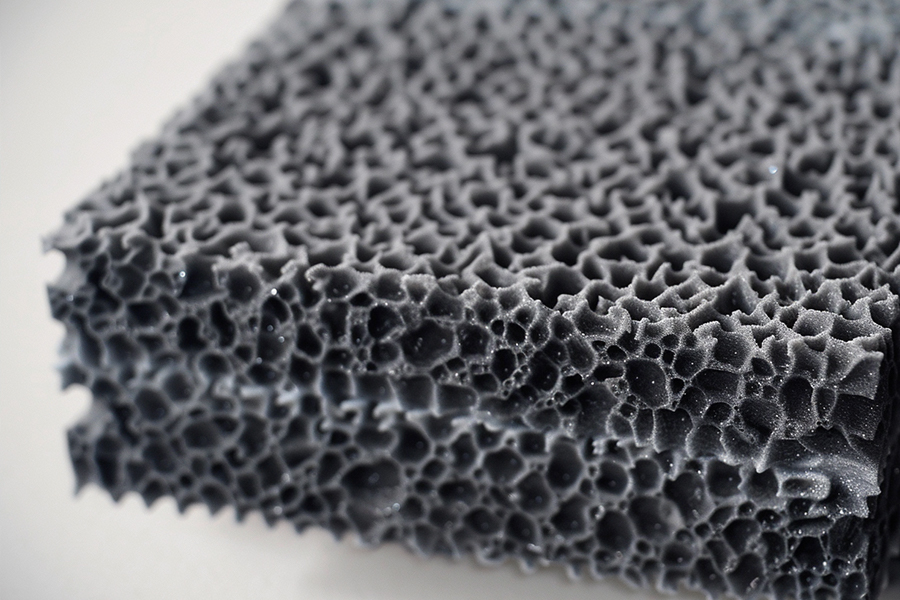
Titanium foam offers a porous and light structure. This makes it a highly suitable option for oxygen removal. Its open-cell nature offers a large surface area. This structure offers good contact between the titanium and the oxygen in the gas. It offers faster reaction rates than the solid or powder structure. The material is also extremely reactive and operates under a variety of conditions. The foam can be incorporated into systems with ease where pressure and flow rates are involved.
Engineers like titanium foam because it is reliable. Its structure is such that oxygen is efficiently removed from it. The working conditions in most industrial environments require prompt and uniform performance. Titanium foam is capable of doing that without any problems.
Mechanism of Oxygen Removal
It is dependent on the spontaneous reactivity of titanium to oxygen. Oxygen molecules, when they reach the surface of the titanium foam, react and form a stable titanium oxide. The process is both rapid and irreversible in most cases. The open nature of the foam provides an equal distribution of the oxygen throughout its entire surface area. This uniform exposure gives a guarantee that the oxidation occurs evenly throughout the material.
Because the oxygen removal is at the surface of the foam, the overall performance remains consistent. Even if there are oxidized areas of the foil, new titanium continues to operate on passing oxygen molecules. The process results in gradual but regulated oxidation, and this extends the lifetime of the titanium foam. The stable process sustains oxygen levels in inert gases at minimal levels.
Applications of Titanium Foam
Application of titanium foam is not limited to one industry. It finds its use in other hi-tech industries:
• In the fabrication of semiconductors, it maintains the level of oxygen contamination under control.
• In metallurgy, it finds application in refining operations where there is a need for high purity of the inert atmosphere.
• In chemical processing, it is necessary to remove oxygen to avoid unwanted reactions that may hinder product quality.
There are other examples as well. For example, in gas cleaning systems used by research centers and laboratories, titanium foam is a neat and effective solution. Its ability to handle varying flow rates of gas makes it a preferred choice in most settings.
Performance Factors
Several factors influence the performance of titanium foam:
• Open cells' porosity is critical. More open cells translate into more surface area of reaction.
• The flow rate of the gas stream dictates the contact time. The balance is crucial in efficient oxygen removal.
• Temperature is now involved. There are temperature conditions that might be required to optimize reaction between oxygen and titanium in certain processes.
Precise field testing data is often employed by industrial applications to make adjustments in these factors. A balanced approach is employed to optimize performance and extend the service life of the titanium foam.
Advantages over Powder or Solid Titanium
Titanium foam possesses several significant advantages over titanium powder or solid forms of titanium.
1. Firstly, it suffers less pressure drop than in powder beds, allowing gases to flow more freely and reliably. This facilitates greater efficiency in systems where steady flow is paramount.
2. Secondly, titanium foam is safer to handle. It will not clump or sinter prematurely when in use or storage, unlike powders.
3. Third, the open-cell structure of titanium foam makes it conducive to even oxidation. The even distribution of oxidation extends the life of the material and keeps it stable over time.
Conclusion
Titanium foam is a very efficient scavenger of oxygen for inert gas streams. It is extremely reactive towards oxygen and has a high porous morphology, which makes it ideal for applications of high purity in industrial and semiconductor processes. Titanium foam ensures consistent performance, lower pressure drop, and improved ease of handling over conventional utilization of powder or solid titanium. In high-tech industries requiring strict regulation of oxygen content, the material is still a viable option. For more metal foams, please check Stanford Advanced Materials (SAM).
Frequently Asked Questions
F: Why are high-purity inert gases needed in semiconductors?
Q: They avoid contamination and ensure that precise, high-quality products are produced.
F: Why is titanium foam better than solid titanium?
Q: It is porous in structure, has a lesser pressure drop, and provides uniform oxidation.
F: How does titanium foam deoxidize gas streams?
Q: Oxygen reacts with titanium to produce a stable oxide on the foam surface.
 Chin Trento