
 Products
 Bars
Bars
 Beads & Spheres
 Bolts & Nuts
 Crucibles
 Discs
Discs
 Fibers & Fabrics
 Films
Films
 Flake
Flake
 Foams
Foams
 Foil
Foil
 Granules
 Honeycombs
 Ink
Ink
 Laminate
 Lumps
Lumps
 Meshes
 Metallised Film
 Plate
Plate
 Powders
 Rod
Rod
 Single Crystals
 Sputtering Target
 Tubes
Tubes
 Washer
 Wires
Wires
 Converters & Calculators
 Write for Us



Precision cBN Powder for Machining Alumina Ceramics with 10 µm Particle Size

Customer Background
A German manufacturing firm involved in advanced ceramics processing recently required a reliable supply of cBN powder for precision cutting and machining of alumina components. The customer's operations focused on the production of high-strength ceramic parts, where slight variations in material properties could lead to significant performance deviations. In order to maintain stringent process control and achieve consistent machining quality, they needed a material that met exact particle size and purity requirements.
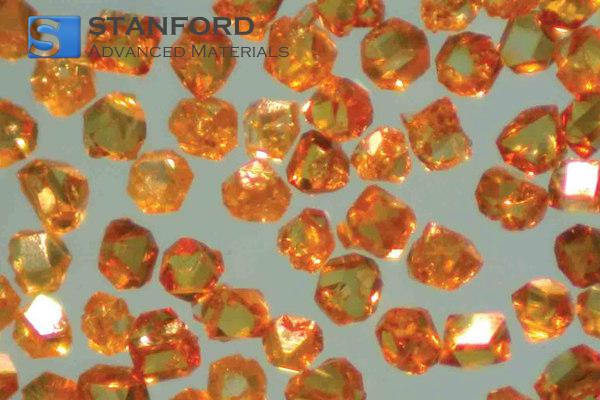
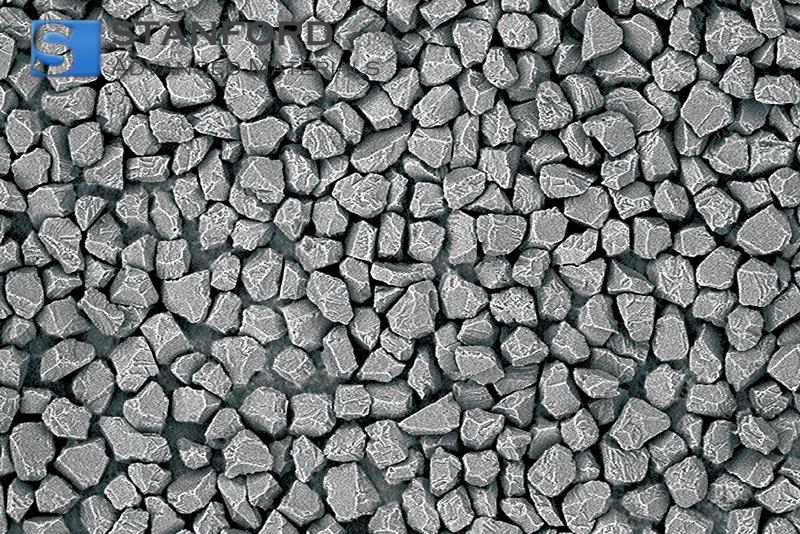
With over 30 years of experience in advanced materials, our team at Stanford Advanced Materials (SAM) was approached to deliver a custom specification: a cubic boron nitride powder with an average particle size near 10 µm and a total quantity of 200 g. Given the firm's commitment to process excellence, it was critical that the cBN powder not only met these dimensional parameters but also maintained excellent physical and chemical stability during machining operations.
Challenge
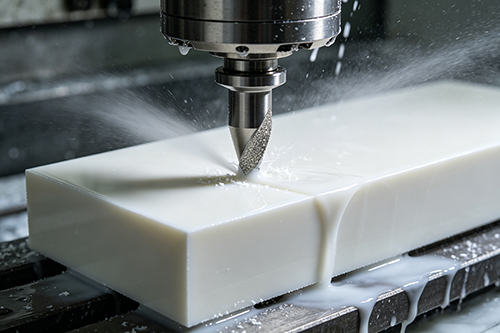
The primary challenge centered around producing a cBN powder that fulfilled several stringent technical criteria under a strict lead time. The customer's process for machining alumina ceramics demanded:
· A narrow particle size distribution centered around ~10 µm to maintain consistency in cutting performance.
· Strict quality control to avoid agglomeration, which had previously led to uneven tool wear and diminished surface finish in the edge areas.
· A batch quantity of 200 g that had to be produced reliably within the scheduled downtime window, minimizing interruption to the machining cycle.
Additionally, integration of this material into an existing precision machining process posed compatibility challenges. The ceramic cutting process is highly sensitive to foreign inclusions or irregularities in particle size, and even minor deviations could compromise surface integrity or lead to additional wear on expensive cutting tools. Ensuring that the powder's characteristics remained consistent during delivery demanded robust packaging and stabilization approaches to preserve its physical properties.
Why They Chose SAM
The customer evaluated multiple suppliers but opted to work with SAM because of our robust experience in handling high-purity materials and our proven ability to customize products to fit extremely specific applications. Our response entailed an in-depth review of their requirements, focusing not only on meeting the average 10 µm particle size spec but also on understanding the operational demands of alumina machining.
Solution Provided
Our engineering team formulated a tailored manufacturing process for producing cubic boron nitride powder that adhered very closely to the customer's specifications. The process was designed with several key technical details:
1. Particle Size Control: We utilized advanced milling and classification techniques to achieve an average particle size of approximately 10 µm, maintaining a narrow distribution band. Detailed in-line particle size analysis ensured that each batch consistently met the criterion.
2. Purity and Stability: The cBN powder produced had a confirmed high purity level, with controlled levels of trace impurities. Our quality control protocols included chemical analysis and X-ray diffraction, ensuring the powder's crystalline structure remained intact for optimum performance.
3. Packaging for Delivery: Recognizing the susceptibility of fine powders to agglomeration, our process included vacuum-sealed, nitrogen-flushed packaging. This protected the powder from moisture and oxidation, which could otherwise compromise its cutting performance during the machining of alumina ceramics.
In addition, we established a production run that accounted for a critical real-world constraint: a limited window for material integration into the customer's machining cycle. Our manufacturing schedule was optimized to deliver the 200 g batch of cBN powder within the required lead time while maintaining the rigorous quality specifications demanded by the process.
Results & Impact
Following the implementation of the custom cBN powder, the customer reported several measurable improvements in their machining process:
· Consistency in Cutting Performance: The narrow particle size distribution ensured uniform material erosion during machining, leading to a consistent cut quality on alumina components. This directly contributed to a reduction in tool wear and lower maintenance interruptions.
· Enhanced Process Stability: With cBN powder of high purity and controlled physical properties, the machining process showed reduced variability in cut precision. This stability allowed for improved predictability in cutting parameters and better control over the overall production process.
· On-Schedule Integration: By meeting the strict delivery timeline, the customer's production run remained on schedule, avoiding costly delays. The robust packaging methods ensured that the powder's performance characteristics were preserved from production to final use.
While adjustments in machining parameters were still necessary to integrate new material properties, the overall process reliability improved markedly. The feedback from the machining team highlighted that the uniformity in particle size led to more predictable tool wear patterns, which in turn supported more efficient scheduling of maintenance and tool replacement.
Key Takeaways
This case underscores the importance of precise material specification when dealing with advanced ceramics machining. Key observations include:
· Custom material specifications, such as narrowly controlled particle size distributions, are critical to maintaining consistency in precision applications like alumina cutting.
· Incorporating real-world constraints such as lead time and compatibility with existing process parameters is essential for minimizing production downtime.
· Transparent communication and technical guidance during the early project stages help in refining product specifications, ultimately benefiting both the supplier and the customer.
Stanford Advanced Materials (SAM) successfully delivered a tailored solution for a complex industrial application by ensuring technical rigor, meticulous quality control, and clear delivery commitments. The experience reinforces the value of working with a supplier that not only meets basic material specifications but also addresses the nuanced demands of high-precision machining processes.
 Dr. Samuel R. Matthews