Products
 Bars
Bars
 Beads & Spheres
 Bolts & Nuts
 Crucibles
 Discs
Discs
 Fibers & Fabrics
 Films
Films
 Flake
Flake
 Foams
Foams
 Foil
Foil
 Granules
 Honeycombs
 Ink
Ink
 Laminate
 Lumps
Lumps
 Meshes
 Metallised Film
 Plate
Plate
 Powders
 Rod
Rod
 Single Crystals
 Sputtering Target
 Tubes
Tubes
 Washer
 Wires
Wires
 Converters & Calculators
 Write for Us



Optimized cBN Powder for Efficient Alumina Ceramic Cutting

Customer Background
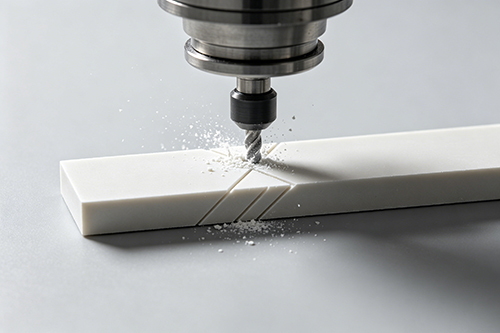
A well-established U.S. university research center, known for its rigorous work on ceramic processing in national laboratory settings, was focused on enhancing their machining techniques for alumina ceramics. Their lab had decades of experience in ceramics testing yet had never faced the challenge of achieving consistent quality in abrasive applications for alumina cutting. The team was familiar with standard cBN grades but required an expert partner to fine-tune powder characteristics for their specific application requirements.
Their internal supply chain managed most materials effectively, though the precise demands of alumina cutting—where grain size uniformity and chemical stability were critical—necessitated collaboration with a materials supplier with deep engineering insight.
Challenge
The primary technical challenge was selecting and tailoring a grade of cubic boron nitride powder that would meet the unique demands of cutting alumina ceramics. The main obstacles included:
1. Material Purity: To achieve consistent cutting performance, the cBN powder needed to sustain a purity level greater than 99.5%. Any impurities could lead to irregular wear patterns on abrasive tools, potentially reducing their lifespan and increasing downtime during processing.
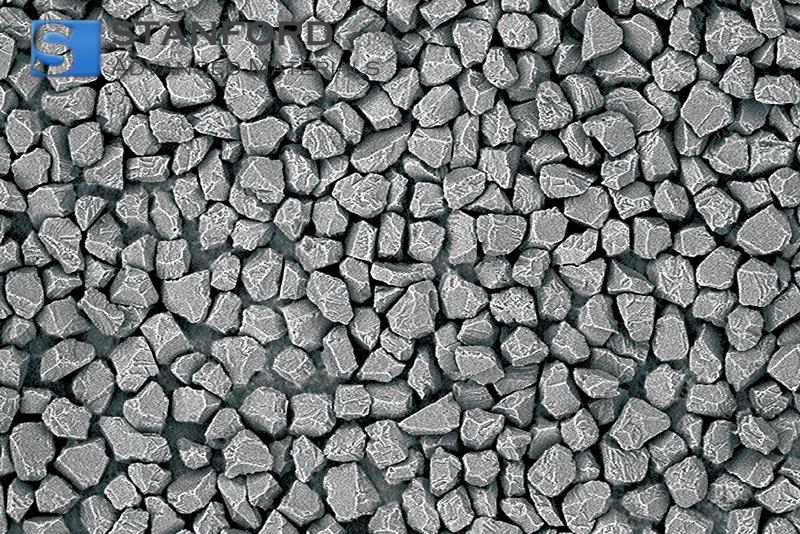
2. Particle Size Uniformity: The effective removal of alumina ceramic material depended greatly on the powder's granulometry. The research team needed a powder with a controlled particle size in the range of 1.5–3 microns, with a narrow distribution tolerance. During early laboratory tests, our engineers noticed small variations in the particle size distribution, which could lead to friction inconsistencies during machining.
3. Compatibility with Equipment: The team's equipment had strict design tolerances to prevent overheating issues. The cBN grain bonding had to be stable enough to ensure consistent performance under high-speed abrasive conditions, avoiding any risk of premature disintegration.
4. Lead Time: Given the experimental schedule of the research project, obtaining the material within a four-week window was non-negotiable. Past material runs had sometimes suffered from delays, which added risk to the complex experiments planned.
Why They Chose SAM
The decision to partner with Stanford Advanced Materials (SAM) was driven by several factors:
· Extensive Expertise: Our team brings over 30 years of engineering insight into advanced materials, handling more than 10,000 different materials and servicing a global customer base. This depth of experience was pivotal in understanding the nuances of the alumina ceramic cutting process.
· Customization Capability: We quickly identified that a tailored cBN powder with a specific purity and particle size distribution was necessary. Our preliminary finite element analysis and trial mixes indicated that minor adjustments in powder bonding could mitigate the instability issues observed in earlier trials.
· Proven Global Supply Chain: The research team appreciated the reliability of our global network and responsiveness. Our established processes ensured that the material could be delivered within the project's four-week timeline without compromising technical specifications.
During initial testing, we observed slight inconsistencies in expected performance when using standard cBN grades. Our collaborative discussions led to an agreement on a custom formulation to optimize the cutting performance on alumina ceramics.
Solution Provided
SAM's solution was multi-faceted, involving a series of technical refinements and quality control measures designed to address all identified challenges:
1. Custom Formulation Process: We began by adjusting the cBN powder formulation to achieve a minimum purity of 99.5%. The bonding matrix was carefully controlled to ensure that the abrasive grains remained intact under the constant high-speed friction typical in alumina cutting applications. Our production process involved high-precision mixing techniques, which included in-line purity measurements ensuring less than 0.5% variance in chemical composition.
2. Controlled Particle Size Distribution: The cBN powder was refined to achieve a narrow particle size distribution with a targeted range of 1.5–3 microns. Advanced milling and sieving techniques were employed, and the powder was screened using laser diffraction particle size analyzers. Occasional outlier particles exceeding ±0.2 microns of the target range were removed via a secondary sorting process. During initial runs, we noted that slight adjustments were necessary in the milling duration to optimize the granulometry.
3. Enhanced Stability for Machining: To address the compatibility issues with the cutting equipment, we targeted the grain bonding strength. A mild thermal treatment process was applied to slightly anneal the abrasive particles, boosting their inter-particle cohesion. This step was essential to ensure that the particles would not disintegrate during high-pressure machining, where tool temperature often rises. Detailed thermal profile measurements ensured that the treatment kept the bonding properties within the desired performance envelope.
4. Rigorous Quality Control and Packaging: Each batch was subjected to comprehensive quality control protocols. In-line optical microscopy confirmed the particle size uniformity, and our precision balances verified purity levels. In addition, the powder was packaged in nitrogen-flushed containers to protect against moisture-induced degradation—a critical consideration given alumina's abrasive nature. The strict packaging requirements contributed to the overall stability and reliability of the material during transport and storage.
5. Timely Delivery: Given the project's tight schedule, our logistics team coordinated internationally to ensure that every process aspect—from synthesis to final packaging—met the four-week delivery requirement. This careful synchronizing of production schedules was crucial to avoid any potential disruptions in the laboratory's testing timeline.
Results & Impact
After integrating the custom cBN powder into their alumina cutting trials, the university research team observed significant improvements in their process reliability and machining efficiency. Key outcomes included:
· Enhanced Abrasive Consistency: The tailored cBN powder provided a uniform cutting profile, which resulted in smoother processing of alumina ceramics. The improved particle size distribution directly translated to more predictable tool wear and extended the operational life of their cutting instruments.
· Improved Thermal Stability: The annealing process imparted increased cohesion among the grains, minimizing disintegration even under high-speed conditions. This stability was crucial during extended cutting sessions, where thermal stresses frequently lead to performance degradation.
· Alignment with Project Timelines: By meeting the strict four-week lead time, SAM enabled the research team to advance their experimental schedule without delays. The reliability of the custom material allowed their equipment to perform optimally, reducing downtime and experimental recalibrations.
During a follow-up session, the lab's lead engineer noted that "the targeted particle size really made a difference when evaluating machining efficiency. Though the change was incremental, over several runs it reduced tool chatter noticeably."
Key Takeaways
This project reaffirmed that precise material adjustments can be the key to enhancing specific industrial processes. Even minor refinements in purity and particle size can have a profound impact on machining performance. At Stanford Advanced Materials (SAM), our 30+ years of engineering expertise allowed us to tailor a cBN powder that not only met rigorous technical specifications but also delivered under tight schedules.
Ultimately, the careful integration of stringent quality controls—such as in-line purity checks, refined particle sizing, and enhanced bonding stability—ensured that the adjusted cBN grade was fully optimized for cutting alumina ceramics. Our process underscores the importance of close collaboration with technical teams and the value of precision in advanced material solutions.
Our experience with this application serves as a reminder that even well-established processes can benefit from detailed engineering oversight. The final material performance provided a robust solution, effectively supporting the research team's goal of achieving more consistent and reliable machining outcomes.
 Dr. Samuel R. Matthews