Products
 Bars
Bars
 Beads & Spheres
 Bolts & Nuts
 Crucibles
 Discs
Discs
 Fibers & Fabrics
 Films
Films
 Flake
Flake
 Foams
Foams
 Foil
Foil
 Granules
 Honeycombs
 Ink
Ink
 Laminate
 Lumps
Lumps
 Meshes
 Metallised Film
 Plate
Plate
 Powders
 Rod
Rod
 Single Crystals
 Sputtering Target
 Tubes
Tubes
 Washer
 Wires
Wires
 Converters & Calculators
 Write for Us



Custom Engineered MgO Single Crystal Substrate: High-Temperature Resistance for Industrial Furnace Applications

Customer Background
A prominent manufacturer in the United States specializing in high-temperature industrial furnaces and foundry equipment required a more reliable refractory lining material. Their operational processes involved continuous high-temperature cycles where even subtle material inconsistencies could lead to early wear, decreased furnace efficiency, or unexpected maintenance shutdowns. Traditionally, they had relied on conventional refractory materials such as zirconia-based components, which ultimately proved insufficient under their extreme operating conditions. Additionally, alternatives like beryllium oxide were dismissed due to toxicity concerns. Faced with these challenges, the customer engaged with Stanford Advanced Materials (SAM) to explore a customized solution that could meet both their technical and safety requirements.
Challenge
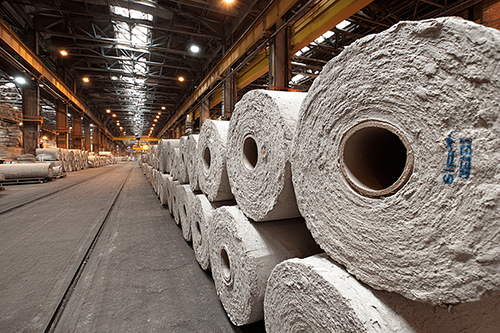
The customer's operational environment demanded refractory lining materials capable of withstanding extreme temperatures while maintaining structural integrity, thermal stability, and consistent performance over extended periods. Key challenges included:
· The inherent limitations of zirconia, which could not consistently meet the necessary high-temperature performance criteria.
· Health and safety concerns associated with BeO, whose toxicity rendered it unsuitable for prolonged industrial use.
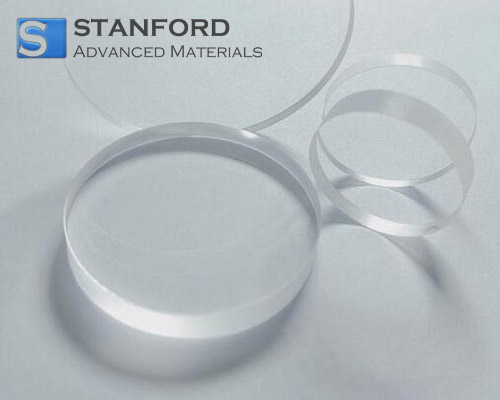
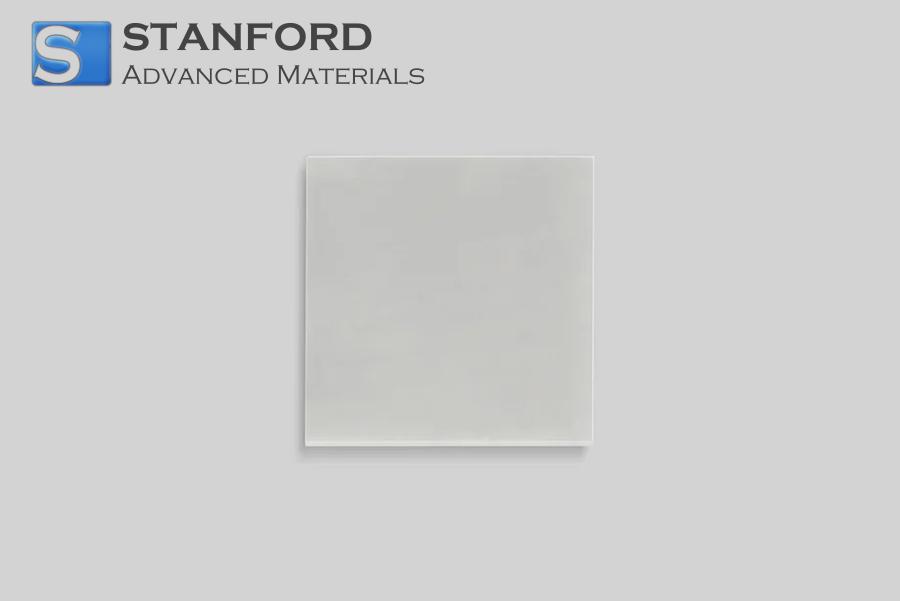
· The need for material forms, such as flat sheets and toroid-shaped components, engineered to extremely precise specifications.
· Tolerance against thermal shock and rapid temperature fluctuations, which traditionally led to micro-cracking and unpredictable material behavior.
· The requirement to deliver a product within a tight lead time, given scheduled maintenance cycles and operational downtimes that could not accommodate extended delays.
In essence, the customer was faced with the risk of decreased operational efficiency and potential production losses if a suitably robust material was not available.
Why They Chose SAM
The customer's decision to work with Stanford Advanced Materials (SAM) was influenced by our 30+ years of technical expertise in advanced materials engineering, our global supply chain reach, and our proven track record in customization. Early interactions were marked by technical discussions where our team probed deep into the specific operational constraints and design requirements. We raised questions regarding:
· The expected maximum operating temperature and acceptable thermal gradients.
· The dimensional tolerances needed for both flat sheets and toroid configurations.
· The potential impact of slight variations in material composition on the lining's long-term durability.
Our ability to provide immediate, technically grounded feedback and custom-tailored options distinguished us in a market crowded with more generic suppliers. The customer appreciated our willingness to adjust parameters such as purity levels and bonding techniques, enabling them to pursue a design that directly addressed their operational inefficiencies and safety concerns.
Solution Provided
Drawing on our extensive experience in supplying high-performance ceramic materials, our team developed a custom Magnesium Oxide (MgO) single crystal substrate specifically for high-temperature refractory lining applications. Key technical aspects of the solution included:
· Material Purity: We ensured the MgO substrate was manufactured with a purity level exceeding 99.99%. The high purity not only enhanced the material's intrinsic thermal stability but also minimized the presence of impurities that could lead to premature degradation.
· Precise Dimensional Tolerances: For the flat sheet configurations, we maintained a dimensional tolerance of ±0.05 mm. For the toroid shapes, which needed to integrate seamlessly with the existing furnace design, we adhered to strict tolerances to within 0.1 mm, guaranteeing a secure fit even under extreme thermal cycling.
· Thermal and Mechanical Performance: Our processing methods were fine-tuned to optimize the crystal structure of the MgO substrate. This adjustment improved resistance to thermal shock and mechanical stresses—key requirements for continuous high-temperature exposure.
· Custom Geometry and Bonding Solutions: Recognizing that different parts of the furnace might experience varying degrees of heat and mechanical stress, we provided the option for both monolithic sheets and toroid shapes. In scenarios requiring enhanced heat transfer, our team designed bonding interfaces that were capable of withstanding repeated thermal cycling without delamination.
· Packaging and Handling: To preserve the tailored, high-purity characteristics of the substrate, each component was vacuum-sealed and shock-protected during shipment. This measure ensured that the crystalline quality and precise dimensions were maintained until installation.
Throughout the process, our engineers coordinated closely with the customer's technical team to refine the substrate design. We performed several in-house tests to validate that the custom MgO substrates met the necessary thermal and mechanical benchmarks dictated by the customer's specific furnace applications.
Results & Impact
After the implementation of our custom-engineered MgO substrates, the customer reported a notable improvement in furnace performance and efficiency. Operating at temperatures where conventional materials had previously shown signs of strain, the MgO lining provided a consistent barrier that reduced heat loss and minimized thermal fluctuations. Concrete performance observations included:
· Enhanced durability against thermal shock, leading to a reduction in micro-crack formation. This stability allowed the furnace to operate continuously without the frequent maintenance stops that had been necessary before.
· Improved dimensional integrity ensured that installation was straightforward, reducing downtime during refurbishments. The precise tolerances maintained in both flat and toroid components contributed to a more secure and effective refractory lining.
· A significant decrease in maintenance interventions, with the overall system demonstrating more predictable behavior under prolonged high-temperature exposure. This consistency allowed the customer to better plan and schedule routine service and preventive maintenance.
These improvements translated directly into operational benefits—greater production uptime and reduced risks associated with unexpected material failure. The enhanced performance of the refractory lining also provided the customer with a higher degree of confidence in the longevity and safety of their high-temperature systems.
Key Takeaways
This case underscores the critical importance of materials engineering precision in industrial furnace applications. When conventional materials like zirconia and BeO fall short—either due to insufficient performance or problematic toxicity—custom solutions become essential. Specific lessons include:
· The necessity of achieving extremely high material purity (above 99.99% in this case) to ensure thermal and mechanical stability in ultra-high-temperature environments.
· The impact that precise dimensional tolerances (within ±0.05–0.1 mm) can have on overall system performance, especially when dealing with both flat and toroid geometries.
· The value of tailored bonding interfaces and packaging protocols to maintain material integrity from production through installation.
By addressing each of these considerations, our team at SAM provided a measurable improvement in performance that not only met the customer's stringent requirements but also supported their broader operational goals. The collaborative approach—combining deep technical expertise with a commitment to flexibility—proved essential for evolving a solution that guarded against operational downtime and enhanced overall system resilience.
 Dr. Samuel R. Matthews