
 Products
 Bars
Bars
 Beads & Spheres
 Bolts & Nuts
 Crucibles
 Discs
Discs
 Fibers & Fabrics
 Films
Films
 Flake
Flake
 Foams
Foams
 Foil
Foil
 Granules
 Honeycombs
 Ink
Ink
 Laminate
 Lumps
Lumps
 Meshes
 Metallised Film
 Plate
Plate
 Powders
 Rod
Rod
 Single Crystals
 Sputtering Target
 Tubes
Tubes
 Washer
 Wires
Wires
 Converters & Calculators
 Write for Us



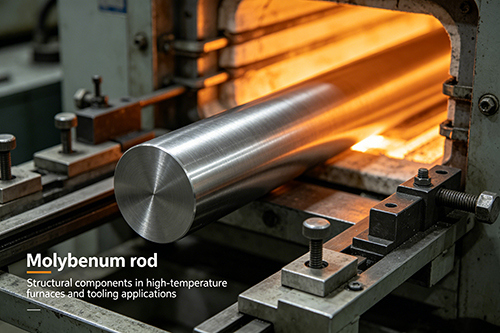
Molybdenum Rod for High-Temperature Furnace Components: Achieving Precise Tolerance and Reliability

Customer Background
A prominent manufacturer specializing in industrial furnaces required critical structural support components capable of withstanding extreme temperatures during prolonged high-temperature operations. The customer operated several production lines where furnace performance depended heavily on the stability and consistency of internal structural elements. With a history of using standard technology, their growing emphasis on high-temperature reliability and minimized downtime led them to seek a more refined approach.
The customer's operations involved a complex environment where components were exposed to thermal cycling and mechanical stress. They needed a material that not only maintained its strength at elevated temperatures but also ensured reliable, repeatable performance under the demanding conditions of industrial heat treatment and tooling applications.
Challenge
Producing components for high-temperature furnaces required addressing several interrelated challenges. The core issues included:
· The need for a material that could maintain mechanical integrity at temperatures surpassing 1500°C.
· Ensuring that dimensional tolerances were met to guarantee proper assembly and alignment within the furnace structure. The design specified a tolerance of ±0.05 mm on key rod dimensions.
· Maintaining a high purity level—above 99.95% molybdenum—to avoid contamination that could lead to localised weakness or accelerated degradation.
· Meeting a stringent lead time due to a tight production schedule, where any delay or deviation in material properties might disrupt furnace uptime.
Earlier attempts using off-the-shelf products resulted in unsatisfactory performance. Variability in purity levels and geometric consistency led to mismatched expansions and stress concentrations, ultimately causing premature wear of supporting structures. The customer faced recurring issues with thermal expansion mismatches and bonding inconsistencies between components.
Why They Chose SAM
After evaluating several suppliers, the customer chose Stanford Advanced Materials (SAM) for several key reasons:
1. Our team demonstrated a deep understanding of the critical role material properties play in high-temperature applications. We offered a clear plan to address both material purity and dimensional control.
2. SAM provided detailed feedback on the design specification, recommending adjustments in the machining process and bonding options to ensure long-term stability under thermal stress.
3. Flexibility in production scheduling was crucial. We had the capacity to adhere to a compressed timeline while ensuring rigorous quality control that minimized the risk of dimensional drift and purity fluctuations.
This engagement came at a time when the customer required not only a material supply but also engineering insight to overcome existing performance limitations. Our willingness to collaborate closely on both design details and post-production testing assured that SAM was the right partner for this specialized application.
Solution Provided
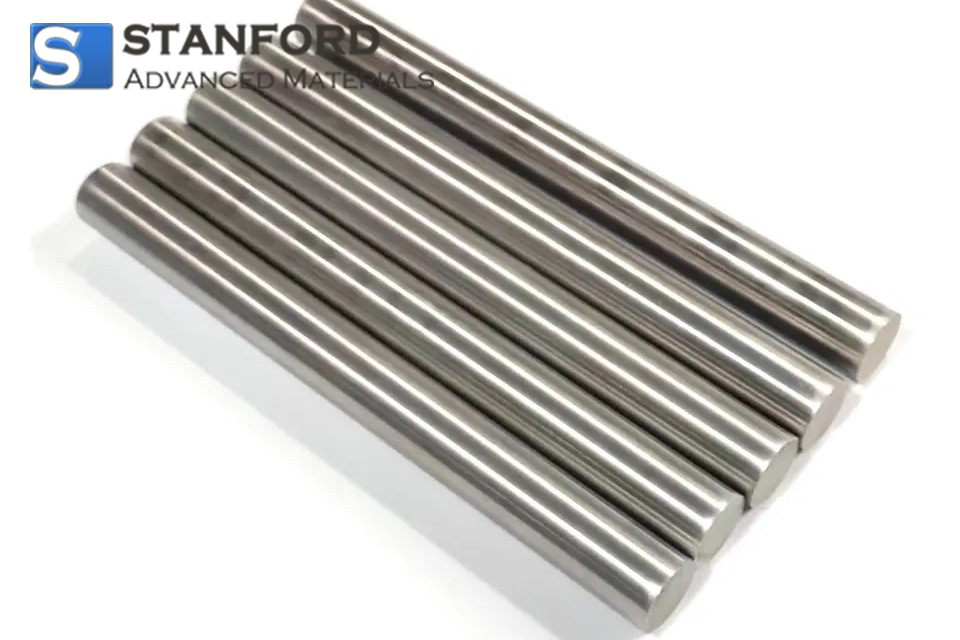
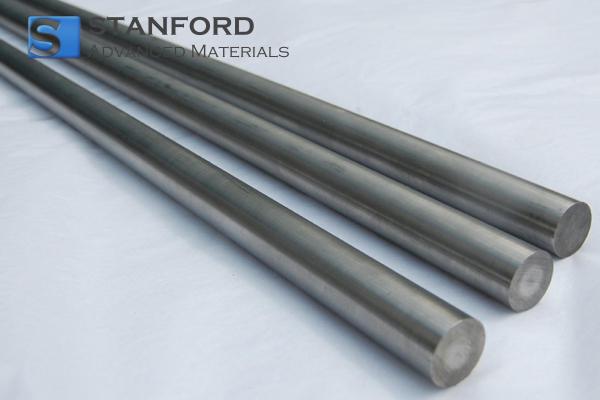
SAM supplied a customized molybdenum rod solution refined for high-temperature furnace structural components. Key features of our approach included:
· Material Specification: We procured molybdenum with a purity level of 99.97%, ensuring a consistent composition across different production batches. This selection minimized the impact of unintentional impurities that could lead to early failures at high heat.
· Precise Machining: The rods were machined to precise dimensions with a tolerance of ±0.05 mm on critical diameters, ensuring proper fit within the furnace assembly. The tight dimensional control was essential for managing thermal expansion and minimizing stress points in the structure.
· Enhanced Bonding and Packaging: Recognizing the risks associated with thermal cycling, we added an engineered surface treatment and robust bonding layer that enhanced resistance to spalling and surface degradation. Each rod was then vacuum-sealed in a controlled environment to prevent oxidation, a critical factor given molybdenum's reactivity at high temperatures.
· Dimensional Design Review: Our engineering team worked with the customer's design drawings to optimize rod geometry, focusing on both length and cross-sectional uniformity. Adjustments were made to reduce the occurrence of thermal gradients that had plagued previous iterations.
Handling the scheduling constraint was a primary focus. Our production process was fine-tuned to meet a strict 4-week lead time, accommodating the production batch consistency without compromising quality. We conducted real-time quality inspections and cross-verified dimensional tolerances using laser-based metrology, ensuring that the final product performed as designed under operational conditions.
Results & Impact
The adoption of the customized molybdenum rod solution led to significant improvements in the operational performance of the customer's high-temperature furnaces:
· Consistency in performance was markedly enhanced. The stable material properties, combined with superior dimensional tolerances, resulted in a reduction of thermal-induced deformations.
· Component bonding integrity increased, yielding fewer instances of fatigue and reducing the maintenance downtime commonly associated with structural misalignment or degradation.
· The minimized variability in rod dimensions led to more uniform thermal expansion characteristics across the furnace structure, enhancing reliability and overall production efficiency.
· The strict adherence to the 4-week lead time was met reliably, allowing the customer to integrate the new components within their scheduled production downtime, thereby avoiding costly delays.
These improvements enabled the customer to perform high-temperature operations with greater confidence in the material's endurance and mechanical stability. Although additional adjustments in the furnace assembly process were still explored to further optimize performance, the material-driven inconsistencies were largely mitigated.
Key Takeaways
Working with specialty materials for high-temperature structural applications demands meticulous attention to both material properties and manufacturing precision. In this case, the focus on achieving over 99.97% molybdenum purity, strict dimensional tolerances, and robust bonding was crucial. These factors contributed to improved structural integrity and reduced maintenance concerns under extreme operating conditions.
Ultimately, the collaboration with Stanford Advanced Materials (SAM) underscored the importance of engaging with a supplier capable of both addressing the fundamental material challenges and providing detailed engineering support. The experience reinforces that in high-temperature industrial environments, each component's precise specifications directly impact overall operational performance, highlighting the need for closely aligned design and execution from material selection to final deployment.
 Dr. Samuel R. Matthews