Products
 Bars
Bars
 Beads & Spheres
 Bolts & Nuts
 Crucibles
 Discs
Discs
 Fibers & Fabrics
 Films
Films
 Flake
Flake
 Foams
Foams
 Foil
Foil
 Granules
 Honeycombs
 Ink
Ink
 Laminate
 Lumps
Lumps
 Meshes
 Metallised Film
 Plate
Plate
 Powders
 Rod
Rod
 Single Crystals
 Sputtering Target
 Tubes
Tubes
 Washer
 Wires
Wires
 Converters & Calculators
 Write for Us



High-Purity TiO2 Pigment with 99.8% Purity Enhances Coatings for Textile and Plastic Applications

Customer Background
A prominent manufacturing business specializing in coatings for textiles and plastics required a stable, white pigment to maintain color consistency across a broad range of applications. The customer, operating in a region with rapidly expanding textile exports, had an established supply base for bulk chemical intermediates and pigments. However, they recently faced issues in maintaining coating quality and adhesion due to variability in pigment performance. Their technical team had collaborated with multiple vendors previously, yet inconsistencies in pigment purity and particle size off-spec had been repeatedly documented.

Challenge
The client's manufacturing process demanded a titanium dioxide (TiO2) pigment that not only provided excellent white opacity but could also be integrated into diverse formulations without compromising film uniformity or adhesion. Key technical requirements included:
- A minimum purity of 99.8% to ensure minimal interference in color and performance.
- A primary particle size distribution of 200-300 nm with a tolerance of ±15 nm, ensuring uniform dispersion in polymer matrices.
- Consistent surface treatment to promote compatibility with resin binders during high-temperature processing.
Additionally, the production schedule was constrained by a strict lead time: delays in pigment delivery would cause significant downtime, affecting overall throughput in their high-volume textile coating operations. The customer had also encountered challenges with pigment instability under high-shear mixing conditions in prior production runs, leading to coagulation and suboptimal dispersion.
Why They Chose SAM
When the customer reached out to address these issues, Stanford Advanced Materials (SAM) demonstrated an in-depth understanding of the technical nuances required for pigment applications in both coatings and plastics. Our team provided the following reassurances:
- We offered detailed discussions on particle size distribution and its influence on viscosity and film formation.
- SAM's experts reassessed the surface treatment of TiO2 particles, ensuring better affinity with polymer resins and reducing the risk of coagulation under processing stresses.
- With a global logistics network and over 30 years of expertise, SAM effectively conveyed our capability to meet strict lead time requirements, even under bulk quantity constraints.
Our technical insights and flexibility in customizing the TiO2 formulation allowed the customer to confidently shift from previous vendors to a supplier who clearly understood the demands of their production environment.
Solution Provided
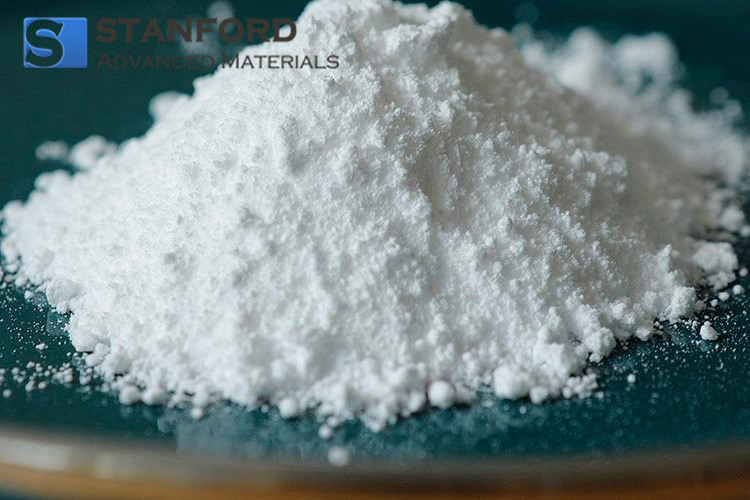
SAM responded by delivering a bulk batch of pigment-grade titanium dioxide tailored specifically to the customer's requirements. The key technical adjustments included:
- Utilizing a TiO2 feedstock with a confirmed purity of 99.8%, verified through detailed spectral analysis to meet optical clarity and whiteness standards.
- Adjusting the milling process to achieve a narrow particle size distribution with an average diameter of 250 nm and a tolerance of ±15 nm. This ensured consistent dispersion in resin systems, which is critical for both coating uniformity and textile application durability.
- Applying a specialized surface treatment that enhanced compatibility with a variety of polymer matrices. This treatment improved the adhesion properties in both coating applications and plastic compounding, reducing the risk of pigment flocculation during processing.
To address the production schedule constraints, our team implemented a robust quality assurance program, which included:
- Pre-production testing to simulate high-shear conditions in the customer's mixing systems.
- Customized packaging solutions—vacuum-sealed, moisture-controlled containers—to maintain pigment stability from our facility to the customer's plant.
- A commitment to a shortened lead time by prioritizing production and closely monitoring shipment logistics, ensuring on-time delivery even during periods of peak demand.
Results & Impact
The tailored TiO2 pigment delivered by SAM resulted in several measurable improvements:
- The enhanced purity and controlled particle size led to a reduction in color variability and improved whiteness, which translated to consistent appearance in the final coating and plastic products.
- The optimized surface treatment enabled better resin adhesion, reducing defects during high-temperature processing and improving overall film integrity.
- The manufacturing plant reported a reduction in production downtime, as the reliable supply and predictable performance of the pigment helped streamline quality control processes.
- The compatibility of the new pigment with the customer's extant coating systems minimized the need for additional process modifications, thereby cutting down on the implementation timeline and saving costs.
Overall, the outcome led to increased customer confidence in their production quality, helping to secure long-term supply agreements with their downstream clients in both textile and plastic industries.
Key Takeaways
This case highlights several important considerations when selecting a pigment for industrial applications:
- Maintaining rigorous control over material specifications, such as purity and particle size, is critical to ensure consistency in coating performance.
- Customizing surface treatments can dramatically improve the integration of pigments with polymer matrices, reducing processing complications such as agglomeration.
- A responsive supply chain capable of meeting tight delivery windows is as crucial as the material properties themselves. With our established logistics and quality control systems, we effectively mitigated lead time risks.
- Engaging with a supplier who understands the detailed engineering and processing challenges in pigment applications can result in substantial operational improvements.
The approach taken by Stanford Advanced Materials (SAM) underscores the value of technical expertise and tailored material solutions in meeting the precise demands of industrial applications without compromising production schedules.
 Dr. Samuel R. Matthews