
 Products
 Bars
Bars
 Beads & Spheres
 Bolts & Nuts
 Crucibles
 Discs
Discs
 Fibers & Fabrics
 Films
Films
 Flake
Flake
 Foams
Foams
 Foil
Foil
 Granules
 Honeycombs
 Ink
Ink
 Laminate
 Lumps
Lumps
 Meshes
 Metallised Film
 Plate
Plate
 Powders
 Rod
Rod
 Single Crystals
 Sputtering Target
 Tubes
Tubes
 Washer
 Wires
Wires
 Converters & Calculators
 Write for Us



3-Week Lead Time Met: Chromium Sputtering Target with 99.98% Purity Delivers Consistent Corrosion Resistance

Customer Background
A well-established surface engineering firm, based in Europe, was seeking to improve the deposition process for protective and decorative chromium coatings. The company specialized in both industrial and consumer products, where consistent corrosion resistance was essential. Their existing processes relied on standard sputtering targets that, although widely available, did not always deliver the uniform performance needed for their demanding applications.
They reached out with a detailed request for a chromium sputtering target that would address issues such as material uniformity, efficient heat dissipation, and long-term stability under repeated cycling. The customer provided engineering drawings and specifications, including a requirement for a high-purity chromium base and stringent dimensional tolerances to ensure seamless integration into their existing deposition equipment.
Challenge
The primary challenge was to develop a sputtering target that met multiple, specific criteria:
- Chromium purity had to be maintained at or above 99.98% to minimize impurities that could affect coating durability.
- The target required controlled dimensions, with a machining tolerance within ±0.05 mm, ensuring a uniform target surface for consistent deposition.
- The backing layer design needed optimization to enhance heat dissipation during sputtering, reducing thermal instability over prolonged use.
- Timing was critical: the customer's production schedule was tightly knit, necessitating that the custom target be delivered within a 3-week lead time to prevent disruptions in their coating process.
The customer's previous suppliers had struggled to balance these technical demands with practical constraints. For instance, slight deviations in target flatness had previously resulted in uneven deposition rates and eventual coating failures on high-contact surfaces. Additionally, the absence of a robust bonding solution for the target's backing material led to thermal-related distresses during operation.
Why They Chose Stanford Advanced Materials (SAM)
The customer's decision to work with Stanford Advanced Materials (SAM) was based on our extensive industry experience and our demonstrated ability to produce custom materials solutions. From the start, our team engaged in detailed technical discussions, reviewing the supplied documentation and providing targeted feedback on:
- The importance of consistent material grain structure to stabilize sputtering performance.
- Careful consideration of the backing configuration to counteract thermal expansion stresses.
- Potential machining techniques that could maintain the strict ±0.05 mm tolerance across the entire target surface.
This early collaboration built confidence in our capability, especially as we had successfully delivered similar custom solutions for protective coatings in the past. Our willingness to address both material and engineering concerns ensured that the target was optimized for the customer's specific operational environment.
Solution Provided
Our team responded by developing a tailored chromium sputtering target solution. Key elements of the solution included:
1. Material Specification:
We sourced high-grade chromium with a purity level of 99.98%, verified through rigorous spectral and chemical analysis. This ensured that the sputtering target possessed the necessary properties to yield uniform, corrosion-resistant coatings.
2. Precision Machining:
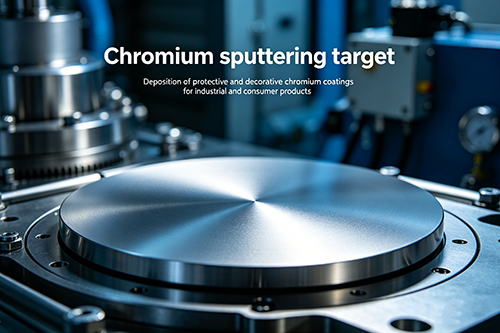
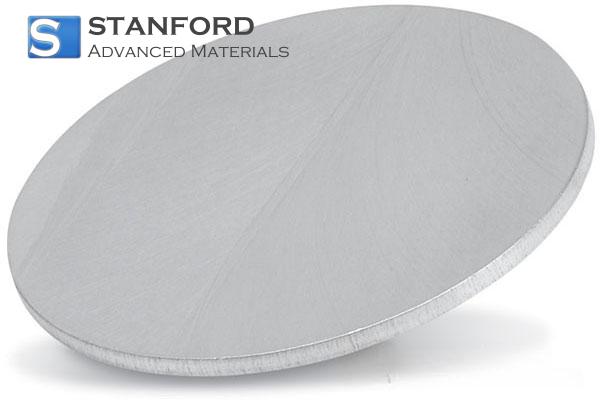
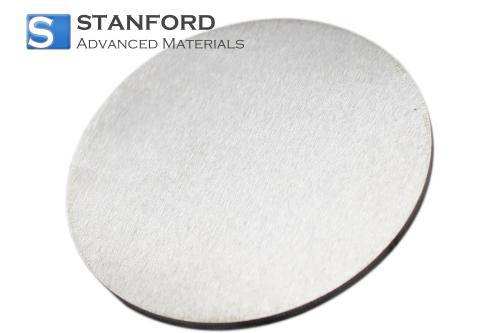
The target was manufactured to meet tight tolerances. We ensured that the final product's dimensions (a diameter of 150 mm with a thickness of 12 mm) maintained a strict tolerance of ±0.05 mm. Such precision was critical for consistent plasma targeting during the sputtering process.
3. Backing Layer Optimization:
To manage the thermal loads, we engineered a copper-backed configuration. The bonding interface was treated with a specialized coupling agent that enhanced thermal conductivity while minimizing the risk of delamination under cyclic heating conditions. This approach provided a predictable thermal profile during operation, supporting a stable deposition rate.
4. Packaging and Delivery:
Understanding the sensitivity of the deposition process, each target was vacuum-sealed immediately after machining to prevent surface oxidation. Careful packaging prevented edge damage, ensuring that all dimensional and material specifications remained intact until installation. Meeting the customer's 3-week lead time was a critical constraint, and our supply chain management ensured on-time delivery without compromise.
Results & Impact
The customized chromium sputtering target delivered tangible improvements in the customer's coating process. Key performance impacts included:
· Enhanced Deposition Uniformity:
The high-purity chromium and consistent target flatness resulted in significantly reduced variations in coating thickness. This consistency meant that both protective and decorative layers adhered reliably, minimizing product rejections due to coating defects.
· Improved Thermal Management:
The optimized copper-backed design effectively dissipated heat during prolonged sputtering cycles. This stability translated into fewer thermal-induced degradations in the deposition profile, contributing to longer operational times between maintenance intervals.
· Streamlined Production Schedules:
Despite tight deadlines, the final product met the 3-week lead time. This punctual delivery helped the customer maintain its production timeline, thereby preventing costly downtime and ensuring that their customer commitments were met.
The overall effect was a more predictable and reliable coating process. Process engineers were able to fine-tune deposition parameters without repeatedly compensating for material-related inconsistencies, allowing them to focus on further process optimizations.
Key Takeaways
In producing high-quality chromium sputtering targets, meeting tight material specifications and machining tolerances is a critical component to achieving reliable deposition performance. Some of the insights gleaned through this collaboration include:
· The importance of working closely with material suppliers to iron out both material and engineering challenges before production.
· Addressing thermal management through proper backing design can significantly increase target stability during sputtering, especially under high-temperature operations.
· Precision in machining and packaging can reduce variability in coating performance, ultimately securing a more reliable end product.
· Effectively managing lead times is integral, as the balance between high-quality production and schedule adherence is key to maintaining critical manufacturing cycles.
Our experience with this customer reinforces the value of detailed upfront technical dialogue, enabling us to tailor our production process to the specific technical and operational constraints faced by our clients. This approach not only resulted in a tailored chromium sputtering target that met all performance criteria but also ensured continued confidence in our commitment to delivering customized, reliable solutions.
 Dr. Samuel R. Matthews