Products
 Bars
Bars
 Beads & Spheres
 Bolts & Nuts
 Crucibles
 Discs
Discs
 Fibers & Fabrics
 Films
Films
 Flake
Flake
 Foams
Foams
 Foil
Foil
 Granules
 Honeycombs
 Ink
Ink
 Laminate
 Lumps
Lumps
 Meshes
 Metallised Film
 Plate
Plate
 Powders
 Rod
Rod
 Single Crystals
 Sputtering Target
 Tubes
Tubes
 Washer
 Wires
Wires
 Converters & Calculators
 Write for Us



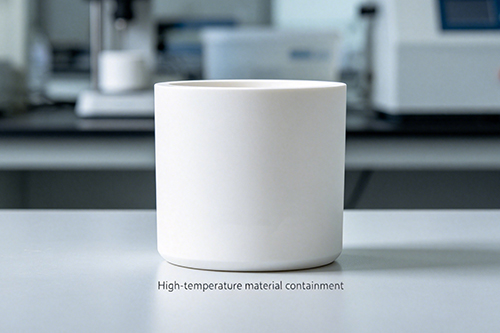
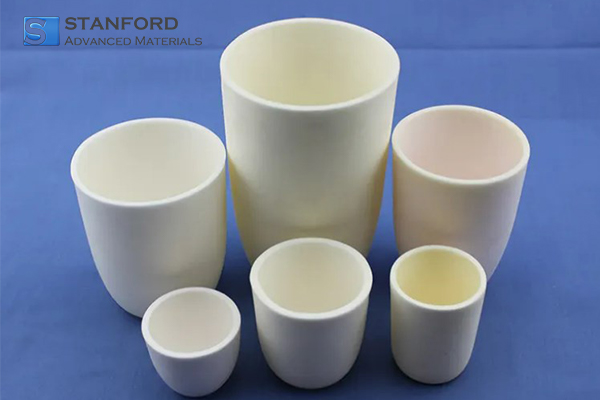
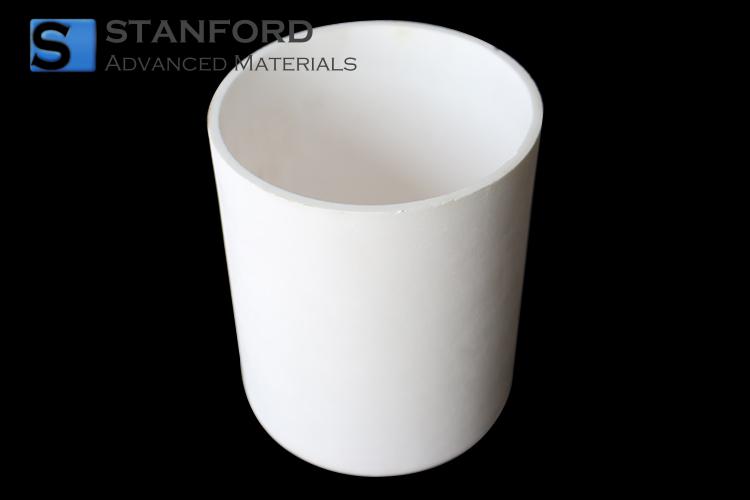
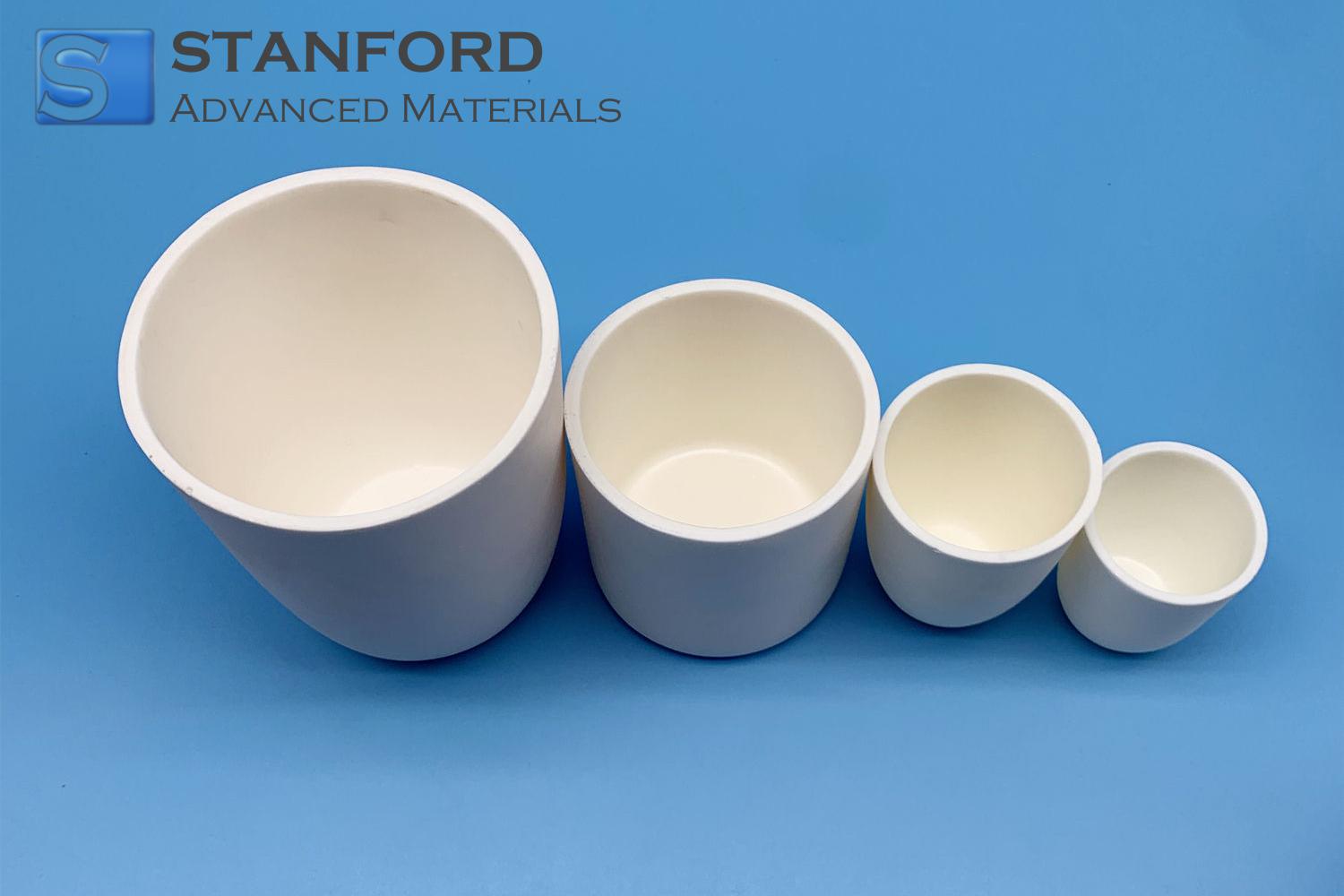
Customized Alumina Crucible with 99.99% Purity and 5 mm Wall Tolerance for High-Temperature Laboratory Containment

Customer Background
A prominent research institute in the Czech Republic, known for its rigorous high-temperature materials testing, required a dependable containment system for experiments conducted under extreme conditions. Their focus on materials characterization and thermal stability meant that every detail — from purity to precise dimensions — was critical in their experimental setups. The team had previously encountered issues with crucibles sourced from other suppliers, where slight inconsistencies led to unreliable testing outcomes. They sought to upgrade their toolset with a customized alumina crucible that could provide steady, repeatable performance during their high-temperature trials.
The research group approached us with detailed technical specifications, including the need for a lab-grade alumina crucible capable of withstanding temperatures above 1700°C while ensuring low contamination levels for sensitive material analysis. The challenge was evident: a container that not only provided structural integrity but also maintained consistency in thermal behavior and minimized any risk of material interaction that might affect experimental outcomes.
Challenge
The primary challenge lay in manufacturing a lab-grade alumina crucible that met several stringent criteria simultaneously:
- Alumina material was required to have at least 99.99% purity, ensuring that contaminants, even at trace levels, would not interfere with high-temperature experiments.
- The crucible's wall thickness needed to be maintained within a 5 mm tolerance. This strict control was essential to manage heat gradients effectively and avoid any thermal shock or cracking during operation.
- The crucible's geometry had to support uniform temperature distribution, a factor critical for reducing experimental variability in materials testing.
A significant constraint imposed by the research team was the tight lead time. They planned a series of high-temperature experiments scheduled within a three-week window, making any production delays or quality inconsistencies intolerable. Previous supplier engagements had resulted in longer delivery cycles and lower precision, causing undue delays and impacting the accuracy of test results.
Additionally, the apparatus needed to interface seamlessly with their existing laboratory setup. Any deviation from the specified dimensions could disrupt the calibration of their testing systems, leading to potential measurement errors and compromised data integrity.
Why They Chose SAM
The research team selected Stanford Advanced Materials (SAM) after evaluating multiple suppliers. Our team's attention to engineering details and proactive discussion of technical constraints set us apart from the competition. During initial consultations, we:
- Conducted a thorough review of the provided design specifications, raising pertinent questions on thermal expansion behavior and potential hotspots during high-temperature cycles.
- - Offered detailed insights regarding the alumina grain structure and its effect on mechanical endurance and thermal shock resistance.
- - Discussed the importance of precise wall thickness, ensuring the alumina crucible would perform uniformly even under rapid temperature ramps.
Our comprehensive feedback and willingness to accommodate both standard and non-standard specifications underscored our commitment to fulfilling the exacting needs of advanced research applications. This level of technical engagement and customized solution development assured the customer that SAM was well-equipped to deliver within the required lead time and performance parameters.
Solution Provided
To address the research institute's stringent requirements, our team engineered a customized alumina crucible with the following technical details:
- The alumina material was procured with a purity specification of 99.99%, ensuring minimal presence of impurities such as iron (<0.01%), which could otherwise catalyze unwanted reactions during high-temperature exposure.
- The crucible was machined with a wall thickness tolerance maintained within a 5 mm margin to prevent localized stress concentrations and promote uniform temperature distribution across the material.
- Precision machining ensured that the overall dimensions adhered strictly to the provided design drawings, thereby guaranteeing seamless compatibility with the existing testing apparatus.
Understanding the necessity for thermal stability, we paid particular attention to the alumina's grain structure, optimizing it to reduce the risk of microcracking under rapid temperature fluctuations. The crucible's interior surfaces were finished to a fine grit to minimize potential sites for contamination accumulation, which could alter experimental outcomes.
To meet the critical lead time, our supply chain team coordinated an expedited production schedule. The finished product was vacuum-packaged, ensuring protection from environmental contaminants during transit, and shipped within a three-week window. This meticulous packaging and delivery strategy was essential to maintaining the material's integrity and the scheduled start of high-temperature tests.
Results & Impact
After integrating the customized crucible into their testing protocols, the research team observed significant improvements:
- Thermal performance remained consistent even under repeated high-temperature cycles, with minimal signs of thermal stress or microcracking.
- The strict dimensional control led to a uniform temperature profile during experiments, reducing data variability and enhancing the reliability of test results.
- The crucible's material behavior under extreme conditions became a dependable component of their experimental setups, allowing the team to focus on refining material compositions without concern for container-related discrepancies.
Standard experiment metrics, such as temperature retention consistency and mechanical robustness over extended use, showed measurable improvements. The feedback from the researchers confirmed that the precise wall thickness and high material purity were critical factors in achieving reproducible testing conditions.
Key Takeaways
· When high-temperature material testing requires components with very high purity and precise dimensional tolerances, attention to minute engineering details is essential.
· Accurate control over material properties, such as the alumina's purity and grain structure, is critical in minimizing experimental variability.
· A proactive, consultative approach with suppliers can help clarify design requirements early on, reducing iteration cycles in both product development and experimental validation phases.
· Timely delivery and robust packaging are just as crucial as material specifications, especially when operating under strict timeline constraints.
Stanford Advanced Materials (SAM) provided a tailored solution that not only met but exceeded the technical requirements necessary for reproducible research performance in demanding high-temperature environments.
 Dr. Samuel R. Matthews