Products
 Bars
Bars
 Beads & Spheres
 Bolts & Nuts
 Crucibles
 Discs
Discs
 Fibers & Fabrics
 Films
Films
 Flake
Flake
 Foams
Foams
 Foil
Foil
 Granules
 Honeycombs
 Ink
Ink
 Laminate
 Lumps
Lumps
 Meshes
 Metallised Film
 Plate
Plate
 Powders
 Rod
Rod
 Single Crystals
 Sputtering Target
 Tubes
Tubes
 Washer
 Wires
Wires
 Converters & Calculators
 Write for Us



Custom Coated Nitinol Wire: Achieving Precise Transformation Temperature Control for Medical Devices

Customer Background
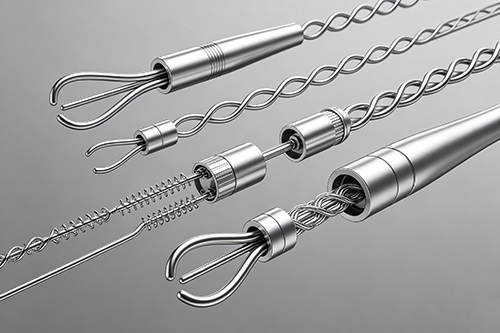
A prominent medical device manufacturer based in the United Kingdom approached our team with a challenging requirement. Their focus was on developing components for minimally invasive devices, including stents and actuators. To accommodate the dynamic mechanical properties expected in such applications, the customer required nitinol wire with custom shape memory behavior. This meant managing precise transformation temperatures and ensuring consistent mechanical performance over repeated cycles.
The customer's core expertise was in assembling and testing medical devices; however, they lacked the internal capability to optimize the raw material properties of nitinol. Their previous materials had exhibited fluctuations in transformation temperatures, leading to inconsistent actuation response and impacting the reliability of their devices. Detailed engineering analyses suggested that fluctuations on the order of ±2°C in transformation temperatures and minor variations in wire diameter could have significant operational consequences.
Challenge
The primary challenge centered on delivering a nitinol wire with tightly controlled properties. Key requirements included:
• Material composition: The nitinol alloy needed to adhere closely to the required Nickel-Titanium ratio, with minimal deviation in elemental purity (specified at 99.8% minimum purity) to ensure repeatable phase transformation behavior.
• Dimensional precision: The wire diameter had to be maintained at 0.25 mm with a tolerance of ±0.005 mm, ensuring that subsequent forming and integration into devices would be predictable.
• Transformation control: The coating process and material treatment needed to deliver transformation temperatures within a narrow range (±2°C of the target value) to match performance criteria for shape memory behavior in stents and actuators.
• Packaging and stability: Given the sensitivity of the nitinol's surface properties, the material had to be packaged in a controlled environment. The solution required individual vacuum-sealed packaging to prevent oxidation prior to assembly.
In addition to these specific material properties, the customer was constrained by a demanding development schedule. They required the finished product within a four-week lead time to synchronize with the prototype testing phase. Previous suppliers had struggled to meet both the technical and logistical requirements, which threatened to delay their product rollout.
Why They Chose SAM
The customer evaluated several potential suppliers and ultimately selected Stanford Advanced Materials (SAM) because of our extensive experience in custom material development and our technical depth. Our initial assessments focused on the following points:
• Technical expertise: We have over 30 years of experience supplying advanced materials tailored to specific customer demands. Our track record of handling over 10,000 materials for global customers instilled confidence in our ability to meet the narrow tolerances required for the nitinol wire.
• Customization capability: Our team offered a comprehensive review of the existing product challenges. Rather than suggesting a one-size-fits-all approach, we proposed a series of modifications including a specialized thin film coating process designed to stabilize transformation temperatures during cyclic loading.
• Responsiveness to constraints: When the customer shared their strict four-week delivery target, we rapidly adapted our production schedule. Our internal planning and supply chain network helped us confirm that we could meet the lead time without compromising quality.
Our thorough feedback early in the process allowed the manufacturer to adjust design tolerances and better align their assembly processes with the expected material performance. Stanford Advanced Materials (SAM) demonstrated not only the capacity for engineering depth but also the commitment to addressing their entire production chain.
Solution Provided
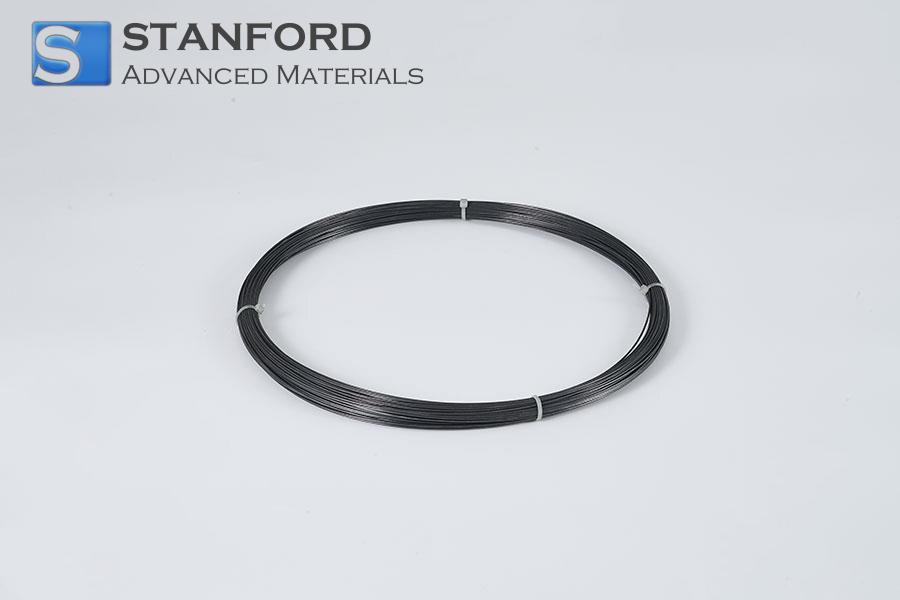
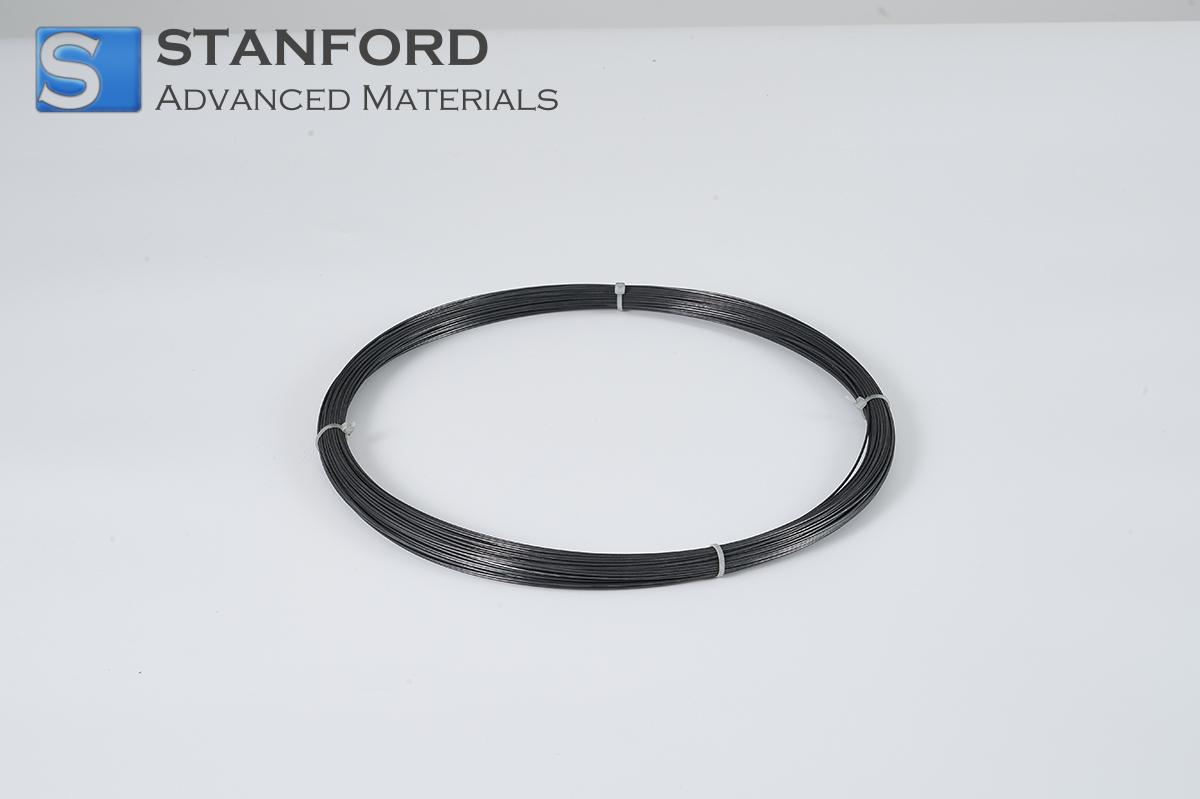
Our solution was built around a custom-engineered thin film coating process applied directly to the nitinol wire. Key elements of the solution included:
• Material Preparation: The nitinol alloy was formulated to meet a precise Nickel-Titanium ratio, achieving at least 99.8% purity. Prior to coating, the wire was mechanically processed to maintain a strict diameter of 0.25 mm ± 0.005 mm. This meticulous pre-treatment was essential to ensure uniform heat distribution along the entire wire.
• Thin Film Coating Process: We applied a specialized thin film coating designed to stabilize the surface and control the transformation temperature. The coating was applied in a controlled environment, with deposition parameters monitored to a precision of ±1 nm per layer. This allowed us to reach the desired transformation range within ±2°C of the target temperature.
• Thermal Treatment: Post-coating, the wire underwent a thermal adjustment cycle under a controlled atmosphere to relieve residual stresses and ensure the uniform behavior of the shape memory. This step was critical because it minimized variations in the phase transformation temperature, thereby enhancing the device's performance reliability.
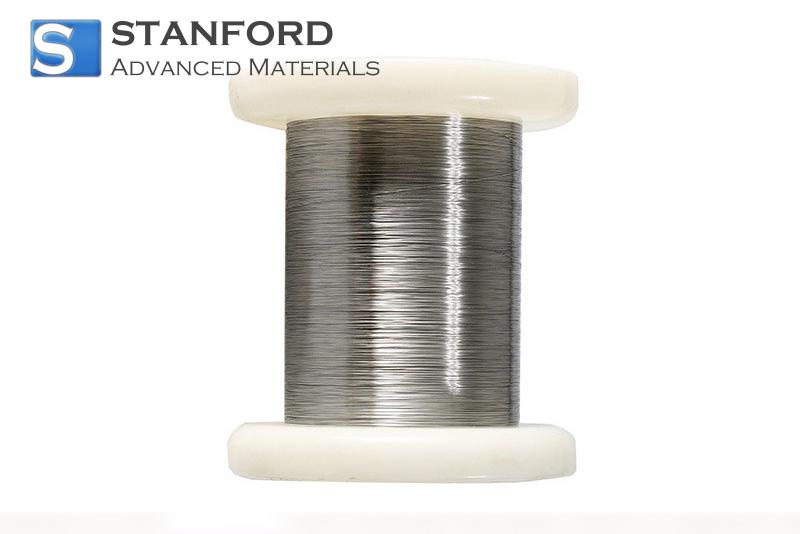
• Packaging: Each wire spool was individually vacuum-sealed with a moisture barrier to prevent premature oxidation or surface contamination. Special care was taken to label each package with detailed batch parameters, including transformation temperature calibration, wire diameter measurements, and coating thickness specifications.
• Process Control & Quality Assurance: To meet the tight production schedule, we implemented real-time monitoring during the coating and thermal treatment processes. In-line measurement systems provided immediate feedback on wire diameter and coating integrity, ensuring that any deviation from our established tolerance limits was promptly corrected. Our quality control protocols confirmed that all key performance indicators were maintained throughout production.
Results & Impact
After the modified nitinol wire was integrated into the manufacturer's prototypes, several critical improvements were observed:
• Stability of Transformation Temperature: The controlled thin film coating process successfully maintained the transformation temperatures within ±2°C of the intended target. This ensured that the actuation response in the medical devices remained predictable under operational conditions.
• Dimensional Consistency: The uniform wire diameter of 0.25 mm ± 0.005 mm significantly improved the consistency of device performance. The tight tolerances contributed to reliable mechanical behavior during device operation, providing the manufacturer with greater confidence during testing.
• Enhanced Process Reliability: With improved material uniformity and packaging integrity, the new nitinol wire reduced the number of iterations needed during the device assembly phase. The consistent material properties contributed directly to smoother integration and lower variability during final device testing.
By addressing both the technical demands and the logistical constraints, our customized approach helped the customer meet their production milestones without sacrificing performance quality. Although further adjustments to the complete assembly process were necessary, the material-related challenges were effectively mitigated.
Key Takeaways
• Material precision is critical. Even minor deviations in alloy composition, coating thickness, or wire diameter can lead to significant performance variability in medical devices.
• Tailored processing steps such as specialized thin film coating and controlled thermal treatment are effective means to ensure uniform transformation temperatures. These measures are essential when the final device performance depends on precise shape memory properties.
• Close collaboration during the early phases of product development can allow both supplier and customer to refine requirements. Constructive technical feedback often prevents later-stage complications that could compromise device operation.
• Meeting strict lead times requires an agile supply chain and adaptable production processes. In this case, our proactive planning and real-time quality monitoring ensured that all parameters stayed within the acceptable range while honoring the four-week delivery target.
In summary, by applying a customized thin film coating and precise process controls, we were able to deliver nitinol wire that met the exacting standards of a leading medical device manufacturer. The approach underscored the importance of detailed engineering in material production, ensuring that performance specifications are consistently met in demanding applications.
 Dr. Samuel R. Matthews