Products
 Bars
Bars
 Beads & Spheres
 Bolts & Nuts
 Crucibles
 Discs
Discs
 Fibers & Fabrics
 Films
Films
 Flake
Flake
 Foams
Foams
 Foil
Foil
 Granules
 Honeycombs
 Ink
Ink
 Laminate
 Lumps
Lumps
 Meshes
 Metallised Film
 Plate
Plate
 Powders
 Rod
Rod
 Single Crystals
 Sputtering Target
 Tubes
Tubes
 Washer
 Wires
Wires
 Converters & Calculators
 Write for Us



Precision Nickel Foam with Controlled Porosity Enhancing Automotive Electrode Substrate Performance

Customer Background
A leading automotive manufacturer based in Germany was in the process of upgrading their energy systems. Their projects required electrode substrates that could serve multiple applications: from batteries and fuel cells to catalytic converters. With an emphasis on achieving consistent electrochemical performance and thermal management, they sought a material that could deliver predictable active surface area and efficient gas flow in all applications. Their traditional nickel foam solutions were satisfactory but lacked the precision in porosity required to meet the tighter specifications demanded by new generation automotive energy systems.
The customer had extensive experience in automotive manufacturing but faced challenges in coupling high-volume production with stringent quality controls at the materials level. Their project timeline was compressed and the replacement of legacy materials with a highly customized product was critical to ensuring competitive performance. A request for quotation (RFQ) was issued with detailed criteria, outlining the necessity for precise porosity metrics and strict dimensional tolerances.
Challenge
The primary challenge was achieving consistent porosity control across nickel foam batches used as electrode substrates. The customer required:
- A high-purity nickel foam with a purity of at least 99.90% to prevent unintended impurities from interfering with catalytic and electrochemical functions.
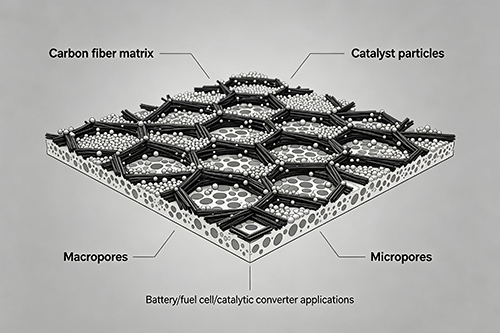
- A controlled open-cell structure, with pore sizes maintained between 150 µm and 250 µm, and a tolerance of ±10 µm to ensure uniform electrolyte penetration and catalyst distribution.
- Precise thickness control, with each foam sheet targeted at 2.5 mm with a tolerance of ±0.05 mm, to provide reliable mechanical strength and electrical consistency.
These technical specifications were non-standard and required careful adjustment of conventional manufacturing processes. Past suppliers had struggled with variability in porosity distribution and thickness uniformity, which in turn impacted cycle stability and overall energy efficiency in the final automotive components. A further complication was the customer's tight lead time due to planned production line upgrades; any delays in material delivery could extend downtime significantly.
Why They Chose SAM
Stanford Advanced Materials (SAM) was selected based on our proven record of more than 30 years in advanced materials supply and our commitment to customized service. When the customer presented the RFQ with its firm specifications and tight production window, our engineering team immediately initiated a series of discussions focused on both the thermal treatments during sintering and the mechanical finishing processes required to achieve their dimensional needs.
Our background in producing specialized thin film and coating materials for similar high-demand applications provided us with the confidence to propose a solution that prioritized both precision and reliability. We communicated detailed evaluations on:
- The stability of nickel foam under continuous thermal cycling in battery cells and catalytic converters.
- Custom sintering profiles to control pore growth without sacrificing material integrity.
- Packaging methods designed to protect the sensitive foam from oxidation and mechanical stress during transit.
The customer's interactions with our technical experts reinforced their decision. They appreciated our detailed documentation of the potential process adjustments and were reassured by our global supply chain, which promised on-time delivery even under customized production constraints.
Solution Provided
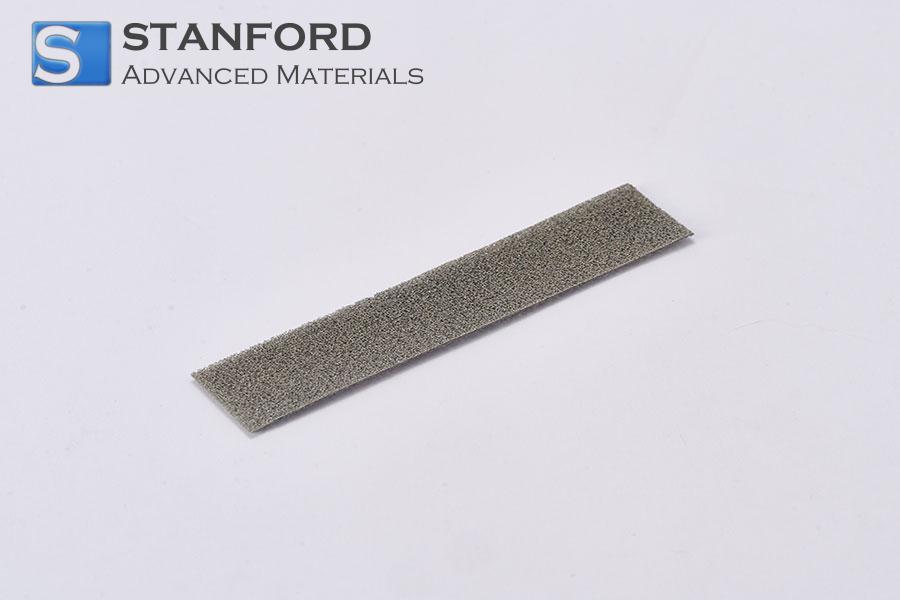
Our response involved a custom production of high-purity nickel foam designed to meet the exacting requirements laid out in the RFQ. The following technical details were implemented:
• We sourced nickel of 99.90% purity and processed it through a refined sintering cycle. By adjusting the furnace temperature and dwell times, we were able to constrain the pore size within a narrow range of 150 µm to 250 µm.
• The foam was manufactured with an exact target thickness of 2.5 mm, maintained within a tolerance of ±0.05 mm, ensuring that the mechanical and electrical properties remained consistent across production batches.
• Special attention was given to the foam's open-cell structure. Our team optimized the cell interconnectivity so that the surface area was maximized without compromising the necessary gas and electrolyte flow for battery and fuel cell applications.
Production was further enhanced by implementing a rigorous quality control process that included microscopic analysis of pore distribution and dimensional laser measurements. Recognizing the customer's sensitivity to lead time, we prioritized scheduling, managing to streamline production so that the complete batch was delivered within the agreed four-week period. The final product was vacuum-sealed in moisture-controlled packaging, designed to prevent premature oxidation—a measure critical to ensuring the foam's performance in demanding automotive environments.
Results & Impact
Upon integration into their testing setups, the customized nickel foam consistently delivered:
• A stable porosity profile ensuring uniform electrolyte distribution, which led to improved cycle life in battery electrodes.
• Enhanced thermal management in fuel cell assemblies, attributed to the uniform structure of the foam which maintained its integrity even under fluctuating temperatures.
• Better catalyst support in catalytic converters, leading to more reliable conversion rates and reduced pollution by-products.
The customer observed that the consistency of the foam's physical properties reduced variability in final product testing. This allowed for better process predictability throughout their production line and minimal adjustments to the setup calibration. Our attention to exact tolerances and controlled porosity ensured that the electrode substrates met demanding automotive standards without unexpected performance drops during extended operation cycles.
Key Takeaways
Uniformity in material properties is critical for advanced automotive energy systems. In this case, precise control over pore size, material purity, and dimensional tolerances translated directly into improved performance across multiple applications—whether it involved energy storage, fuel cell efficiency, or emissions control in catalytic converters. The ability to customize and closely monitor production parameters allowed SAM to meet specifications that standard products could not reliably offer.
Working with a supplier experienced in advanced materials and accustomed to strict automotive standards assures that precision is maintained, even when production timelines are compressed. Our careful engineering and quality assurance protocols demonstrated that it is possible to tailor materials for high-demand applications while minimizing process variability and delivery risks.
 Dr. Samuel R. Matthews