Products
 Bars
Bars
 Beads & Spheres
 Bolts & Nuts
 Crucibles
 Discs
Discs
 Fibers & Fabrics
 Films
Films
 Flake
Flake
 Foams
Foams
 Foil
Foil
 Granules
 Honeycombs
 Ink
Ink
 Laminate
 Lumps
Lumps
 Meshes
 Metallised Film
 Plate
Plate
 Powders
 Rod
Rod
 Single Crystals
 Sputtering Target
 Tubes
Tubes
 Washer
 Wires
Wires
 Converters & Calculators
 Write for Us



Precision Alumina Ceramic Tubing for Medical Device Components: Ensuring Concentricity and Consistency

Customer Background
A well-established medical device manufacturer, specializing in high-performance implantable devices, faced significant challenges when designing components requiring extremely precise ceramic tubing. Their focus was on producing biocompatible, wear-resistant pathways integrated within complex assemblies. With in-house expertise in device prototyping but limited capabilities on ceramic processing, the customer needed a reliable partner who could ensure tight control over tube dimensions and surface integrity.
Our team at Stanford Advanced Materials (SAM) has been servicing global customers for over 30 years, and our experience with more than 10,000 unique materials has proved critical for addressing the customer's intricate needs. During early discussions, we learned the manufacturer had experimented with various providers, but occasional inconsistencies in tube concentricity and surface finish had led to undesirable performance variations in final prototypes.
Challenge
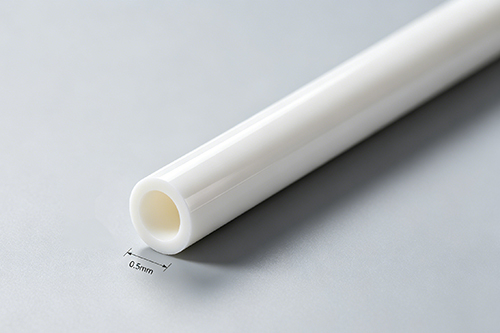
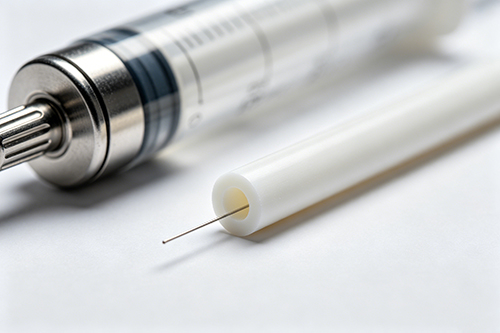
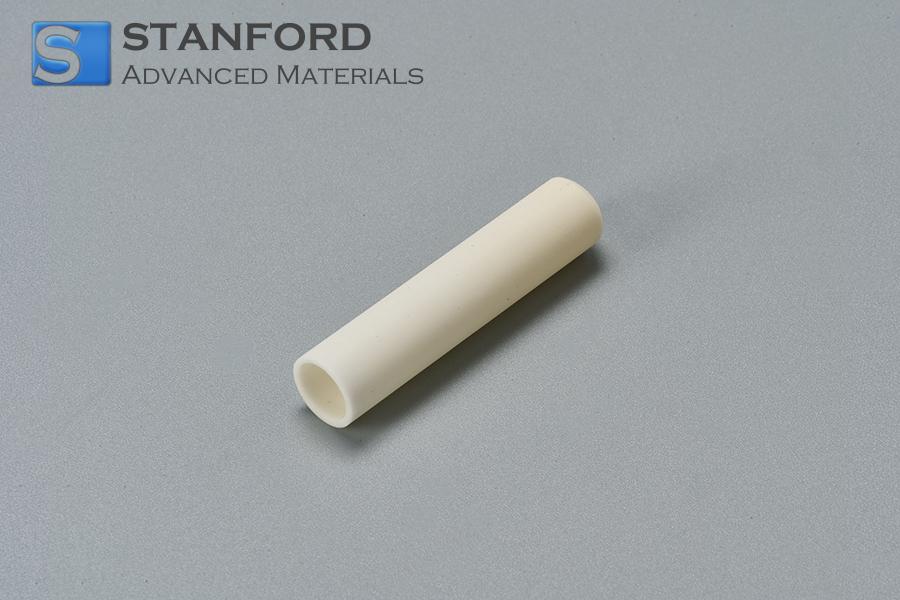
The manufacturer's project required alumina ceramic tubing with a strict size specification: 1 mm outer diameter (OD) and 0.5 mm inner diameter (ID). Several intertwined challenges emerged during the initial design phase:
· Dimensional Tolerance: The tubing had to be extruded and fired while maintaining a tolerance of ±0.05 mm. Even minor deviations could affect device performance.
· Wall Thickness Precision: With wall thickness as thin as 0.25 mm, achieving uniformity around the tube's circumference was critical, particularly for maintaining concentricity.
· Surface Finish: Ensuring a smooth inner and outer surface was necessary for friction control during the assembly of delicate medical components.
· Lead Time Constraints: The customer needed a reliable supplier capable of delivering quality samples—10 half-meter sections—within a short lead time to align with their testing schedule.
· Reproducibility: Maintaining a consistent quality over multiple production runs was another important requirement, given the rigorous testing protocols in the medical device field.
These challenges underscored the need for a supplier with robust process monitoring and in-line quality assurance to mitigate potential deviations.
Why They Chose SAM
The decision to work with SAM was driven by several core factors:
· Extensive Technical Expertise: Our history of over 30 years using advanced materials meant we had the hands-on experience required to handle fine ceramic tolerances.
· Customized Processing Capabilities: We were equipped to adjust our extrusion and firing processes to meet the strict dimensional needs. SAM's labs enable precision adjustments on the fly.
· Responsiveness and Reliability: The customer's timeline was tight, and our global supply chain network promised timely delivery of the custom alumina ceramic samples.
· Attention to Detail: During our initial review of their specifications, our team noted potential issues with maintaining concentricity, and we proactively proposed strategies to address these variations before mass production.
The manufacturer appreciated that SAM not only offered technical rigor but also a practical understanding of the challenges inherent in scaling production under strict medical device standards.
Solution Provided
SAM's tailored solution encompassed several distinct process improvements and rigorous quality control measures:
1. Material Selection and Processing: We started with premium-grade alumina, ensuring a purity level that contributed to superior wear resistance and biocompatibility. Alumina was pre-fired under controlled atmospheric conditions to enhance its mechanical stability while ensuring a consistent microstructure.
2. Dimensional Control: The substrates were extruded to achieve the 1 mm OD and 0.5 mm ID specifications. We used precision extrusion dies and continuously monitored dimensions during the process. Our team confirmed that the wall thickness of 0.25 mm remained within the tolerance of ±0.05 mm, measured using in-line optical verification systems. During early trials, we observed slight deviations at certain stages which led us to adjust tooling pressure; these refinements ensured a uniform, concentric tube structure.
3. Firing and Surface Finishing: Firing the extruded tubes was done in a controlled kiln environment. By precisely managing the ramp-up and cool-down cycles, we reduced internal stresses, a common factor affecting surface quality. We further employed a post-firing polishing process to achieve the required smooth surface. Minor adjustments during initial batches—such as a tweaking of the kiln hold time—led to improved surface finish and overall dimensional stability.
4. Quality Assurance and Packaging: Each sample underwent rigorous quality checking. In-line measurement systems measured both dimensional tolerances and surface roughness. After verifying that all parameters met the prescribed standards, each half-meter sample was carefully packaged to prevent any contamination before shipment. Labeling included technical specifications such as tube diameter, wall thickness, and surface finish grade.
Our approach balanced precise material processing with practical adjustments informed by real-time observations. During initial tests, we noticed that minor variability in the extrusion pressure could lead to surface imperfections. We addressed these issues promptly, ensuring the final products met all application constraints.
Results & Impact
Following the implementation of our process adjustments, the manufacturer was able to integrate the custom alumina tubes seamlessly into their medical device assemblies. Key observed outcomes included:
· Consistent Dimensions: The alumina tubes consistently met the 1 mm OD and 0.5 mm ID requirements with a tolerance of ±0.05 mm. This reliability improved their predictability in assembly.
· Superior Surface Quality: The smooth surface finish facilitated a controlled assembly process, reducing friction during component integration. In testing, the tubes showed negligible wear and excellent biocompatibility.
· Enhanced Process Reproducibility: Our process improvements led to minimal batch-to-batch variation. The manufacturer reported fewer revisions during prototype evaluation, as the tubes maintained consistent performance.
· Timely Delivery: Despite the tight production schedule, our global supply chain ensured that all samples were delivered within the specified lead time, contributing to efficient project timelines.
These improvements meant that refined control over phase uniformity and tube concentricity not only enhanced component performance but also reduced overall assembly downtime. Our solution contributed to smoother testing rounds and fewer technical revisions—a win for both the supplier and the manufacturer.
Key Takeaways
The project underscored several important lessons for the integration of custom ceramic tubing in medical device applications:
· Rigorous Process Monitoring is Critical: Real-time quality assessments, such as in-line optical measurement of tube dimensions, are essential in preventing deviations that could affect downstream applications.
· Small Adjustments Yield Big Results: Fine-tuning processing parameters, like extrusion pressure and firing profiles, can correct minor variations and lead to consistently high-quality products.
· Collaboration Enhances Outcomes: Working closely with the manufacturer enabled us to identify potential issues early and apply corrective adjustments promptly.
· Timeliness and Technical Consistency Matter: Delivering precise materials on a tight timeline is as important as meeting technical specifications. Our focus on both ensured the manufacturer could maintain their production schedule without compromise.
Our work on this project highlights how Stanford Advanced Materials (SAM) brings over three decades of expertise to complex material challenges. It's a reminder that small, technical insights—like noticing slight variations during initial testing—make a significant difference in high-precision applications.
 Dr. Samuel R. Matthews