
 Products
 Bars
Bars
 Beads & Spheres
 Bolts & Nuts
 Crucibles
 Discs
Discs
 Fibers & Fabrics
 Films
Films
 Flake
Flake
 Foams
Foams
 Foil
Foil
 Granules
 Honeycombs
 Ink
Ink
 Laminate
 Lumps
Lumps
 Meshes
 Metallised Film
 Plate
Plate
 Powders
 Rod
Rod
 Single Crystals
 Sputtering Target
 Tubes
Tubes
 Washer
 Wires
Wires
 Converters & Calculators
 Write for Us



Custom Tantalum Capillary Tube Enhances Reliability in High-Temperature Corrosion Research

Customer Background
A prominent European research institute specializing in high-temperature corrosion studies recently faced a challenge with material consistency. The institute, renowned for its rigorous scientific protocols, required a tantalum capillary tube as part of their apparatus for studying material behavior under extreme conditions. Their experimental setup demanded not only impeccable durability but also very tight dimensional tolerances. Despite their excellent internal capabilities with data collection and analysis, the research team lacked in-house facilities to reliably source and verify the material quality needed for the apparatus.
Their work centered around experiments in environments where minor inconsistencies could ripple through experimental data. The customer had previously sourced tantalum tubes from multiple vendors, but recurring issues, such as minor diameter variation and unsatisfactory surface finishes, were hampering the reliability of test results.
Challenge
The primary challenge was to develop a tantalum capillary tube that met extremely strict specifications in a timely manner. Specific hurdles included:
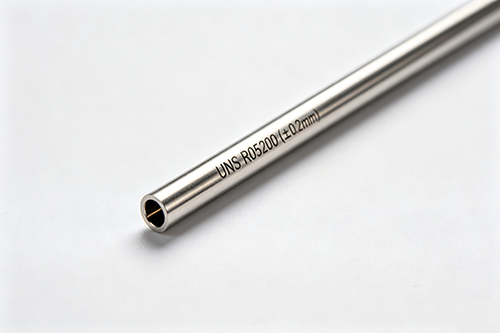
• Dimensional tolerance: The tube required a 1mm OD with a tolerance of just ±0.02mm. Even small deviations could affect fluid dynamics within the capillary and lead to inconsistent experimental readings.
• Surface finish: Given the tube's role in a high-temperature, corrosive environment, it was critical for the internal surface to be exceptionally smooth to prevent material degradation and ensure reliable performance during prolonged testing periods.
• Material composition: The capillary had to be made from UNS R05200 tantalum. This grade is known for exceptional corrosion resistance and the ability to withstand extreme temperatures, but processing it to such tight tolerances is no trivial task.
• Lead time: The research deadlines were tight. The customer needed the final product within a narrow timeline, adding additional pressure to ensure that production and quality verifications were efficient.
During preliminary evaluations, our team observed that even slight imperfections in the inner surface could lead to increased stress points during high-temperature cycles. This hinted at the critical need for rigorous quality checks.
Why They Chose SAM
The customer turned to Stanford Advanced Materials (SAM) primarily due to our extensive experience and proven ability to deliver on challenging material specifications. With over 30 years in the industry, a global supply chain, and a portfolio of over 10,000 materials, our expertise resonated with their need for precise and high-quality materials.
Our earlier discussions also revealed that the investigators required not just a product, but a collaborative partner who could integrate advanced processing capabilities with responsive adjustments based on feedback. We recalled a similar project where slight process modifications led to significantly improved material consistency. Our team's engineering insights during initial testing were key. We observed subtle variances in wall thickness, which could have impacted long-term durability. This proactive communication and willingness to iterate helped the research team mitigate potential setbacks early on.
Solution Provided
For this project, SAM executed a multi-step plan that ensured every technical detail was addressed:
• Material Processing: We started with UNS R05200 tantalum, chosen for its excellent high-temperature corrosion resistance. The challenge was to draw the tube to a 1mm OD with a tolerance of ±0.02mm. Our sophisticated drawing process, monitored with in-line measurement systems, ensured the tube most often clustered precisely around the target diameter. Any deviations were corrected immediately through controlled mechanical adjustments.
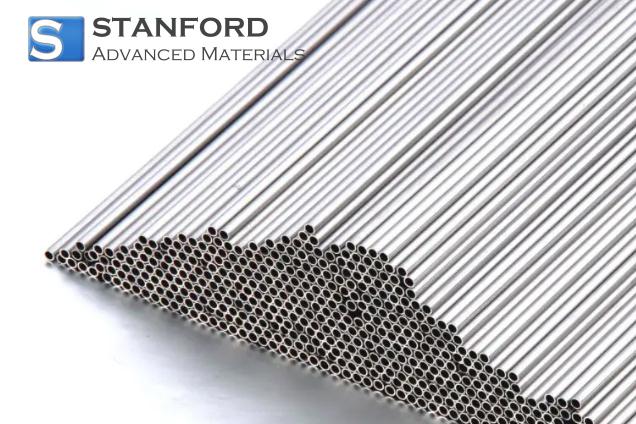
• Surface Finishing: The internal finish was equally critical. We employed refined polishing techniques designed specifically for tantalum. The process stressed the importance of minimizing microscopic surface irregularities, which we confirmed using advanced microscopy. During initial testing, we noticed that a slight improvement in the polishing duration reduced roughness below the predetermined threshold, enhancing flow consistency in the lab setup.
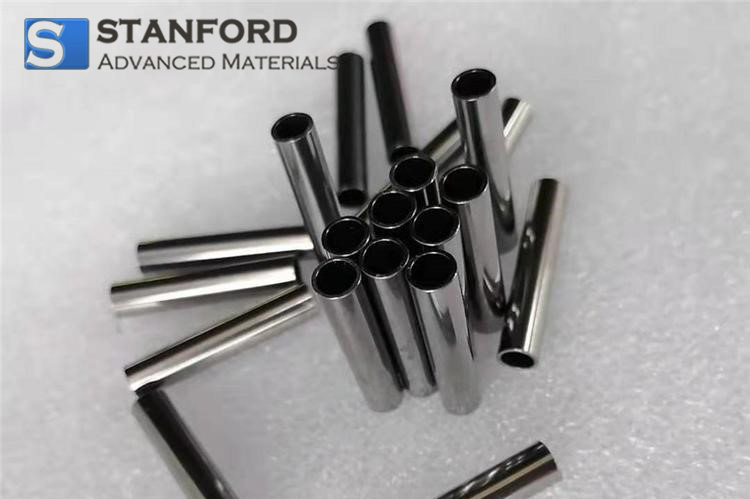
• Custom Length and Packaging: The final product was tailored to the desired lengths as per the customer's experimental layout. Each capillary tube was carefully packaged to avoid any contamination or mechanical impacts during shipment. Given the sensitivity of the research apparatus, this extra step was vital.
• Time-bound Production: Acknowledging the real-world constraint of a tight lead time, our production schedule was adjusted accordingly. We ensured that quality control checks were integrated at every stage—from raw material inspection to final packaging. Each batch was verified for dimensional accuracy and surface smoothness, ensuring compliance with the rigorous specifications.
Our engineers communicated online and off-site with the research team. "We noted a very slight deviation in one of the early batches," our senior process engineer remarked. "Adjusting the tension during drawing resolved the discrepancy and maintained the critical ±0.02mm tolerance." This hands-on approach proved instrumental in meeting the precise technical requirements.
Results & Impact
After integrating the custom tantalum capillary tubes into their high-temperature corrosive test apparatus, the research team experienced marked improvements:
• Consistent Dimensional Accuracy: The tubes consistently measured at 1mm OD within ±0.02mm, ensuring stable fluid dynamics and reliable experimental conditions.
• Superior Surface Integrity: The exceptionally smooth internal surface helped reduce potential stress concentrations during thermal cycling, contributing to longer-lasting performance under severe conditions.
• Timely Delivery: Despite the challenging specifications and short lead time, our schedule was maintained throughout the process. Quick iterations based on real-time quality data allowed for an expedited yet reliable production cycle.
• Reduced Downtime: With the enhanced material consistency, recurring issues during experiments were significantly diminished. This led to fewer interruptions in testing and a more reliable dataset for the research team.
These tangible performance improvements not only boosted experimental reliability but also provided valuable feedback for further optimizing the research apparatus. The team could now focus more on their core investigative work rather than troubleshooting material inconsistencies.
Key Takeaways
For research environments where precision is non-negotiable, every step of the material processing chain matters. Our experience with UNS R05200 tantalum capillaries highlights several important lessons:
• Detailed engineering oversight is essential. Even minor deviations in diameter or surface finish can lead to measurable performance issues in demanding environments.
• Collaboration and responsive process adjustments—such as tweaking drawing tension or extending polishing intervals—can effectively resolve issues even under tight deadlines.
• Quality control at every production stage ensures that custom-tuned materials meet the demanding specifications required by advanced research disciplines.
By focusing on precision and open engineering dialogue, we at SAM turned a challenging specification into a robust solution. This project stands as a reminder that personalized attention to material processing details can yield significant benefits in experimental setups, ultimately supporting more reliable and consistent research outcomes.
 Dr. Samuel R. Matthews