
 Products
 Bars
Bars
 Beads & Spheres
 Bolts & Nuts
 Crucibles
 Discs
Discs
 Fibers & Fabrics
 Films
Films
 Flake
Flake
 Foams
Foams
 Foil
Foil
 Granules
 Honeycombs
 Ink
Ink
 Laminate
 Lumps
Lumps
 Meshes
 Metallised Film
 Plate
Plate
 Powders
 Rod
Rod
 Single Crystals
 Sputtering Target
 Tubes
Tubes
 Washer
 Wires
Wires
 Converters & Calculators
 Write for Us



High Purity 2mm AlN Rods Elevating Semiconductor Thermal Testing

Customer Background
A prominent research group at a USA university, specializing in semiconductor materials and high-temperature applications, required ultra-high purity aluminum nitride (AlN) rods for their thermal testing apparatus. With decades of research behind them, the team had been working with advanced ceramics and other specialized materials to push the boundaries of device efficiency. However, their experiments were extremely sensitive to even trace impurities, and every batch of raw material had to be accompanied by comprehensive characterization data.
The university's research department was known for producing well-documented, rigorous test data. They needed exactly reproducible input materials to ensure their simulations and models matched experimental data. Any contamination or variation could skew results, leading to erroneous conclusions. Thus, securing the right supplier became critical for progressing with their experimental timelines.

Challenge
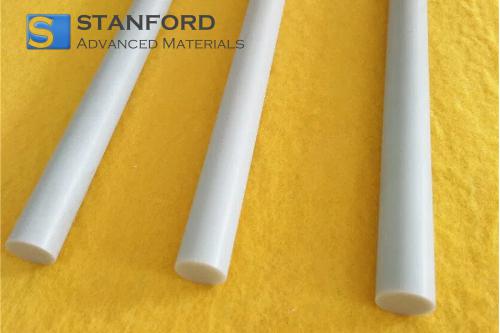
The foremost challenge was clear. The research project required aluminum nitride rods with a purity greater than 99.5%. The rods needed to be manufactured to a precise 2mm outer diameter and exactly 50mm in length. The following technical constraints also needed to be met:
• Purity & Characterization: The material's purity had to exceed 99.5%. Additionally, every rod required documented impurity analysis using ICP (Inductively Coupled Plasma) and structural analysis via X-ray diffraction (XRD) to quantify possible trace contaminants.
• Dimensional precision: The rods had a tight tolerance on both diameter and length (2mm x 50mm), ensuring compatibility with their thermal test rigs.
• Thermal properties: Accurate data on thermal conductivity and density was crucial as the experiments involved rapid temperature cycling.
A further complication was the project timeline. The research team was on a strict schedule, meaning any delay in material delivery could push back critical testing phases. Past attempts with other vendors had resulted in inconsistent data sheets and marginal deviations from expected dimensions, causing a cascade of troubleshooting during critical phases of the research.
Why They Chose SAM
The team selected Stanford Advanced Materials (SAM) because of our long-standing reputation for handling advanced materials and our ability to deliver a customized service. Over the past 30 years, our expertise has grown as we provided materials to over 10,000 global customers. When the researchers discussed their unique contamination sensitivities and precise dimensional requirements with our engineers, we immediately saw how our lab capabilities could be aligned with their demanding needs.
During preliminary discussions, our team noticed that small adjustments in the heating process during rod fabrication might minimize the risk of micro-cracking and thermal instability. We shared these technical insights, which underscored our commitment to offering not just a product, but a complete material solution. This proactive perspective, combined with our extensive product characterization capabilities, made SAM the clear partner for this critical research project.
Solution Provided
To meet the stringent requirements, SAM engineered a solution tailored to the research team's demands:
1. Material Synthesis and Purification: Our process began with refining the raw materials to achieve an aggregate purity greater than 99.5%. We implemented rigorous purification steps using high-purity precursors, followed by in-house quality assessments. The final AlN rods were manufactured to a precise 2mm diameter, with a tolerance of ±0.01mm. Given that the rods measured 50mm in length, every batch underwent laser micrometry to confirm dimensional accuracy.
2. Comprehensive Characterization: Each rod came with a detailed technical data sheet. Our in-house laboratory conducted impurity analysis using ICP methods. For each sample, values were documented, and any deviation was flagged for secondary review. Additionally, XRD ran on each batch provided structural consistency, ensuring that the crystalline phases aligned with the specifications required for contaminant-sensitive experiments. We also recorded density and thermal conductivity data, which were critical for the thermal simulations planned by the research team.
3. Process Control and Adjustments: During initial testing runs, slight adjustments became necessary. We noted small variations in thermal conductivity linked to minor differences in powder compaction. By tweaking the rod sintering conditions and enhancing the pre-sintering phase through controlled atmosphere heating, we improved consistency. The adjustments reduced variability day-to-day, a detail our technical team proudly verified.
4. Packaging and Delivery: Understanding the importance of a contamination-free environment, SAM vacuum-sealed the rods in moisture-proof packaging immediately after surface finishing. Each package included the complete analysis data and handling instructions, ensuring that the integrity of the rods remained uncompromised throughout shipping. Given the strict timeline, our logistics team coordinated a rapid delivery process. In fact, our lead time was less than our usual standard, a factor that ultimately helped align the material deliveries perfectly with the research schedule.
Results & Impact
The impact of SAM's custom solution was immediately visible. The university research group reported that the high-purity AlN rods performed consistently within their demanding thermal testing setups. Some of the key technical outcomes included:
• Consistent Thermal Performance: The rods maintained stable thermal conductivity values even during rapid cycling. Variations remained well within experimental thresholds, supporting robust data collection. This consistency was crucial for accurately replicating thermal loads in semiconductor device tests.
• Dimensional Integrity: Every rod measured precisely 2mm in diameter and 50mm in length with a very tight tolerance. Our meticulous in-line measurement systems ensured that the rods matched the stringent design specifications. Such precision significantly reduced the risk of instrument faults during the high-precision experiments.
• Detailed Documentation: The complete impurity and density profiles provided an essential reference for correlating experimental outcomes. This documentation helped the research team to fine-tune their simulation parameters, as the theoretical models could account for the exact material properties.
With the improved sample integrity and reduced variability, the researchers were able to focus more on testing the thermal limits of their semiconductor materials, rather than troubleshooting material inconsistencies. The tight lead times and responsive engineering discussions further cemented their trust in our team, particularly under pressing experimental deadlines.
Key Takeaways
This case study illustrates the importance of aligning material properties with specific experimental needs. By focusing on stringent purity thresholds (greater than 99.5%), precise dimensional accuracy (2mm ±0.01mm diameter and 50mm length), and robust documentation (ICP, XRD, density, and thermal conductivity data), we helped mitigate risks associated with contaminant-sensitive testing. Our proactive technical adjustments and rapid lead time underlined the value of detailed process control in advanced materials fabrication.
Stanford Advanced Materials (SAM) has once again demonstrated that technical depth combined with responsive service can significantly reduce testing uncertainties in high-demand research environments. Such collaborations underscore the critical role of deep engineering expertise when every micron and impurity count.
We continue to work side by side with our customers, applying our decades of experience and extensive material catalog to support the next wave of semiconductor research and advanced testing.
 Dr. Samuel R. Matthews