
 Products
 Bars
Bars
 Beads & Spheres
 Bolts & Nuts
 Crucibles
 Discs
Discs
 Fibers & Fabrics
 Films
Films
 Flake
Flake
 Foams
Foams
 Foil
Foil
 Granules
 Honeycombs
 Ink
Ink
 Laminate
 Lumps
Lumps
 Meshes
 Metallised Film
 Plate
Plate
 Powders
 Rod
Rod
 Single Crystals
 Sputtering Target
 Tubes
Tubes
 Washer
 Wires
Wires
 Converters & Calculators
 Write for Us



High-Temperature Thermal Barrier Coatings Optimized with BaZrO3 Powder in Plasma Spray Applications

Customer Background
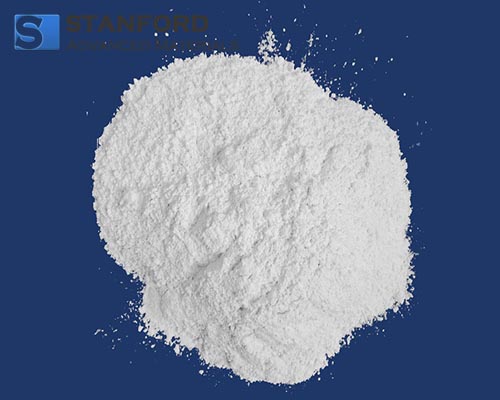
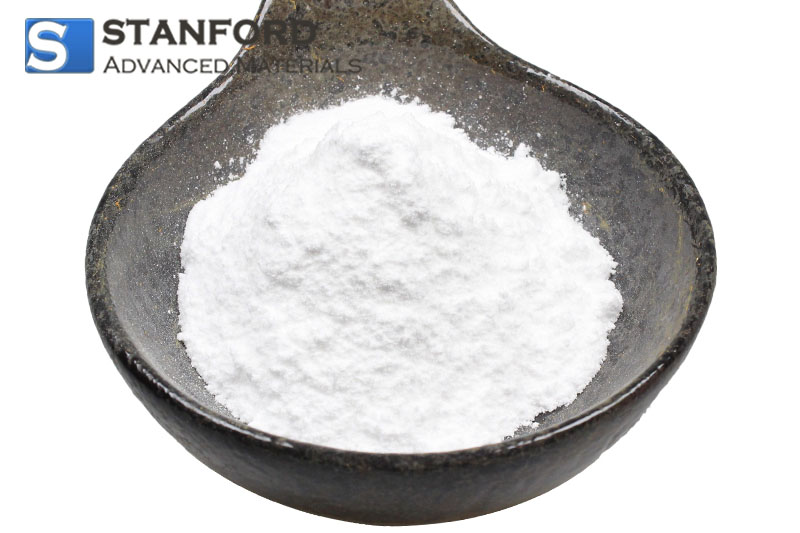
A leading manufacturer in the aerospace sector was in the process of upgrading their high-temperature thermal barrier coating systems. Their plasma spray application demanded a specialized barium zirconate (BaZrO3) powder that consistently delivered controlled particle size distributions, with the size range strictly between 15 and 53 μm. Their team, experienced in both materials testing and advanced coatings, required raw materials that could support robust performance under extreme thermal cycling. However, despite their capabilities in post-process assembly and testing, sourcing a powder with both consistent morphology and precise particle dimensions had posed ongoing challenges.

Challenge
The project faced several technical and logistical challenges. For plasma spray thermal barrier coatings, consistency in particle size and morphology is critical:
· Particle size uniformity: The coating performance needed powder within a narrow distribution of 15–53 μm. Variations outside these bounds resulted in less predictable melt-pool dynamics during spraying.
· Spherical morphology: The powder required a sphericity exceeding 90% to ensure consistent flow through the spray system. Irregular particles risked clogging and uneven deposition.
· Customizable quantities: The customer required a flexible supply ranging from as little as 1 lb to 100 lbs, with a specific initial order of 10 lbs to validate process parameters under real-world conditions.
· Tight production schedule: There was limited lead time available, meaning that any supplier misalignment might cause delays in subsequent testing phases.
Previous suppliers had struggled to meet these simultaneous technical and timing specifications. Minor deviations in particle morphology or slight shifts in the 15–53 μm distribution could lead to coating inconsistencies, affecting thermal performance and the overall durability of the barrier.
Why They Chose SAM
The decision to work with Stanford Advanced Materials (SAM) was driven by several factors. Initially, our team's extensive experience—over 30 years and access to more than 10,000 material options—gave them confidence in our ability to address their specific needs. When our engineers reviewed the project specifics, our focus quickly turned to rigorous quality control and tailored supply options.
During initial discussions, our team noted subtle concerns regarding particle agglomeration, a common issue with plasma spray powders if not adequately processed. We shared our observations regarding the importance of a controlled atmosphere during powder synthesis. This proactive approach, along with our flexible production capacity and global supply chain network, helped solidify their decision. Ultimately, SAM's demonstrated capacity for precise customization and responsive lead times made us the ideal partner.
Solution Provided
SAM developed a meticulous production and quality assurance plan to fabricate BaZrO3 powder that matched the stringent requirements of the customer's plasma spray process.
We began with careful process control. First, the synthesis parameters were adjusted to achieve the desired phase purity in the barium zirconate composition. Using controlled nucleation and sintering protocols, we ensured the final product had the correct crystal structure, crucial for high-temperature stability.
Then came the critical particle size distribution control. Our milling and classification processes were fine-tuned until we achieved the specified 15–53 μm range. Each batch was analyzed using laser diffraction techniques to confirm size uniformity. We maintained a margin of error within ±1 μm, ensuring that the powder would interact predictably in the plasma spray system.
The spherical morphology was the next focus. We utilized advanced spheroidization techniques to ensure that more than 90% of the particles were spherical. During early quality checks, our team noticed slight deviations in the particle roundness at the lower end of the size range. Adjustments were made during the processing, resulting in a consistent, spherical morphology ideal for homogeneous flow during spraying.
Packaging was another crucial step. Each batch of powder was encapsulated in moisture-controlled environments, with the product labeled with precise details about its particle size distribution and morphology. This documentation not only ensured traceability but also provided the necessary data for the customer's internal quality checks.
Finally, the production facility adhered to a stricter lead time protocol. Despite the specialized production steps, SAM delivered within the contracted schedule, a factor that was critical due to the customer's pressing development timeline.
Results & Impact
After integrating the customized BaZrO3 powder into their plasma spray process, the customer noted several tangible improvements:
• Consistent Coating Quality: The controlled particle size and enhanced spherical morphology translated to a more uniform coating deposit. The improved flow properties resulted in fewer interruptions during spraying and a more even melt pool, which is essential for high-temperature performance.
• Process Reliability: The meticulous preparation steps helped reduce the unexpected variability in the thermal barrier coatings. In our follow-up discussions, the customer confirmed that the optimized powder led to stable deposition parameters, which in turn shortened their cycle times for subsequent testing and validation.
• Timely Supply: Meeting the production schedule allowed the customer to maintain their development timeline. This was particularly significant given the short lead time required for their prototype validation phase.
A notable observation came during initial integration testing. One sample batch exhibited slightly delayed flow characteristics. Our technical team quickly identified that the minor delay was due to the powder's interaction with residual moisture. An expedited drying process was then integrated into the production protocol, ensuring that all subsequent batches maintained consistent dry flow, thereby preserving the quality of the plasma spray process.
Key Takeaways
Certain parameters can make or break high-temperature thermal barrier coatings. In this case, controlling particle size within a narrow band of 15–53 μm and ensuring a spherical morphology (>90% sphericity) were critical. Even slight deviations in these metrics can compromise the quality of plasma spray applications, leading to inefficient coating uniformity and potential performance issues.
Our approach at Stanford Advanced Materials (SAM)—careful process optimization, rigorous quality checks using laser diffraction for size confirmation, and adjustments based on early test observations—demonstrated that meticulous material processing can significantly improve downstream manufacturing outcomes.
The case reinforces that supply chain flexibility, technical expertise in producing advanced materials, and proactive engagement with customers' process requirements are invaluable assets. Each step, from synthesis to packaging, played a part in reducing variability and ensuring that the delivered powder met the exacting standards of high-temperature thermal barrier coatings.
Our experience also showed that close monitoring and adjustments—even minor ones—can prevent larger issues later in the production cycle. The customer benefited from a material that directly contributed to consistent process performance and reliability under extreme operating conditions.
 Dr. Samuel R. Matthews