
 Products
 Bars
Bars
 Beads & Spheres
 Bolts & Nuts
 Crucibles
 Discs
Discs
 Fibers & Fabrics
 Films
Films
 Flake
Flake
 Foams
Foams
 Foil
Foil
 Granules
 Honeycombs
 Ink
Ink
 Laminate
 Lumps
Lumps
 Meshes
 Metallised Film
 Plate
Plate
 Powders
 Rod
Rod
 Single Crystals
 Sputtering Target
 Tubes
Tubes
 Washer
 Wires
Wires
 Converters & Calculators
 Write for Us



Precise Thermal Management in Liquid Cooling: Aluminum-Diamond and Copper-Diamond Composites in Electronics Cooling

Customer Background
A renowned Canadian electronics company specializing in direct liquid cooling solutions required advanced materials to push the boundaries of thermal management. Their products, destined for high-performance computing and power electronics, demanded rapid heat dissipation to maintain system integrity. Over years of experience and field testing, the customer had built a reputation for engineering excellence but faced challenges when conventional materials fell short of meeting the ultra-high thermal conductivity requirements.
The customer's development team had been working on prototypes where even minor reductions in thermal performance led to system inefficiencies. They were in search of a reliable supplier who could guarantee consistent thin-section manufacturing with a composite material that paired metal with diamond reinforcements—an essential combination for transferring heat effectively under demanding conditions.
Challenge
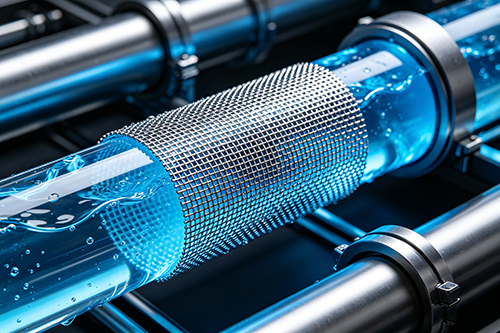
The engineering team encountered several intertwined challenges during the design and testing phase:
• Material Compatibility and Thermal Performance: Their cooling systems required materials with thermal conductivities in the range of 500-800 W/mK. Achieving these properties in diamonds combined with metals such as aluminum and copper was non-trivial. The composite had to sustain high performance without compromising structural integrity.
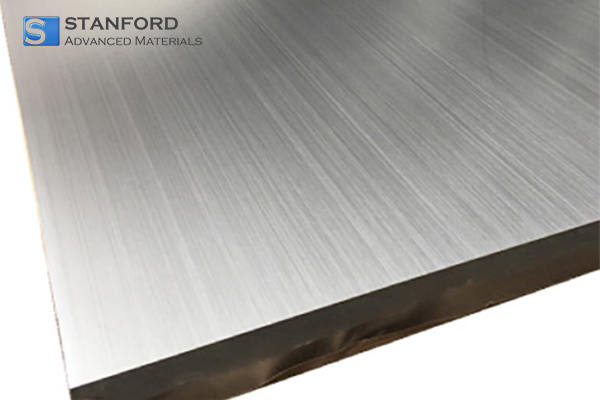
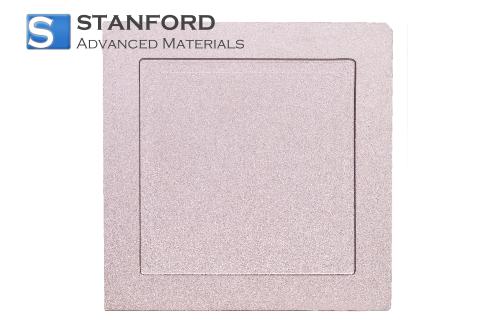
• Manufacturability of Thin Sections: The customer needed samples as small as 25x25x1 mm. Producing such thin sections brought extra complexity in ensuring uniform distribution of diamond particles throughout the metal matrix while maintaining a precise 1 mm thickness.
• Tolerance and Quality Control: With direct liquid cooling applications, even slight material inconsistencies could lead to hotspots. The assembly team required tight tolerances, both in terms of dimensional consistency and material bonding. For instance, ensuring a consistent layer with a thickness variation of less than ±0.05 mm across the sample area was critical. Additionally, the purity of the base metal had to be maintained (metals used were at least 99.9% pure) to avoid potential degradation over time.
• Real-world Constraints: There was also a demanding lead time and compatibility requirement with existing cooling modules. The customer's prototypes were scheduled for evaluation within a few weeks, leaving little margin for trial-and-error.
Why They Chose SAM
The manufacturer chose Stanford Advanced Materials (SAM) due to our proven expertise honed over 30+ years and our broad portfolio encompassing more than 10,000 materials for customers around the globe. Our track record with advanced composite materials gave the customer confidence that we could meet not only the technical specifications but also the manufacturing constraints.
Our collaborative approach was another key factor. During initial testing, we noticed minor discrepancies in expected material consistency that hinted at potential challenges in large-scale production. Our team communicated these findings openly and proposed adjustments that helped align the composite specifications with the client's performance targets.
Moreover, SAM's ability to provide both aluminum-diamond and copper-diamond composite variants allowed the customer to compare and eventually optimize performance based on specific cooling demands. Our global supply network also assured a timely delivery, a critical element given the stringent project timelines.
Solution Provided
To address these challenges, our team at Stanford Advanced Materials (SAM) devised a multi-stage process:
1. Material Formulation: We started by developing the aluminum-diamond and copper-diamond composites with a careful balance. The metal matrix was prepared using a base metal of 99.9% purity, while diamond content was optimized to achieve a tunable thermal conductivity ranging from 400 to 800 W/mK. This formulation was crucial because maintaining the right ratio ensured the desired composite behavior even under the physically demanding conditions of liquid cooling applications.
2. Precision Manufacturing for Thin Sections: Given the sample dimensions of 25x25x1 mm, controlling the manufacturability of such thin sections required meticulous process calibration. In our production runs, we introduced rigorous in-line measurement systems. For example, every sample was measured to guarantee a thickness variation within ±0.05 mm, ensuring uniform thermal characteristics across the entire component. The integration of diamond particles was monitored to avoid agglomeration, a factor that could hinder thermal performance.
3. Quality Control and Process Adjustments: Throughout the manufacturing runs, our engineers monitored parameters such as composite density and interfacial bonding quality between the diamond and the metal. During early batches, we observed a slight irregularity in thermal conductivity at the edges of the samples, which we corrected by adjusting the bonding pressure during sintering. These adjustments allowed us to consistently achieve the desired 500-800 W/mK range. Additionally, we implemented a rigorous post-production analysis procedure that involved thermal conductivity testing using a controlled heat source and calibrated sensors, ensuring that every sample met the high-performance criteria.
4. Addressing Real-World Constraints: The production process was synchronized with the customer's lead-time demands. Our logistics team coordinated closely with production to make sure that the samples were available for testing within the set deadline. The final products were packaged with detailed certification reports, including measurements of thickness uniformity, thermal conductivity, and composition.
Results & Impact
The customized solution provided by SAM had tangible engineering impacts. The customer reported:
• Consistent Thermal Performance: The composites delivered a measured thermal conductivity consistently within the range of 500-800 W/mK. This level of performance ensured effective heat transfer in the direct liquid cooling modules.
• Dimensional and Compositional Accuracy: All 25x25x1 mm samples maintained the strict thickness tolerance of ±0.05 mm, and the homogeneity in the metal-diamond structure was confirmed via scanning electron microscopy and thermal mapping. This consistency reduced the risk of localized overheating in the final products.
• Improved Integration in Cooling Modules: During prototype assembly, the cooling systems exhibited smoother temperature gradients. Our real-time quality controls and process adjustments allowed the engineering teams to integrate these composites without additional modifications to their design. There were minor adjustments required during initial testing, but these were resolved quickly thanks to the detailed process logs and rapid feedback mechanism established with SAM's technical team.
• On-Time Delivery: Despite the challenges inherent in producing such thin slices of composite material, the samples were delivered within the required timeline, keeping the customer's project on track.
Key Takeaways
This case study underscores the importance of precision and detailed engineering oversight in developing advanced materials for electronics cooling applications. By focusing on the rigorous specifications of thermal conductivity, purity, and dimensional tolerances, we demonstrated that even the most complex material requirements could be met through careful formulation and process control.
During our work, small observations during initial testing led to adjustments that made a significant performance difference. Our ability to deliver both aluminum-diamond and copper-diamond composites with tunable properties provided the customer with valuable options, ensuring their cooling systems would perform reliably. In the realm of electronics cooling, where every degree counts, the concerted effort from SAM's experienced team helped bridge design challenges with manufacturable solutions.
This case highlights that success in high-demand applications hinges on meticulous material engineering, proactive quality control, and the flexibility to meet specific client constraints.
 Dr. Samuel R. Matthews