Products
 Bars
Bars
 Beads & Spheres
 Bolts & Nuts
 Crucibles
 Discs
Discs
 Fibers & Fabrics
 Films
Films
 Flake
Flake
 Foams
Foams
 Foil
Foil
 Granules
 Honeycombs
 Ink
Ink
 Laminate
 Lumps
Lumps
 Meshes
 Metallised Film
 Plate
Plate
 Powders
 Rod
Rod
 Single Crystals
 Sputtering Target
 Tubes
Tubes
 Washer
 Wires
Wires
 Converters & Calculators
 Write for Us



High-Purity Cesium Chloride Powder Fuels Clean Energy R&D Feasibility Studies

Customer Background
A prominent research group in the United States dedicated to clean energy initiatives embarked on a feasibility study to assess novel process improvements. They have been focused on breakthrough clean energy R&D, where even the slightest inconsistency in raw materials could skew experimental results. Their expertise lies in energy conversion systems that demand the utmost precision in material inputs. Despite advanced research capabilities, the team needed a reliable supplier of cesium chloride powder, as their work involved minuscule reaction yield thresholds sensitive to batch variations.
Historically, they sourced materials from various suppliers, but discrepancies in purity and composition led to delays in their process development. With timelines tightening and process parameters becoming more demanding, finding a dependable source for high-purity cesium chloride powder was a top priority. Their target was a shipment that maintained over 99.9% purity and ensured lot-to-lot consistency across a 10 kg batch—a necessary condition for scaling up from lab-scale experiments to full process development.
Challenge
Clean energy R&D experiments require layman magic, but science is unforgiving with its need for precision. For this feasibility study, the main challenges were threefold:
1. Purity Requirements: The material needed to consistently reach between 99.9% and 99.99% purity. Given the sensitivity of subsequent chemical processes, even a minor impurity could shift reaction kinetics.
2. Lot-to-lot Consistency: Process development depended on predictable performance. The team demanded that each batch of cesium chloride powder not only met the high-purity specification, but also exhibited minimal variability. This stringent uniformity was non-negotiable.
3. Scale and Timelines: While early feasibility studies often require smaller sample sizes, this project needed 10 kg shipments to allow proper testing under realistic process loads. This presented a real-world supply challenge—maintaining lead times and ensuring samples from different batches showed negligible deviations.
The technical constraints were steep. Any gap in quality or consistency would have led to delays, forcing the team into a cycle of revalidation and iterative testing, likely pushing back milestones in clean energy commercialization.
Why They Chose SAM
Our customer opted for Stanford Advanced Materials (SAM) due to our long-standing reputation built over three decades. In our experience of supplying more than 10,000 advanced materials for global customers, we encountered similar challenges. Here's why they counted on our ability to deliver:
· Technical Expertise: We have a deep bench of engineers and material scientists who truly understand the nuances of high-purity process demands. During early discussions, our team identified the potential pitfalls in inconsistent cesium chloride batches.
· Customization: Beyond merely selling a commodity, we proposed a tailored approach—providing batch-specific Certificates of Analysis (COAs) that detailed the purity levels, moisture content, and other key parameters. This documentation was pivotal to making internal process adjustments.
· Reliability: We understood that in the clean energy R&D space, time is as critical as composition. Our global supply network meant that a 10 kg shipment was not only achievable but also guaranteed to meet their tight lead time without sacrificing quality.
Solution Provided
To meet the rigorous requirements, our approach encompassed several technical and logistical steps:
1. Material Sourcing and Preparation: We began by sourcing raw Cesium Chloride from trusted mining and refining operations. Our material prep team then refined the powder to achieve the desired purity levels (ranging from 99.9% to 99.99%). We employed rigorous purification processes and monitored trace contaminants using inductively coupled plasma (ICP) analysis. These methods provided a quantifiable assessment of impurity levels in parts per million.
2. Batch-Specific Documentation: Recognizing the importance of lot-to-lot consistency, we implemented a batch-release system. Each 10 kg shipment came with a comprehensive COA, including measurements of impurity levels, moisture content (maintained below 0.5% to ensure optimal performance), and the particle size distribution (target range within 50-150 microns). During initial testing, we noticed that ensuring uniform particle size distribution was critical to good process flow in subsequent experiments. Adjustments in powder milling ensured that the specified range was consistently met.
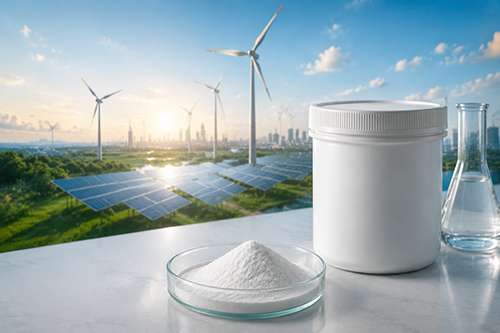
3. Packaging and Logistics: The cesium chloride powder was packaged in moisture-resistant, airtight containers to prevent any degradation. This step was particularly important because even minor moisture ingress could compromise the purity levels critical for the R&D process. Our logistics team coordinated precise delivery schedules to ensure that lead times were strictly adhered to. During early shipments, we verified that temperature and humidity conditions during transit met the stringent requirements, thereby maintaining product integrity.
4. Continuous Feedback Loop: While the material was in transit and during the preliminary use phase, our team maintained close correspondence with the research engineers. We discussed observations such as minor shifts in powder fluidity under different storage conditions. This feedback allowed us to fine-tune packaging methods on subsequent orders—notably through slight modifications in desiccant usage within the container assemblies.
Results & Impact
After integrating the supplied cesium chloride powder into their testing protocols, the clean energy R&D team reported significant improvements:
· Reliable Process Development: The uniform high-purity levels of the cesium chloride powder eliminated variability in test outcomes. The batch consistency allowed the team to confidently scale up.
· Reduced Iterations: With material properties clearly defined and maintained across batches, there was a notable decline in the need for repeated calibration tests. Our customers remarked on the reliable performance between shipments.
· Streamlined Documentation and Evaluation: The in-depth COAs eased internal quality reviews. Every batch showed trace impurity levels that aligned with the process requirements, greatly reducing troubleshooting and process downtime.
· On-Time Delivery: Despite the challenges of scaling to a 10 kg format, our ability to deliver within the required timelines proved essential to maintaining the project schedule for R&D milestones.
These tangible outcomes reinforced the importance of material consistency in highly specialized applications. The research team was able to move from early feasibility studies to more comprehensive process development with assurance that the raw material would not impede progress.
Key Takeaways
Meeting the high-purity and consistency requirements for clean energy research can be challenging when your process relies on critical material attributes. Our experience with this project highlighted several vital points:
· Consistent Purity Matters: When a process's success hinges on achieving and maintaining a purity range upwards of 99.9%, every detail—from sourcing to packaging—requires thorough oversight.
· Detailed Analysis and Documentation: Providing batch-specific COAs offers transparency and assists customers in optimizing their internal processes. Knowing the exact impurity levels and particle size distribution aids in mitigating risks.
· Supply Chain Reliability: Even when experiments need larger-than-lab-scale quantities (like 10 kg shipments), a dependable supply chain mitigates risks of delays, a common real-world constraint in R&D projects.
· Collaborative Adjustments: Continuous dialogue between our lab engineers and the client's process team led to rapid modifications (like packaging adjustments) that further bolstered material performance.
Throughout the project, our team at SAM was consistently engaged with the client, ensuring that every technical and logistical challenge was met with precision. Our goal was pragmatic: to provide a custom material solution that not only met technical specifications but also integrated smoothly into their clean energy experimentation framework.
The successful deployment of high-purity cesium chloride powder for this feasibility study underscores the significance of detailed engineering oversight coupled with a robust supply chain. Smaller tweaks, like improving moisture-resistant packaging or refining particle size distribution, can make all the difference when moving from lab experiments to broader process validation.
 Dr. Samuel R. Matthews