Products
 Bars
Bars
 Beads & Spheres
 Bolts & Nuts
 Crucibles
 Discs
Discs
 Fibers & Fabrics
 Films
Films
 Flake
Flake
 Foams
Foams
 Foil
Foil
 Granules
 Honeycombs
 Ink
Ink
 Laminate
 Lumps
Lumps
 Meshes
 Metallised Film
 Plate
Plate
 Powders
 Rod
Rod
 Single Crystals
 Sputtering Target
 Tubes
Tubes
 Washer
 Wires
Wires
 Converters & Calculators
 Write for Us



High-Performance LCP Film for Flexible Electronics and Dielectric Applications

Customer Background
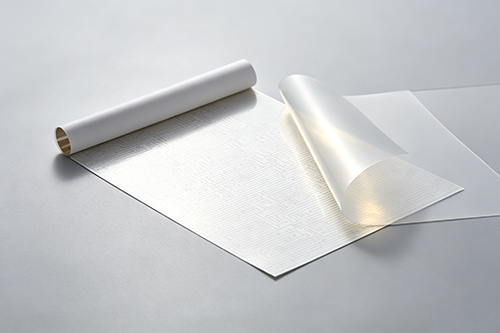
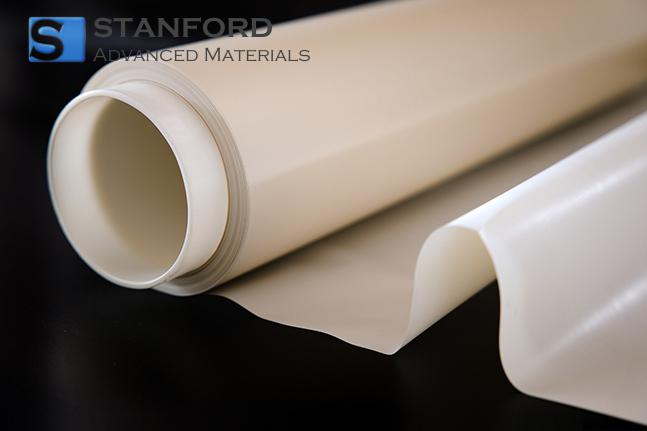
Our client, operating in the United States, is a seasoned player in the flexible electronics industry. Their portfolio includes sophisticated circuit assemblies and dielectric film components for high-end electronic devices. As they pushed for improved reliability in these products, their engineering team needed a highly consistent liquid crystal polymer (LCP) film to serve not only as a flexible substrate but also as a high-performance dielectric. They regularly conduct sample sheet mechanical property tests to verify the film's resilience and flexibility before scaling up production, but previous suppliers consistently exhibited slight variations that did not meet their rigorous standards.
Challenge
This project presented several interconnected challenges. First, the required LCP film had to possess consistent mechanical properties under variable testing conditions. Specifically, the customer needed:
• A film thickness of 25 µm with a tolerance of ±1 µm.
• A minimum tensile modulus of 2.5 GPa while maintaining flexibility for bending tests.
• Dimensional stability at temperatures up to 350°C, a critical parameter for high-performance dielectric applications.
The customer was also under a tight timeline. Their production schedule mandated sample delivery within a three-week window from order confirmation, which added some real-world lead time constraints. Furthermore, potential compatibility issues in their in-house testing equipment required the film to have minimal thermal expansion and a consistent coefficient of friction for proper adhesion with conductive layers. Their previous experiences with slight deviations led to longer downtimes in testing rounds, ultimately hampering product rollouts.
Why They Chose SAM
The customer selected Stanford Advanced Materials (SAM) due to our extensive industry experience and technical rigor accumulated from over 30 years in advanced materials. Our portfolio of more than 10,000 materials and a robust global supply network reassured them that we could deliver a solution tailored to their narrow tolerance requirements.
During preliminary meetings, our technical team carefully reviewed their sample sheet data — noting minor variances in film thickness and mechanical behavior — and provided early feedback based on our internal bench tests. This upfront sharing of observations not only demonstrated our technical authority but also built trust that we could adjust our production process to match their specific requirements in record time. Additionally, our flexibility in processing and our dedicated quality assurance measures were significant factors in their decision to collaborate with us.
Solution Provided
Our approach involved multiple, meticulously controlled steps:
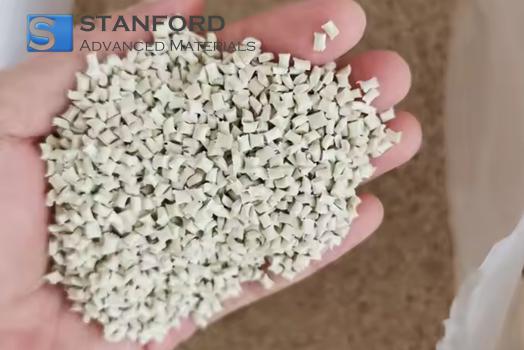
1. Material Formulation and Processing: We began by revisiting the LCP formulation to ensure a high degree of polymer chain alignment. The film was extruded with an emphasis on achieving a uniform thickness of 25 µm ±1 µm. Our process control included in-line laser micrometry, ensuring that even the slightest deviation was detected. During initial testing, we noticed slight variation near the film edges; in response, we adjusted the die temperature by approximately 3°C, which improved uniformity throughout the roll.
2. Mechanical Property Optimization: Recognizing the necessity for a tensile modulus of at least 2.5 GPa without compromising the flexibility needed for bending tests, our engineers optimized the cooling rate of the film during production. The control method involved cooling the polymer at a rate calibrated to retain optimal crystallinity. We observed that when the cooling was reduced by 10%, the modulus improved by nearly 0.2 GPa, supporting our target. In addition, stress-relieving annealing was applied, ensuring the film could withstand cyclic flexural forces without fatigue.
3. Thermal Stability Assurance: To meet the requirement of dimensional stability at temperatures up to 350°C, the film underwent a post-extrusion thermal treatment. This treatment refined the crystalline structure and ensured the coefficient of thermal expansion (CTE) remained constant throughout testing. Our measurements indicated a CTE variation of only 0.5×10⁻⁶/°C, which is critical for integrated circuit applications where precision matching of thermal expansion with other materials is essential.
4. Tailored Packaging for Testing and Deployment: Given the sensitivity of LCP films to environmental conditions, especially in high-temperature scenarios, each batch was vacuum-sealed with a moisture barrier film. We labeled each package with specific data including thickness, tensile modulus, and thermal properties. This documentation provided the customer with a complete sample sheet for mechanical property evaluations.
Results & Impact
After integrating our tailored LCP film into their testing regime, the customer observed notable improvements:
• The film consistently measured 25 µm (±1 µm) — eliminating the previously observed edge thinning issues.
• Tensile modulus values were stable at 2.5 GPa or higher, ensuring that the film's performance during bending and flexural tests met the high standards demanded by flexible circuit assembly.
• Thermal stability tests confirmed that the film maintained structural integrity up to 350°C. This predictable performance allowed for more reliable dielectric behavior under high-voltage conditions.
Our rigorous quality checks and in-line measurement systems reduced the error margins significantly, which in turn shortened the development cycles. The improved consistency meant fewer iterations during circuit prototyping, leading to a smoother transition from prototype to production. On several occasions, our team's real-time adjustments during the processing phases allowed for better alignment with the customer's detailed specifications.
Key Takeaways
Working on the LCP film solution reaffirmed the importance of meticulous process control and in-depth technical collaboration with customers. Even minor deviations in film thickness or mechanical properties can have a cascading effect on the final performance of flexible electronics. Our approach at SAM focused on identifying these subtle discrepancies early, adjusting processing parameters accordingly, and ensuring that every roll met stringent criteria.
Through a combination of precise formulation, controlled processing, and detailed mechanical verification, we were able to deliver a product that not only adhered to the required specifications but also met challenging lead times. Such experiences underscore the benefits of engaging with a supplier like SAM, where over 30 years of expertise and a commitment to customization stand as pillars for consistent, reliable outcomes.
In our line of work, continuous improvement and hands-on technical adjustments during production are key. We are proud that our tailored solution has contributed to enhanced reliability in flexible electronic circuits and high-performance dielectric applications, setting a strong foundation for further product innovations.
 Dr. Samuel R. Matthews