Products
 Bars
Bars
 Beads & Spheres
 Bolts & Nuts
 Crucibles
 Discs
Discs
 Fibers & Fabrics
 Films
Films
 Flake
Flake
 Foams
Foams
 Foil
Foil
 Granules
 Honeycombs
 Ink
Ink
 Laminate
 Lumps
Lumps
 Meshes
 Metallised Film
 Plate
Plate
 Powders
 Rod
Rod
 Single Crystals
 Sputtering Target
 Tubes
Tubes
 Washer
 Wires
Wires
 Converters & Calculators
 Write for Us



Alumina Tube Replacement Restored Medical Imaging Production Stability

Customer Background
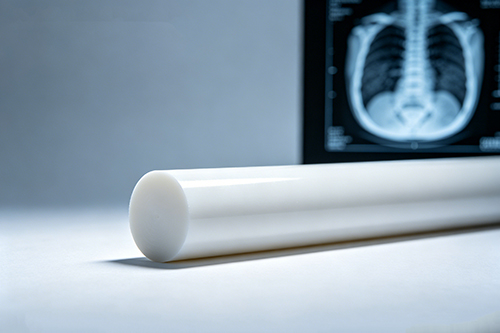
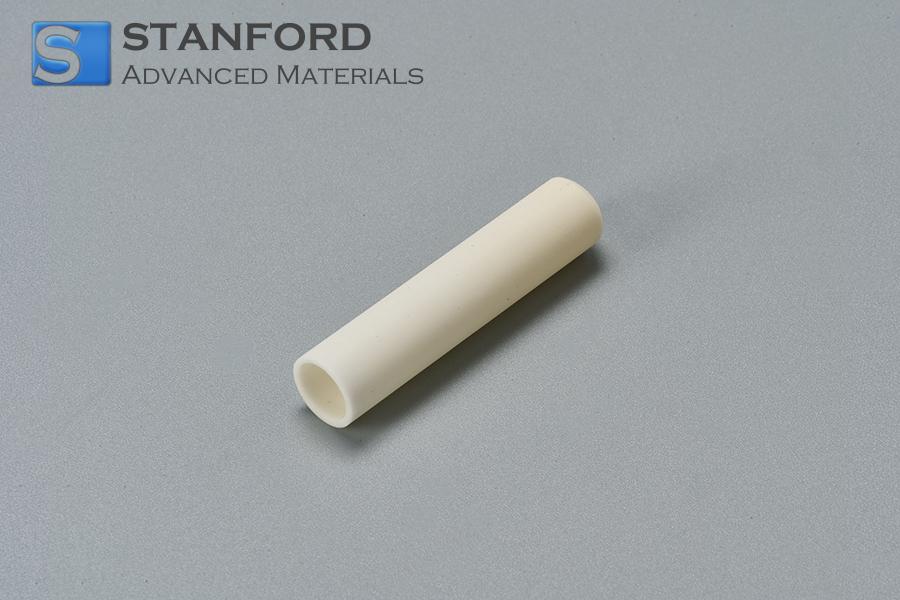
A medical imaging equipment manufacturer was dealing with an unglamorous but urgent problem: a legacy ceramic part had gone out of normal replenishment flow, and their service and production teams still needed it. The component was an alumina tube used in older imaging systems, where it served as an insulating and structural element inside the assembly. The equipment itself was still in the field, and replacement demand had not disappeared just because the original supply had become harder to manage.
The customer's engineering group needed a source for replacement ceramic rods and tubes that matched the existing design closely enough to drop into established builds without forcing a redesign. That sounds straightforward. It usually is not. Older medical platforms tend to carry multiple hidden constraints — established mating dimensions, assembly fixtures, thermal behavior, and strict cleanliness expectations. A slight mismatch can stop a production line or create a service delay.
During initial discussions, our team noticed that the real issue was not just sourcing aluminum oxide ceramics. It was keeping legacy compatibility intact.
Challenge
The core challenge was the dimensional and functional match.
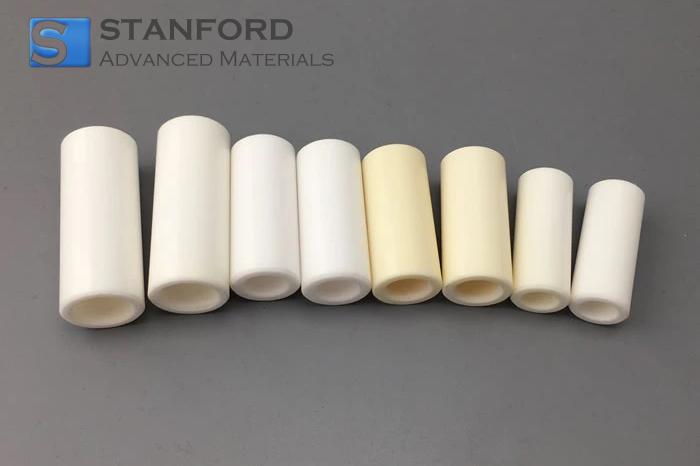
The customer needed alumina tubes and rods that aligned with existing medical equipment geometry, including outer diameter, inner diameter, and length tolerances already locked into their assembly process. In this case, the nominal tube size was held to tight limits around 6.0 mm OD with an ID near 3.0 mm, and the length had to stay within a controlled range to avoid interference during installation. They also needed material consistency that would not change the electrical insulation or thermal stability behavior of the original part.
There were a few other constraints, and they mattered more than they first appeared:
· High alumina purity was required, with 99.5% or better preferred for reliable dielectric performance.
· Surface finish had to be smooth enough to prevent chip initiation during handling and installation.
· Parts had to be shipped with protective packaging to reduce edge damage and moisture exposure.
· Lead time was tight because the customer could not afford a production stop while waiting for a special-order component.
The legacy design itself added another layer of difficulty. Older parts were often made from a supplier-specific ceramic body that had subtle differences in shrinkage, density, or straightness. Matching the drawing was only half the job. Matching the behavior during assembly was the part that usually exposed problems.
Why They Chose SAM
The customer chose Stanford Advanced Materials (SAM) because we could work from the actual application requirements instead of treating the request like a generic ceramic purchase.
We reviewed the target dimensions, the acceptable deviation range, and the service environment. Our team also compared the customer's existing part geometry against available alumina stock forms so we could identify where a direct match was realistic and where minor adjustments might be needed. That early review helped reduce back-and-forth. It also avoided the common mistake of assuming "ceramic is ceramic."
Another reason was supply reliability. With more than 30 years of materials experience and a global inventory network covering 10,000+ materials, SAM could respond quickly to a replacement-part request without turning it into a long custom development cycle. The customer needed continuity, not a science project.
We also provided practical guidance on packaging and handling. Small things matter with brittle ceramic parts. A careful carton configuration, foam separation, and moisture-protective wrapping can prevent a usable part from arriving as scrap. Our team found that these details often decide whether a replacement part makes it straight into production.
Solution Provided
SAM supplied alumina tubes and rods configured to match the legacy assembly requirements as closely as possible.
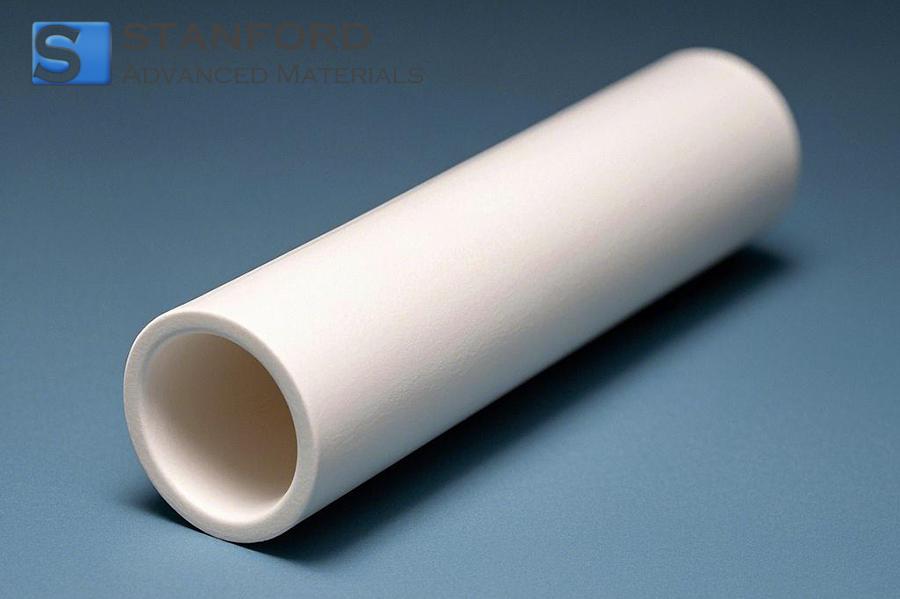
We selected high-purity alumina ceramic stock with stable density and low porosity, then verified the key dimensions before shipment. The tubes were produced to maintain consistent wall thickness and concentricity, while the rods were checked for straightness and end condition so they would seat properly in the existing equipment.
A few technical points mattered in practice:
· Alumina purity was held at 99.5%+ to support insulation and wear resistance.
· Dimensional checks were performed against the customer's reference part, including OD, ID, and length.
· Straightness and end finish were reviewed to reduce installation resistance.
· Parts were packed in protective configurations with foam separators and cushioned corner support.
· Each lot was labeled clearly for traceability, which helped the customer's receiving team verify the correct replacement set quickly.
During initial testing, we noticed that one geometry could benefit from a slightly adjusted end finish to improve insertion behavior. That suggested the assembly team had been compensating for minor edge variation in the old supplier's part. We adjusted the finishing approach accordingly, which made the replacement parts behave more like the customer expected.
Results & Impact
The replacement parts integrated into the customer's imaging equipment without forcing changes to the existing assembly process. That was the main objective, and it was met.
The production team was able to continue building and servicing legacy systems with fewer interruptions. Fit-up time decreased because the alumina tubes and rods matched the established fixture geometry more closely than the customer's previous emergency substitutes. The service group also benefited from having a repeatable source for future replacements rather than a one-time stopgap.
From a materials standpoint, the customer gained a dependable supply path for a component that is usually overlooked until it becomes unavailable. We often see that in older medical platforms. One small ceramic part can become a bottleneck for an entire equipment line. This case was no exception.
The customer also avoided the cost and delay of redesigning a functioning legacy subassembly. That saved engineering time, qualification time, and a fair amount of administrative friction.
Key Takeaways
Legacy medical equipment often depends on ceramic components that must match more than just a drawing. They need to match the way the part fits, handles, and survives assembly. In this case, alumina tube and rod replacement required careful attention to purity, geometry, finish, and packaging.
Stanford Advanced Materials (SAM) supplied a practical replacement path that kept the customer's medical imaging production moving. The result was straightforward, which is usually what people want from a replacement part. The part arrived, fit the assembly, and stayed out of the way afterward. That is often the best outcome in equipment support.
 Dr. Samuel R. Matthews