Products
 Bars
Bars
 Beads & Spheres
 Bolts & Nuts
 Crucibles
 Discs
Discs
 Fibers & Fabrics
 Films
Films
 Flake
Flake
 Foams
Foams
 Foil
Foil
 Granules
 Honeycombs
 Ink
Ink
 Laminate
 Lumps
Lumps
 Meshes
 Metallised Film
 Plate
Plate
 Powders
 Rod
Rod
 Single Crystals
 Sputtering Target
 Tubes
Tubes
 Washer
 Wires
Wires
 Converters & Calculators
 Write for Us



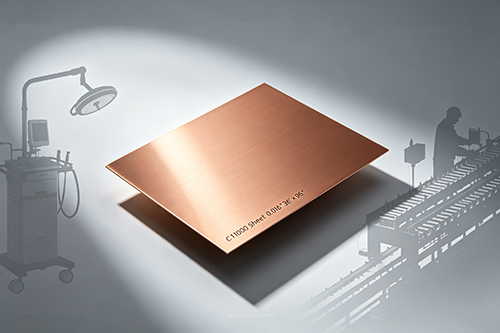
C11000 H02 Copper Sheet Cut to 0.016" x 36" x 96" for Medical Manufacturing Panels

Customer Background
A medical manufacturing company was building internal copper panels used in compact electrical assemblies and shielding subcomponents. The material was not the finished product itself, but it had to behave consistently during stamping, forming, and downstream assembly. Their team needed C11000 copper in H02 temper, and they needed it in a very specific format: 0.016" thick, 36" wide, and 96" long.
That combination sounds straightforward on paper. It usually isn't. A thin copper sheet at that width tends to show edge waviness, handling marks, and coil set if the temper control drifts. For their line, those issues could translate into surface reject rates, fit-up problems, and extra sorting time before the sheets ever reached production. During initial testing, we noticed they were also dealing with a lead-time constraint. They could not wait for a standard mill order and then run a separate slitting process. They needed a ready-to-use supply format.
Challenge
The main challenge was maintaining the right balance between formability and stability. H02 temper was required because the sheet needed enough hardness to hold shape through fabrication, yet still remain workable for stamping and controlled bending. If the temper came in too soft, the parts distorted. If it came in too hard, cracking showed up during forming.
Three technical constraints mattered most:
· Thickness control at 0.016" across a 36" wide sheet
· C11000 copper composition with consistent conductivity and ductility
· Surface condition suitable for medical manufacturing, where contamination and blemishes can create process issues later
Packaging was another real concern. The customer wanted material protected from handling damage and oxidation during transit. Even minor surface discoloration would have forced extra cleaning or inspection. That added cost and slowed the line.
Why They Chose SAM
They selected Stanford Advanced Materials (SAM) because we could supply the copper in a custom cut size rather than forcing them to buy a larger stock format and rework it in-house. Our team also confirmed the temperature, thickness, and certification requirements before production started. That mattered. It reduced back-and-forth and kept the order moving.
We also had the supply-chain flexibility to handle the timing. The customer's production schedule was tight, and they needed a supplier that could respond without turning the order into a long procurement cycle. SAM's experience with custom metal formats helped here. We know that when a sheet is this thin and this wide, small process choices affect everything downstream.
Solution Provided
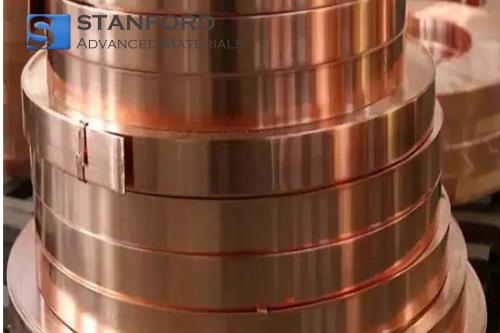
We supplied C11000 copper sheet in H02 temper, rolled and finished to 0.016" thickness, then prepared it to the requested 36" x 96" format. The material was checked for dimensional consistency and surface quality before shipment. For this project, the important details were not dramatic. They were controlled.
A few points stood out in production:
· Thickness held at 0.016" with tight lot-to-lot consistency
· Material was certified as C11000 copper, suitable for electrical and fabrication use
· H02 temper was maintained to support forming without losing shape stability
· Sheets were protected in packaging designed to limit scratches and oxidation during transport
Our team found that handling the sheet individually, rather than in a generic bulk pack, reduced edge damage. That seems obvious, but it makes a difference on thin copper. We also paid close attention to surface finish because the customer was using the sheet in a controlled manufacturing environment where even small defects could interfere with assembly flow.
A small adjustment in packaging format helped too. The sheets were separated and secured so they would not rub during transit. That suggested a simple but effective way to reduce inspection rejects at receiving.
Results & Impact
Once the material entered production, the customer reported smoother sheet handling and fewer interruptions during forming preparation. The H02 temper provided the expected balance of workability and stiffness, so their operators did not need to compensate for inconsistent sheet behavior.
The most visible impact was on process stability. Because the material arrived in the correct size and condition, their team could move directly into fabrication instead of spending time on trimming, flattening, or additional surface checks. Lead time improved as well, since they no longer had to organize a separate conversion step.
A secondary benefit showed up in quality control. The certified material documentation made incoming inspection faster. That seems minor, but in medical manufacturing, paperwork and traceability are not side tasks. They are part of the release process.
Key Takeaways
This project showed that thin copper sheet orders often fail or succeed on the details: temper consistency, cut size, surface protection, and documentation. C11000 copper at 0.016" x 36" x 96" is not difficult only because of the alloy; it is difficult because of handling and repeatability.
Stanford Advanced Materials (SAM) supplied the requested format without forcing the customer into extra processing steps. That reduced risk, saved time, and kept the production schedule moving. For manufacturers working with thin copper sheet, especially in regulated or controlled environments, the value is usually in the quiet things: stable temper, clean packaging, and material that arrives ready to use.
 Dr. Samuel R. Matthews