
 Products
 Bars
Bars
 Beads & Spheres
 Bolts & Nuts
 Crucibles
 Discs
Discs
 Fibers & Fabrics
 Films
Films
 Flake
Flake
 Foams
Foams
 Foil
Foil
 Granules
 Honeycombs
 Ink
Ink
 Laminate
 Lumps
Lumps
 Meshes
 Metallised Film
 Plate
Plate
 Powders
 Rod
Rod
 Single Crystals
 Sputtering Target
 Tubes
Tubes
 Washer
 Wires
Wires
 Converters & Calculators
 Write for Us



Ultra-Thin Stainless Steel Marker Bands Kept Medical Device Development on Schedule

Customer Background
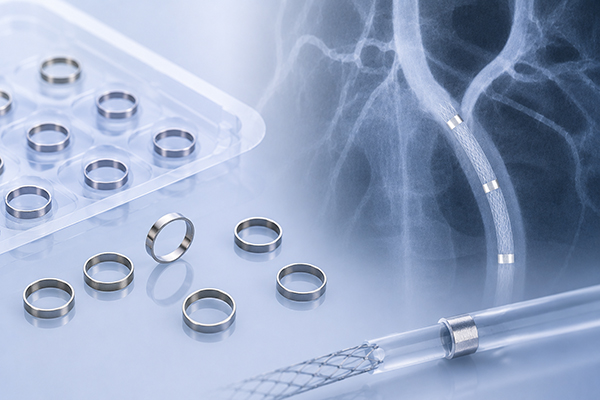
A medical device manufacturer was developing an imaging-enabled catheter platform that required a stainless steel marker band near the distal tip. The band had to be small enough to fit a compact assembly, visible under fluoroscopy, and stable through downstream bonding and sterilization steps. During early testing, the team found that the marker geometry affected not only visibility but also how consistently the band seated against the polymer shaft.
Their development team had already narrowed the design to a very thin-wall stainless steel part. The target called for a 0.38 mm inner diameter and a 0.03 mm wall, with a small initial order for R&D followed by a planned ramp to about 5,000 pieces per month. That combination sounds straightforward on paper. In practice, it is not.
Challenge
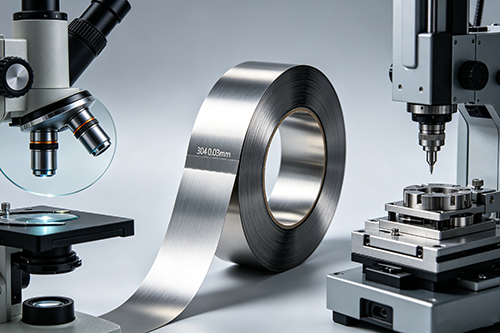
The main issue was manufacturability at that scale and geometry. The band needed to maintain a stable ID so it could fit repeatably on the catheter shaft, and the wall had to remain uniform enough to preserve ring strength without adding unnecessary bulk. The customer also needed clean, burr-free edges. Any flare or rough edge could interfere with bonding and create a weak point during crimping.
Several constraints were working at once:
· ID held at 0.38 mm with tight variation control
· Wall thickness at 0.03 mm, which left very little margin for distortion
· Medical-grade stainless steel compatibility with bonding and sterilization
· Edge quality suitable for direct assembly, not secondary cleanup
· Packaging that protected the parts during handling and shipment
· Lead time short enough to support iterative R&D without delaying pilot builds
Previous sourcing attempts had shown a common problem: suppliers could quote the part, but not deliver it consistently. Some pieces were dimensionally acceptable yet had slight edge deformation from cutting. Others met the size target but arrived with an inconsistent finish. For a catheter marker, those small defects can turn into assembly variation very quickly.
Why They Chose SAM
The team selected Stanford Advanced Materials (SAM) after a technical review of our ability to work with small-format medical components and controlled tolerances. They needed a supplier that could support an early prototype run without making them wait for a large minimum order, then transition to a repeatable supply path once design validation moved forward.
What stood out was our response to the edge-quality concern. Instead of treating it as a minor cosmetic detail, we discussed how the cutting method, deburring approach, and post-process handling would affect fit and bonding. That mattered. Our team found that the customer was not just buying a stainless steel ring; they were buying assembly stability.
The broader sourcing capability also helped. Stanford Advanced Materials (SAM) could support the R&D quantity first, then align production planning for the 5,000-per-month requirement once the design was frozen.
Solution Provided
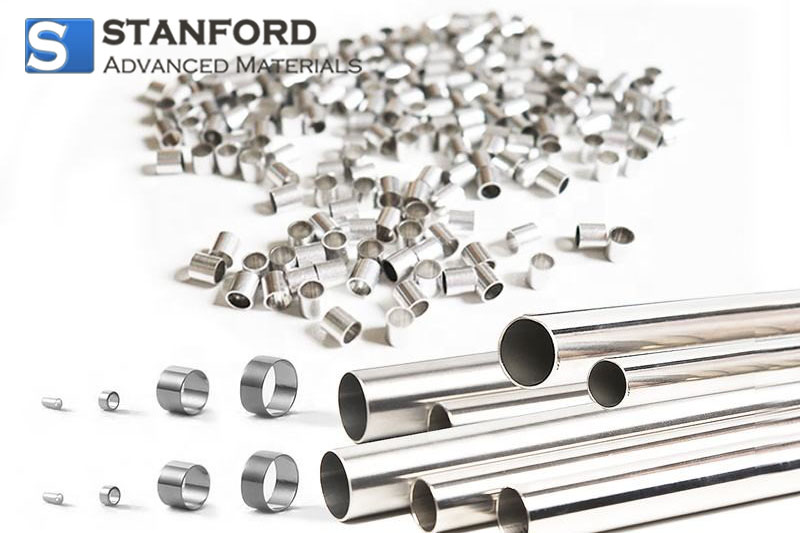
We supplied custom stainless steel marker bands produced to the requested 0.38 mm ID and 0.03 mm wall specification, with process controls focused on dimensional consistency and part integrity. The material was selected for medical use and processed to avoid unnecessary work-hardening at the edges.
A few details mattered most:
· The marker bands were produced from medical-grade stainless steel with controlled chemistry and surface quality suitable for device assembly.
· Dimensional checks were performed on the ID and wall section, with sampling tightened around the prototype lot because the wall was so thin.
· Edge finishing was adjusted to reduce burr formation and improve fit at the catheter interface.
· The parts were cleaned and packaged to limit particulate contamination during transfer to the customer's assembly area.
· For the production-ramp discussion, we planned packaging and lot structure so the same part could move from bench testing to monthly supply without changing the downstream handling method.
During initial testing, we noticed that even a small amount of edge irregularity could alter seating depth. This suggested that the finishing step was just as important as nominal size. We adjusted the process accordingly and held the parts to a cleaner edge profile before release.
The customer also needed consistency across batches because the marker band would be used in both development and production. That is where SAM's supply coordination mattered. We kept the lot structure simple, labeled, and traceable, which reduced confusion during test builds.
Results & Impact
The first R&D lot fit the assembly process without major rework. The bands seated properly on the shaft, and the clean edge profile reduced the need for manual touch-up before bonding. That was important because hand finishing at this size can create more variation than it solves.
The customer reported three practical improvements:
· Faster prototype assembly because the marker bands required less adjustment
· Better repeatability in fit-up during early device builds
· A clearer path to production scaling once the design was locked
The monthly volume target was also more realistic after the initial qualification run. Instead of treating the R&D order and the production order as two separate sourcing problems, the customer could keep the same material approach and part geometry through both stages. That saved time. More importantly, it reduced the risk of last-minute material changes during design validation.
We have seen this pattern before with small medical components. If the band looks simple, people often underestimate how much process control it takes to make it behave the same way every time.
Key Takeaways
Ultra-thin stainless steel marker bands demand more than a nominal size match. Wall control, edge condition, cleaning, and packaging all influence whether the part works in a medical assembly. In this case, the 0.38 mm ID and 0.03 mm wall left little room for error, so the supply approach had to be disciplined from the start.
Stanford Advanced Materials (SAM) supported the customer with a small R&D lot and a scalable production path, which helped shorten the gap between development testing and monthly manufacturing. For teams building catheter-based devices or other compact medical assemblies, that kind of material consistency can remove a surprising amount of friction from the program.
 Dr. Samuel R. Matthews