Products
 Bars
Bars
 Beads & Spheres
 Bolts & Nuts
 Crucibles
 Discs
Discs
 Fibers & Fabrics
 Films
Films
 Flake
Flake
 Foams
Foams
 Foil
Foil
 Granules
 Honeycombs
 Ink
Ink
 Laminate
 Lumps
Lumps
 Meshes
 Metallised Film
 Plate
Plate
 Powders
 Rod
Rod
 Single Crystals
 Sputtering Target
 Tubes
Tubes
 Washer
 Wires
Wires
 Converters & Calculators
 Write for Us



Comparative Analysis of Tantalum, Niobium, and Pt/Ir Capillary Tubes in Medical Applications

Introduction
Capillary tubes made from Tantalum (Ta), Niobium (Nb), and Platinum-Iridium (Pt/Ir) alloys are crucial components in various medical devices, particularly in interventional cardiology, neurosurgery, and implantable electronics. These metals are selected not only for their mechanical properties but also for biocompatibility, radiopacity, and long-term stability in the human body.
In this article, we will discuss the physical and chemical properties of these three materials, examine their suitability for specific medical applications, and provide real-world examples that illustrate how these tubes are used in clinical settings.
1. Material Properties at a Glance
|
Property |
Niobium (Nb) |
||
|
Density (g/cm³) |
16.6 |
8.6 |
~21.5 |
|
Melting Point (°C) |
3017 |
2477 |
~1780 (Pt) |
|
Radiopacity (X-ray) |
Excellent |
Moderate |
Exceptional |
|
Biocompatibility |
Excellent |
Excellent |
Excellent |
|
Corrosion Resistance |
Outstanding |
Very Good |
Outstanding |
|
Magnetic Response |
Non-magnetic |
Non-magnetic |
Non-magnetic |
|
Cost |
Moderate-High |
Moderate |
High |
Further reading: Capillary Tubes: Types and Applications
2. Tantalum: The Trusted Choice for Long-Term Implants
Tantalum capillary tubes have been a staple in the medical industry due to their superior biocompatibility, excellent corrosion resistance, and strong radiopacity.
Their real-world applications include:
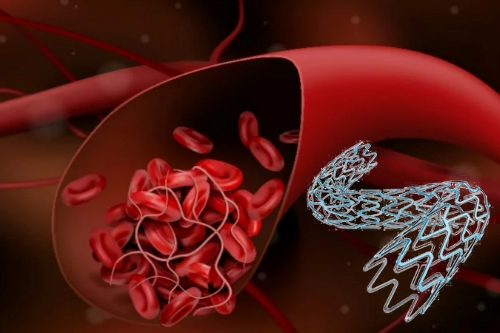
- Coronary stents: Tantalum is often used for radiopaque marker bands in balloon catheters and stents. Its high density makes it easy to visualize under fluoroscopy.
- Spinal fusion devices: Tantalum cages promote osteointegration while maintaining strength and inertness.
- Cranial reconstruction plates: Thanks to its compatibility with bone tissue and non-magnetic nature, it is preferred in neurosurgery.
- Cochlear implants: Tantalum tubes act as signal-carrying conduits that remain stable in the body for decades.
3. Niobium: A Balanced Option for Electronics and Temporary Implants
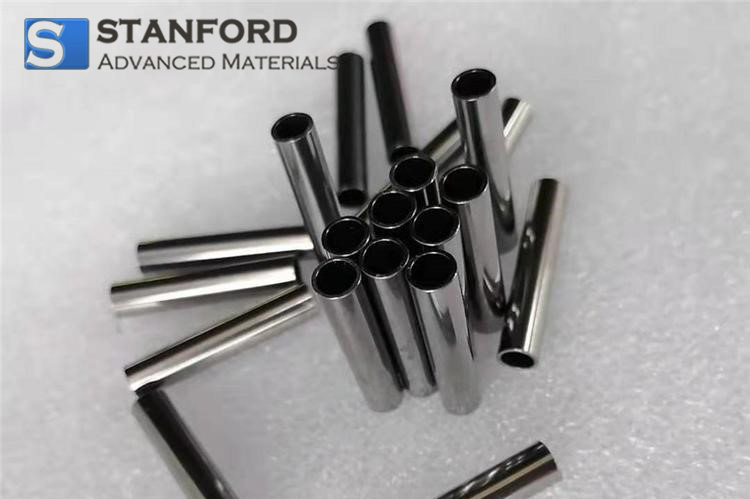
Niobium capillary tubes offer lighter weight and better processability than tantalum, while maintaining excellent biocompatibility. It is especially useful in devices that require electrical insulation, electromagnetic transparency, or tight tolerances.
These capillary tubes find real-world applications in:
- Implantable pulse generators (IPGs): Niobium is often used for cases or connectors in cardiac pacemakers and neurostimulators due to its non-magnetic and electrically neutral properties.
- Neurostimulation leads: Niobium's flexibility and corrosion resistance make it ideal for use in small-diameter conduits carrying electrical signals.
- Cochlear implant interconnects: Used as connecting tubes due to its solderability and stable interface with silicone or epoxy encapsulation.
4. Platinum-Iridium: Premium Performance for High-Risk Applications
Platinum-Iridium alloys (typically 90/10 or 80/20 Pt/Ir) are considered the gold standard for components that require extreme radiopacity, electrical conductivity, and corrosion resistance.
Their real-world applications involve:
- Electrophysiology (EP) catheters: Pt/Ir tips are used as electrodes that deliver or record cardiac signals during ablation procedures.
- Vascular marker rings: In cerebral aneurysm coils or embolization devices, Pt/Ir rings ensure excellent visibility for accurate placement.
- Deep brain stimulation (DBS): Fine Pt/Ir tubes are used to encase or support electrodes implanted in the brain.
- RF ablation devices: Where electrical conductivity and thermal stability are critical under load.
5. Application Selection Guide
|
Medical Application |
Recommended Material |
Reason |
|
Coronary balloon markers |
Cost-effective, highly visible |
|
|
Neurostimulator leads |
Niobium |
Flexible, biocompatible, and EM-stable |
|
Deep brain stimulation (DBS) |
Pt/Ir |
Fine electrodes, high conductivity |
|
Spinal implants |
Tantalum |
Encourages osseointegration |
|
Cardiac ablation electrodes |
Pt/Ir |
High-temperature stability, conductivity |
|
Cochlear implant interconnects |
Niobium or Tantalum |
Biocompatible, solderable |
|
Aneurysm coil markers |
Pt/Ir |
Extremely radiopaque and corrosion-resistant |
For more information, please check Stanford Advanced Materials (SAM).
Conclusion
Each of these materials—Tantalum, Niobium, and Pt/Ir—has carved a niche in the medical device industry. Selection should be based not just on technical performance, but also on cost, regulatory history, and integration with the rest of the device.
- Use Tantalum capillary tubes when long-term implantation, radiopacity, and mechanical stability are key.
- Choose Niobium for light, flexible, and electrically neutral components—ideal for electronics and short-to-medium term implants.
- Opt for Platinum-Iridium in high-precision, radiopaque, and electrically active applications, especially in neurology and cardiology.
 Chin Trento