Products
 Bars
Bars
 Beads & Spheres
 Bolts & Nuts
 Crucibles
 Discs
Discs
 Fibers & Fabrics
 Films
Films
 Flake
Flake
 Foams
Foams
 Foil
Foil
 Granules
 Honeycombs
 Ink
Ink
 Laminate
 Lumps
Lumps
 Meshes
 Metallised Film
 Plate
Plate
 Powders
 Rod
Rod
 Single Crystals
 Sputtering Target
 Tubes
Tubes
 Washer
 Wires
Wires
 Converters & Calculators
 Write for Us



Common Applications of Incoloy Capillary Tubes

What Makes Incoloy Tick
Incoloy isn’t your average metal—it’s a superalloy. That means it’s built to stand up to serious abuse: high heat, corrosion, pressure—you name it. It's made mostly of nickel, with some iron and chromium mixed in, and depending on the job, it might have molybdenum, copper, or titanium too. This stuff doesn’t flinch in the face of acids, heat, or salt-heavy environments.
Now, stainless steel might look shiny and strong, but it’ll start to rust or pit when things get really rough—especially around chlorides or acidic media. Incoloy? It just keeps chugging along. That’s why we use it in places like chemical plants, power stations, and even under the sea.
A Quick Look at the Grades
Each Incoloy grade has its own “superpower,” depending on what it's built for:
- Incoloy 800/800H/800HT: These hold up well in high heat and resist oxidation. Great for furnaces, steam generators, and heat exchangers.
- Incoloy 825: This one’s a champ against acids—sulfuric, phosphoric. You'll see it in acid plants and nuclear reprocessing.
- Incoloy 903 and A-286: Tough and stable at both freezing cold and scorching hot temperatures. Perfect for aerospace and high-pressure fuel systems.
Here’s a summary table for the key Incoloy grades:
|
Incoloy Grade |
Key Properties |
Typical Applications |
|
- Excellent resistance to oxidation and carburization - High creep and rupture strength at high temperatures |
Heat exchangers, nuclear steam generators, furnace components |
|
|
- Outstanding resistance to sulfuric and phosphoric acids - Strong resistance to pitting, intergranular attack, and stress corrosion |
Chemical processing, acid production, nuclear fuel reprocessing |
|
|
903 & A-286 |
- Excellent mechanical strength at cryogenic and high temperatures |
Aerospace, high-performance fuel and hydraulic systems |
For more Incoloy products please check Stanford Advanced Materials (SAM).
Common Applications of Incoloy Capillary Tubes
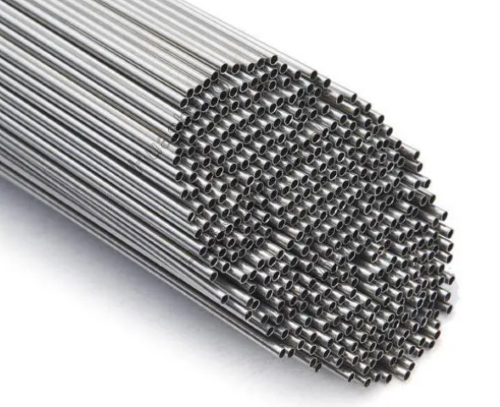
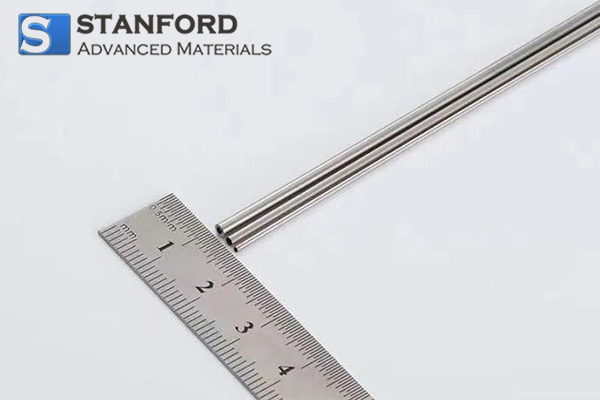
Now, these aren’t just regular tubes we’re talking about—they’re capillary tubes. That means they’re narrow, precise, and made for systems where there’s no room for error.
In nuclear power plants, they help monitor and control systems where reliability is critical. One failure could mean a shutdown—or worse. Incoloy holds up under radiation and heat better than most, so it's a solid bet in that environment.
In petrochemical setups and refineries, you’ve got acids, sulfides, and other corrosive agents flying around. Incoloy tubes take it all in stride, whether they’re in sampling lines or injection systems.
Then there’s high-temp gas systems—think gas turbines or reactors. These tubes carry superheated gases that’d melt or warp most materials. But not Incoloy—it stays straight and true, even when temperatures hit 1000°C.
Aerospace folks also love it. When you’re launching a rocket or flying a jet, there’s no time for leaks or failures. Incoloy tubes carry fuel and hydraulic fluid through some very intense environments, and they do it with remarkable precision.
Related reading: A Guide to Inconel Used in Oil and Gas Extraction
Choosing the Right Tube for the Job
Picking the right Incoloy capillary tube isn’t something you do on a whim. You’ve got to consider:
- The environment: Are you fighting acids? High heat? Chlorides? Pick your grade accordingly.
- The pressure and temperature: Not all alloys behave the same under stress. Make sure the tube can take the heat and the load.
- Dimensional accuracy: With capillary tubes, small variations can lead to big problems—especially in flow or pressure control.
- Compliance and standards: If you’re in nuclear, aerospace, or pharmaceuticals, you’ll need documentation to prove everything’s up to code.
- Cost vs. longevity: Incoloy might be pricier up front than stainless steel, but if it lasts three times longer and cuts down on maintenance? That’s money well spent.
Here’s a concise table. It presents a quick overview of the Incoloy capillary tubes and the relevant ASTM standards:
|
Incoloy Capillary Tube |
Relevant ASTM Standards |
Description |
|
Nickel-chromium-iron alloys, including Incoloy |
ASTM B163 |
Covers requirements for high-temperature service, including capillary tubes. |
|
Nickel-chromium alloys (seamless tubes) |
Applies to seamless tubing for aerospace, power generation, and chemical industries. |
|
|
Nickel-chromium alloys (seamless tubing) |
ASTM B407 |
Focuses on mechanical properties and corrosion resistance in high temperatures. |
Final Thoughts
When you’re working in tough environments—places where a material failure isn’t just inconvenient but dangerous—you want something you can trust. That’s why Incoloy capillary tubes have earned their place. They are the go-to choice for critical applications in energy, aerospace, and chemical processing.
 Chin Trento