
 Products
 Bars
Bars
 Beads & Spheres
 Bolts & Nuts
 Crucibles
 Discs
Discs
 Fibers & Fabrics
 Films
Films
 Flake
Flake
 Foams
Foams
 Foil
Foil
 Granules
 Honeycombs
 Ink
Ink
 Laminate
 Lumps
Lumps
 Meshes
 Metallised Film
 Plate
Plate
 Powders
 Rod
Rod
 Single Crystals
 Sputtering Target
 Tubes
Tubes
 Washer
 Wires
Wires
 Converters & Calculators
 Write for Us



EV Batteries: A Complete Overview

Description
Electric vehicles (EVs) are extremely popular now, driven by increased environmental awareness and development in battery technologies. Batteries are at their center, key components that determine range, efficiency, cost, and vehicle lifespan.
Several battery technologies drive EVs today, including Lithium-Ion (Li-ion), Nickel-Metal Hydride (NiMH), and future Solid-State batteries. Their difference is the reason why certain technologies dominate certain applications.
Lithium-Ion (Li-ion) Batteries
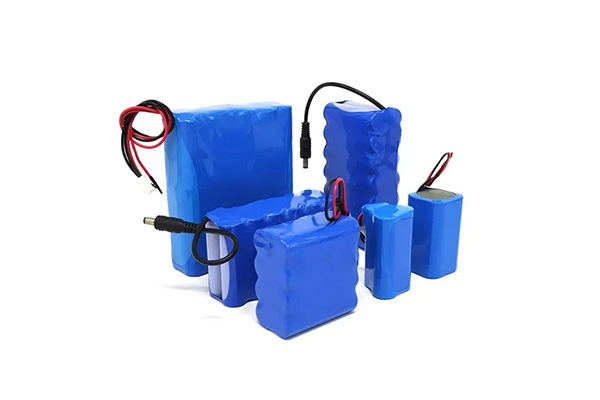
Lithium-Ion batteries are the dominant battery in the EV industry currently, due to their high energy density, relatively long life, and good charging characteristics. Lithium-Ion batteries function by transferring lithium ions from the cathode to the anode during charging, and vice versa when discharging, thereby storing and releasing electrical energy. Common cathode materials include Lithium Nickel Manganese Cobalt Oxide (NMC) and Lithium Iron Phosphate (LFP), each with varying advantages. Li-ion batteries are small, light, and can provide extended driving ranges of 200 to 400 miles per charge and are the battery of choice for newer EVs like Tesla's Model 3 and Nissan Leaf.
Li-ion batteries also have their own limitations, which include thermal instability, and require sophisticated cooling systems to manage heat. Li-ion batteries are hard to recycle due to their complex chemical makeup, which raises environmental concerns about their disposal.
Nickel-Metal Hydride (NiMH) Batteries
Nickel-Metal Hydride batteries were among the first commercial battery technologies utilized in hybrid electric vehicles, with widespread application in Toyota's first-generation Prius vehicles. NiMH batteries utilize hydrogen-absorbing alloys at the negative electrode and nickel oxide hydroxide at the positive electrode. Their key advantages are durability, long cycle life, and higher tolerance to abuse compared to other batteries.
On the downside, NiMH batteries have lower energy density than Li-ion, so they result in heavier battery packs and reduced driving range. They are also prone to memory effect—reduction of battery capacity caused by successive partial charge cycles, requiring periodic full discharge to restore their full capacity.
Solid-State Batteries
Solid-State batteries are a promising next-generation EV battery technology. Unlike conventional batteries that utilize liquid electrolytes, Solid-State batteries utilize solid electrolytes. This change enhances safety by removing the risks of fire from liquid electrolyte leakage or thermal runaway. Solid-State batteries can also have significantly higher energy densities, enabling longer driving ranges and faster charging times.
Automakers like Toyota, Volkswagen, and BMW have invested heavily in the technology's development, hoping Solid-State batteries will substantially improve the performance of EVs. The tech is still in the developmental stage, though, and challenges in terms of manufacturing cost, electrolyte stability, and scalability are currently impeding large-scale commercialization.
Benefit and Use Data Table
The table below summarizes the benefits and practical uses of the three prominent EV battery technologies discussed:
| Battery Type | Energy Density | Lifespan | Charging Speed | Cost Efficiency | Typical Applications |
|---|---|---|---|---|---|
| Li-ion | High | Good | Fast | Moderate | Tesla Model 3, Nissan Leaf |
| NiMH | Moderate | Excellent | Moderate | Good | Toyota Prius (older models) |
| Solid-State | Very High | Excellent | Very Fast | Low | Future EVs (2027+) |
This comparative data underscores why Li-ion batteries are currently preferred, why NiMH remains relevant for hybrids, and how Solid-State batteries may soon redefine EV battery standards. For more information, please check Stanford Advanced Materials (SAM).
Frequently Asked Questions
What is the lifespan of EV batteries?
EV batteries generally last 8–15 years, depending on technology, usage patterns, and maintenance practices.
Can EV batteries be recycled?
Yes, EV batteries, particularly Li-ion, can be recycled, though current processes are complex and continually evolving.
How long does it take to charge an EV battery?
Typical EV charging times range from 20 minutes (fast charging) to several hours (standard home charging), depending on battery capacity and charger type.
Are Solid-State batteries available commercially?
Currently, Solid-State batteries are still experimental and not yet commercially available, with mass production expected around 2027–2030.
Why are Li-ion batteries preferred in most EVs?
Li-ion batteries offer the best current balance of energy density, cost, and charging speed—which is why they power vehicles like the Tesla Model 3, Ford Mustang Mach-E, and Nissan Leaf.

 Chin Trento