
 Products
 Bars
Bars
 Beads & Spheres
 Bolts & Nuts
 Crucibles
 Discs
Discs
 Fibers & Fabrics
 Films
Films
 Flake
Flake
 Foams
Foams
 Foil
Foil
 Granules
 Honeycombs
 Ink
Ink
 Laminate
 Lumps
Lumps
 Meshes
 Metallised Film
 Plate
Plate
 Powders
 Rod
Rod
 Single Crystals
 Sputtering Target
 Tubes
Tubes
 Washer
 Wires
Wires
 Converters & Calculators
 Write for Us



The Evolution of Optical Crystals

Description
Optical crystals are materials that display special optical features, finding their application in high-tech lasers, fiber optics, and optical lenses. Such materials have a number of specific possibilities of manipulating light in particular ways: to bend, reflect, or refract it.
Within the past hundred years, the optical crystal area has passed through a rapid evolution-from the discovery of naturally occurring crystals to the creation of sophisticated synthetic materials specifically designed to meet the demands imposed by modern technology. This article will describe the history of optical crystals, types, their use, and future possibilities.
Introduction to Optical Crystals
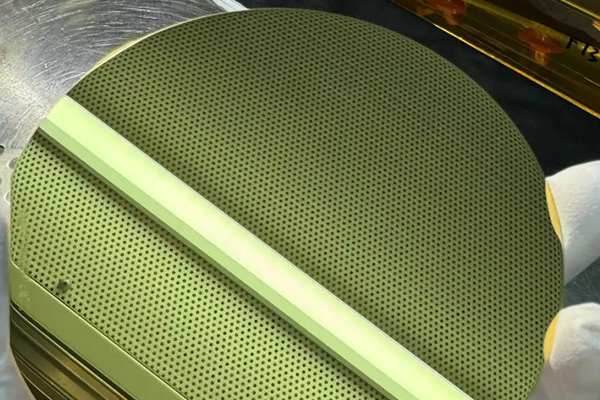
Optical crystals have been a cornerstone for advancing optics, photonics, and laser technologies for many decades. The study of optical crystals, regarding their interaction with light, began early in the 19th century when scientists pursued an understanding of how light interacts with different materials. These early findings used natural crystals such as quartz, calcite, and sapphire, from which it emerged that certain crystals, if oriented properly, could bend, polarize, or reflect light predictably. These findings have formed the basis for developing more advanced optical materials available today.
With the mid-20th-century development of lasers and greater insight into quantum mechanics, the need for optical crystals increased exponentially. The development of synthetic crystals such as Nd:YAG (Neodymium-doped Yttrium Aluminum Garnet) and LiNbO₃ (Lithium Niobate) revolutionized the field, giving full control over light to a degree previously unimaginable and thus allowing for further advancements in fields like telecommunications, medicine, and defense.
The History of Optical Crystals
The history of optical crystals began in the 19th century when Pierre Curie and Jean-Baptiste Biot initiated a study on the optical properties of materials, particularly those that rotate plane-polarized light. During the 19th century, quartz was the most common optical crystal used, since it can polarize light and is relatively more available than most optical crystals. Quartz crystals then became the basis for piezoelectric crystals, which have been applied to sonar, ultrasonic devices, and several types of sensors.
In the early 20th century, calcite crystals, which exhibit a phenomenon known as double refraction, became central to many optical systems. Calcite was one of the first crystals used to demonstrate how light could be split into two beams with different refractive indices. This laid the groundwork for the development of more complex optical devices, such as polarizers and beam splitters.
However, the most significant fillip in the domain of optical crystals was obtained during the middle of the 20th century. The development of synthetic crystals in laboratories marked a turning point. Researchers began to make crystals with highly specialized optical properties, allowing manipulation of light to be done more effectively and efficiently. Most important, this was accrued in the up-and-coming lasers.
Theodore Maiman developed the first operating laser using a synthetic crystal, Ruby (Al₂O₃ doped with chromium), in 1960. This invention was able to illustrate that crystals are not only capable of manipulating light but also amplifying it, thereby giving rise to laser systems, which are the basis of many of the modern technologies.
Types of Optical Crystals
Several types of optical crystals exist, each with different properties and applications. These could be categorized into three main classes: nonlinear optical crystals, laser crystals, and piezoelectric crystals.
1. Nonlinear Optical Crystals
Nonlinear optical crystals are materials which, when the intensity of light is high, will show a nonlinear response. In other words, the refractive index changes with the intensity of light passing through it, which enables a wide range of effects such as second-harmonic generation, optical parametric oscillation, and frequency mixing. These crystals find extensive applications in optical communication, laser technologies, and quantum optics.
Common NLO crystals:
Beta Barium Borate (BBO): applied in laser systems for frequency conversion.
Potassium Titanyl Phosphate (KTP): Especially applied in high-power laser sources.
Periodically-Poled Lithium Niobate (PPLN): Commonly used for SHG in telecom applications.
2. Laser Crystals
Laser crystals represent the materials that engage in an active medium of laser systems, where they are doped with different ions in order to produce a specific wavelength of light when pumped by an external source.
Common laser crystals:
Nd:YAG stands for Neodymium-doped Yttrium Aluminum Garnet, and is a crystal commonly used in medical lasers (surgery), cutting tools, and military applications.
Ti:sapphire: Titanium-doped Sapphire, well-known for its tunable laser output in femtosecond laser systems.
Ruby (Cr:Al₂O₃): The first ever laser crystal developed.
3. Piezoelectric Crystals
Mechanical deformations in piezoelectric crystals produce an electric charge. Such materials play an indispensable role in many ultrasonic devices, sensors, and actuators. Common applications include medical imaging, industrial sensors, and precision measurement devices.
Common piezoelectric crystals:
Quartz is the most common piezoelectric material used in watches, clocks, and frequency control devices.
LiNbO₃ - Lithium Niobate: Used in ultrasonic transducers and acoustic wave devices
Applications of Optical Crystals
Applications of optical crystals are numerous, with a wide range of industries to cover, from telecommunications, medicine, and defense to manufacturing. Among the more important applications are:
1. Lasers and Laser Systems
Optical crystals are the core component in most laser systems of the present day. Medical lasers used in surgery and diagnostics, industrial lasers applied to the processing of materials, and military lasers for targeting and communications-all these are demanding tasks relying on optical crystals. For instance, Nd:YAG lasers are used in dentistry for precise cutting and in surgical procedures aimed at the treatment of tissue.
2. Optical Communication
Nonlinear optical crystals are necessary in the area of fiber-optic communication. Their role is that they allow one to generate new frequencies and manipulate light at the quantum level, thus permitting transmissions of data over long distances at very high speeds, thereby underpinning the backbone of modern internet infrastructure.
3. Medical Imaging
Another critical contribution of optical crystals is in medical imaging technologies like X-ray and computed tomography-CT, where they serve to focus and guide beams of light. Also, crystals find their application in SEM-scanning electron microscopes and NMR-nuclear magnetic resonance imaging, where they ensure high precision and clear imaging.
4. Military and Defense
Some of their applications in military operations include laser weapons, targeting systems, and night vision equipment. Their ability to amplify light and produce precise laser beams makes them invaluable for defense technologies.
Future Trends and Research
The future of optical crystals is bright as research continues to develop new materials with superior optical properties. Scientists are pushing the bounds of photonics with new nonlinear crystals, tunable laser materials, and advanced piezoelectric materials that will enable even faster communication and more precise laser systems.
In the future, quantum optics will also lead to new innovations in the application of optical crystals, especially in quantum computing and secure communication.
Frequently Asked Questions
1. What are optical crystals?
Optical Crystals: These are materials with unique properties that enable them to interact with light in specialized ways such as the refraction, polarization, and amplification of light. They are applied in lasers, communication systems, and medical devices.
2. What are nonlinear optical crystals used for?
Non-linear optical crystals have widespread usage in manipulating light: frequency conversion in lasers enables optical communication and quantum optics.
3. Why are lasers important in modern technology?
Application areas where lasers are used include medical treatments, industrial manufacturing, telecommunications, and military systems due to the capability of producing precise and focused beams of light.
4. How are optical crystals manufactured?
The crystal growth of optical crystals usually occurs in the laboratory through a process such as the Czochralski pulling, Bridgman method, and flux growth, which control the crystal structures and properties with precision.
 Chin Trento