
 Products
 Bars
Bars
 Beads & Spheres
 Bolts & Nuts
 Crucibles
 Discs
Discs
 Fibers & Fabrics
 Films
Films
 Flake
Flake
 Foams
Foams
 Foil
Foil
 Granules
 Honeycombs
 Ink
Ink
 Laminate
 Lumps
Lumps
 Meshes
 Metallised Film
 Plate
Plate
 Powders
 Rod
Rod
 Single Crystals
 Sputtering Target
 Tubes
Tubes
 Washer
 Wires
Wires
 Converters & Calculators
 Write for Us



The Ultimate Guide to Optical Materials and Their Applications

Description
There is no area in high technology where one does not find the uses of optical materials. From telecommunications to healthcare, they are used in a wide range of industries today. The physical properties involved in governing light behavior, including reflection, refraction, dispersion, and absorption, are all covered under optical materials. They are also widely used in lenses, mirrors, prisms, and fiber optic cables. This paper examines various types of optical materials, their properties, and their many applications, especially in leading-edge industries including electronics, medical devices, and optical communications.
Types of optical materials
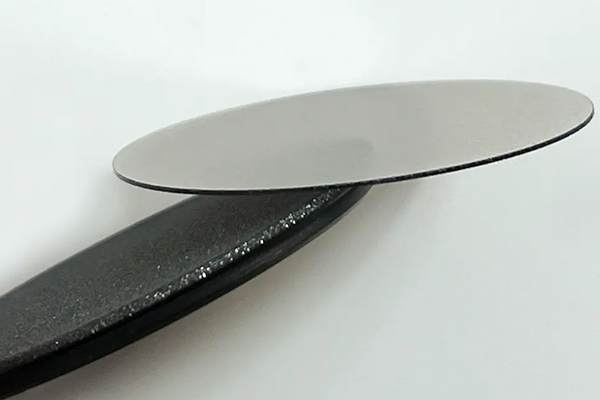
The properties that determine their interaction with light categorize the optical materials. Materials generally come in various forms, including transparent, reflective, and materials that show non-linear optical characteristics. The type of optical material used will depend upon the requirements of the application within conditions such as the transmission of light, refractive index, durability, and economic viability.
1. Glass
Glass is among the most common optical materials. The reasons for this are its excellent light transmission, a wide range of refractive indices, and the possibility to shape it into almost any form with high precision, including lenses and prisms. Glass is used in the manufacture of eyeglasses, camera lenses, and optical fibers.
The main glass types include:
- Soda-lime glass - used for windows and simple optics.
- Borosilicate Glass: Thermal expansion resistance is high and is used in laboratory equipment and high-precision lenses.
- Optical Glass: Specialty glass utilized for cameras, microscopes, and telescopes because of its superior optical qualities.
2. Crystals
Crystalline materials are highly valued for their hardness and unique optical characteristics, such as quartz and sapphire. Crystals may be birefringent, meaning that they can split light passing through them into two rays, which makes them useful for polarization applications.
The common types are:
- Quartz: Widely used in optical devices like oscillators, optical fibers, and lenses. Its high precision and stability make it a favorite in high-end equipment.
- Sapphire: With its outstanding hardness and optical clarity, sapphire can be used as a material for high-durability lenses and windows, especially in the defense and aerospace sectors.
3. Plastics and Polymers
Plastics include acrylic and polycarbonate, which are lighter and cheaper than glass. They find application in the manufacture of lenses, optical fibers, and protective coatings. These may not give the optical clarity of glass; however, with advancement in polymer technology, high-performance optical plastics are being developed.
Types of plastics and polymers include:
- Acrylic: Used in optical components like light guides and lenses, it is a good balance between optical clarity and affordability.
- Polycarbonate: A tough, shatter-resistant material used in eyewear lenses and optical filters.
4. Metals
Though metals are not typically used for the transmission of light, they are indispensable in reflective optical applications. Silver, aluminum, and gold are utilized in mirrors, reflective coatings, and optical filters because of their high reflectivity and durability.
- Silver: Owing to its high reflectivity, silver is very commonly used in mirrors and coatings on optical components.
- Aluminum: Commonly used in mirrors and reflective coatings for telescopes and laser systems.
5. Non-linear Optical Materials
Under high-intensity light, unique properties of such materials are revealed, including second-harmonic generation, useful in laser technology and telecommunications. Non-linear optical materials play the key role in enabling high-speed data transmission and new laser systems.
They are:
- Barium Titanate: A ferroelectric material used in the production of non-linear optical devices.
- Potassium Titanyl Phosphate (KTP): A crystal often used for frequency doubling in lasers.
Applications of Optical Materials
The versatility of optical materials allows them to be utilized within a wide range of high-tech applications. Some important areas where optical materials find their crucial role are mentioned below.
- Telecommunications
Depending on the application, optical fibers can be made from glass and polymer to enable high-speed, long-distance telecommunications. The capability of optical materials to support light signals over long distances, with minimal loss, has enabled a revolution in communication technologies.
- Medical Devices
The contribution of optical materials to medical technology is vast, including endoscopes, OCT systems, and laser surgery. For instance, optical fibers are in great demand for less-invasive surgical applications because they can carry light and images within the human body.
- Imaging and Photography
Lenses and imaging systems used in various optical instruments like cameras, microscopes, and telescopes require high-quality optical materials. A better quality of imaging system for everyday applications and scientific research has been possible with the development of improved optical materials.
- 4. Laser Technology
From applications involving the cutting and welding of items to barcode scanning and data storage, all lasers rely on non-linear optical materials enabling them to manipulate light. Crystals like KTP are used to generate particular wavelengths of light in laser systems.
- Aerospace and Defense
The fabrication of durable lenses and windows for satellites, spacecraft, and defense equipment employs optical materials such as sapphire and quartz. These materials must be resistant to extreme temperatures, have high clarity, and must be stable under harsh environments.
- Optical Sensors and Displays
Optical materials are fundamental in the development of advanced sensors and display technologies, including OLEDs and touchscreens. Transparent conductors, such as indium tin oxide (ITO), are used in the fabrication of optoelectronic devices.
Comparison Table of Common Optical Materials
|
Material |
Optical Properties |
Common Uses |
|
Glass |
High transparency, wide range of refractive indices |
Lenses, prisms, fiber optics, eyeglasses |
|
Quartz |
High precision, low absorption, birefringent |
Optical fibers, oscillators, high-end lenses |
|
Sapphire |
High hardness, optical clarity, durable |
Aerospace, defense, high-durability lenses |
|
Acrylic |
Lightweight, good optical clarity |
Lenses, light guides, affordable optics |
|
Polycarbonate |
Shatter-resistant, high impact resistance |
Eyewear lenses, optical filters |
|
Aluminum |
High reflectivity |
Mirrors, reflective coatings |
|
Barium Titanate |
Non-linear, ferroelectric |
Laser devices, frequency doublers |
|
KTP (Potassium Titanyl Phosphate) |
Non-linear optical properties |
Laser systems, frequency doubling |
Conclusion
Optical materials are at the core of many industries, providing the very basis for some of the developments in communications, healthcare, imaging, and many more. From the high-precision quartz in fiber optics to the nonlinear properties of barium titanate in lasers, these are enabling materials that make the innovations driving modern technology possible.
 Chin Trento