Products
 Bars
Bars
 Beads & Spheres
 Bolts & Nuts
 Crucibles
 Discs
Discs
 Fibers & Fabrics
 Films
Films
 Flake
Flake
 Foams
Foams
 Foil
Foil
 Granules
 Honeycombs
 Ink
Ink
 Laminate
 Lumps
Lumps
 Meshes
 Metallised Film
 Plate
Plate
 Powders
 Rod
Rod
 Single Crystals
 Sputtering Target
 Tubes
Tubes
 Washer
 Wires
Wires
 Converters & Calculators
 Write for Us



Why Carbon Fiber is the Material of the Future

Carbon fiber is rapidly becoming one of the most sought-after materials in modern manufacturing, ranging from high-end bicycles to cutting-edge electronics.
But what exactly is carbon fiber, and why is it so special? We'll dive into what carbon fiber is, its unique qualities, and how it's being used. By the end, you'll understand why carbon fiber is often considered the material of the future.
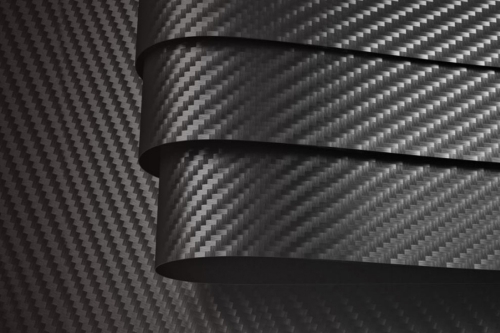
What Is Carbon Fiber?
Carbon fiber is a substance formed from fine fibers composed of carbon atoms in a crystalline form. The carbon fiber is often processed by heating so-called precursor materials, including polyacrylonitrile (PAN), rayon, and petroleum pitch, at very high temperatures in the absence of air. The procedure is called pyrolysis and results in the removal of non-carbon material from the precursors, producing long-chain carbon atoms. The carbon fibers produced are very light in mass and possess high strength and rigidity properties.
The fiber is generally combined with a resin material like epoxy to create a composite. The composite is widely used to manufacture lightweight and robust structures. The composites are moldable and are generally made in different shapes and sizes as required by the applications. Carbon fibers are widely admired for their strength to weight ratio properties, corrosion resistance, and thermal resistance.
What Makes Carbon Fiber So Special?
The attractiveness of carbon fiber is based on its numerous properties:
1. High Strength-to-weight Ratio
Carbon fiber materials have one of the strongest strength-to-weight ratios. Carbon fiber materials are five times stronger than steel but lighter. It implies that carbon fiber materials possess the same strength or even stronger strength than steel. However, the carbon fiber materials are lighter than steel. It is very beneficial to have the same strength at a lighter weight because this aspect can significantly favor the same industries.
2. Stiffness
Carbon fiber materials are also extremely stiff and resist the effects of pressure. In other words, they are resistant to significant bending or flexing when subjected to pressure. This characteristic makes carbon fiber ideal for the manufacturing of aircraft wings or other sport equipment such as tennis racquets and golf clubs. In addition to durability, carbon fibers also retain their shape when under pressure.
3. Corrosion Resistance
In contrast to metals, carbon fibers possess the natural ability to resist corrosion, making them especially suited to harsh conditions where the material may be exposed to water, chemical substances, or high temperatures. Carbon fibers, for instance, are especially suited to applications involving boats, where they do not oxidize like steel or aluminum.
4. Thermal Stability
Carbon fiber composites do not undergo degradation due to high temperatures. Certain types of carbon fiber can withstand temperatures above 300° C (572° F), and as such, they find many applications as engine components. This is particularly true for both automobiles and aircraft.
5. Versatility
It is possible to shape it in complex forms and designs, and this is a quality that is hard to match in other materials. This has made it a very popular material for various industries ranging from consumer electronics to aerospace exploration.
What Are the Uses of Carbon Fiber?
It is applied in many fields, given its outstanding strength and durability. Some of the most notable uses include the following:
1. Aerospace and Aviation
The aerospace industry has widely used the adaptation of carbon fiber, which is in increasing demand. Aircraft manufacturers have utilized carbon fiber composites in many key structural parts such as wings, fuselage, and others to reduce weight and thereby increase fuel efficiency. This material is able to bear high speed, strong pressure, and extreme temperature; thus, it is perfect for flying.
2. Automobile Industry
Carbon fiber is fast finding a wider application in the automotive industry, with a particular emphasis on high-performance sports cars and electric vehicles. The lightweight nature of carbon fiber improves fuel economy in EVs while also enhancing the performance of traditional gasoline-powered vehicles by reducing overall weight.
3. Sports Equipment
Carbon fiber also finds wide applications in high-end sports equipment manufacturing, like bicycles, tennis rackets, and golf clubs. The toughness combined with lightweight properties has made carbon fiber the ultimate material for athletes where speed and precision are required.
4. Medical Devices
In healthcare, carbon fiber is utilized in making prosthetic devices, medical equipment, as well as imaging equipment. This is because it is light, which is comfortable to patients. In addition to that, it is radiolucent.
5. Consumer Electronics
Carbon fiber is increasingly finding its applications in consumer electronics such as smartphones, laptops, etc. The hardness as well as the lightweight nature of carbon fiber provides the needed hardness as well as portability.
Carbon Fibers and Other Materials
When carbon fiber is considered alongside other traditional materials such as steel, aluminum, and plastics, it is evident that it has some advantages. Here's a comparison of carbon fiber with some of the other commonly used materials:
• Carbon Fiber vs. Steel: Carbon fiber is more strenuous than steel based on weight, and it is most suitable to use when you need to have strength without having additional weight. Steel, however, is more economical and feasible to produce on a mass scale. Even though carbon fiber performs better, it is more expensive to produce and requires more complex manufacturing processes.
• Carbon Fiber vs. Aluminum: Although lighter than steel, it does not match carbon fiber in strength-to-weight ratio. Also, it is more prone to corrosion than carbon fiber. While their cost is lower, carbon fiber boasts better durability and resistance to wear.
• Carbon Fiber vs. Plastic: Plastics are low in cost and light in weight but are considerably less strong and less durable when compared to carbon fiber. Carbon fiber composites are much more rigid, and their resistance to temperature and corrosion extends their applications to more demanding conditions. For more advanced materials and their applications, please check Stanford Advanced Materials (SAM).
FAQs
- Why is carbon fiber so expensive?
Carbon fiber is expensive due to the complex and energy-intensive manufacturing process. The raw materials used to make carbon fiber are costly, and the production process requires high precision, contributing to its overall cost. - Can carbon fiber be recycled?
Yes, carbon fiber can be recycled, but the process is still evolving. Researchers are working on developing more efficient methods to break down and reuse carbon fiber materials, which could help reduce costs and environmental impact. - Is carbon fiber stronger than steel?
In terms of strength-to-weight ratio, carbon fiber is stronger than steel. However, steel is more durable and performs better under certain conditions, particularly in terms of toughness and impact resistance. - How long does carbon fiber last?
Carbon fiber is incredibly durable and can last for decades if properly maintained. It is resistant to corrosion, which helps prolong its lifespan in harsh environments. - What are the environmental impacts of carbon fiber production?
The production of carbon fiber involves high energy consumption and can result in carbon emissions. However, efforts are being made to make the production process more sustainable, including recycling initiatives and improved manufacturing techniques.
 Chin Trento