
 Products
 Bars
Bars
 Beads & Spheres
 Bolts & Nuts
 Crucibles
 Discs
Discs
 Fibers & Fabrics
 Films
Films
 Flake
Flake
 Foams
Foams
 Foil
Foil
 Granules
 Honeycombs
 Ink
Ink
 Laminate
 Lumps
Lumps
 Meshes
 Metallised Film
 Plate
Plate
 Powders
 Rod
Rod
 Single Crystals
 Sputtering Target
 Tubes
Tubes
 Washer
 Wires
Wires
 Converters & Calculators
 Write for Us



A Beginner's Guide to Composite Materials

Description
Composite materials combine two or more distinct constituents to form a new material with enhanced properties. Typically, one part provides strength while the other offers flexibility or durability. In short, composites take advantage of the best characteristics of each ingredient. They can be as simple as fiberglass or as advanced as carbon fiber reinforced polymers used in aerospace and automotive industries.
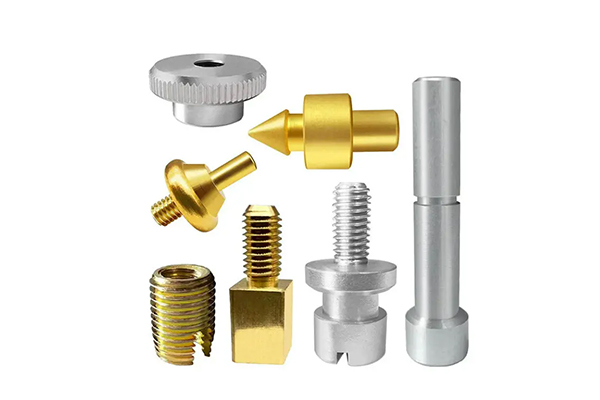
--What are Composite Materials?
Composite materials are manufactured by combining two or more disparate substances to create a product with enhanced properties not contained in the original material. They typically consist of a matrix (binder) and a reinforcement (strengthening phase). The matrix serves to bond the reinforcement together, while the reinforcement provides strength and stiffness. Such synergy results in materials that are both strong and lightweight, and this renders them priceless in numerous applications.
--Types of Composite Materials
The composite materials can be broadly grouped based on the matrix material:
Polymer Matrix Composites (PMCs): These are the most common composites, where a polymer resin (for example, epoxy) is used as the matrix, and reinforcing fibers such as glass or carbon provide the strength. PMCs have widespread usage in automobile as well as in aviation industries because of their enhanced strength-to-weight ratios.
Metal Matrix Composites (MMCs): Al or Ti acts as the matrix in MMCs, while ceramic fibers or particles act as reinforcements. They provide enhanced mechanical properties and are used in high temperature-resistant applications.
Ceramic Matrix Composites (CMCs): Composite materials with a ceramic matrix that is reinforced using silicon carbide fibers. CMCs display resistance to high temperatures and find applications in turbine engines and cutting tools.
Hybrid Composites: Two reinforcement types are joined in one matrix to create hybrid composites. This technique allows for the tailoring of properties to meet specific requirements.
--Properties of Composite Materials
The unique combination of reinforcement and matrix provides composite materials with a range of useful properties:
High Strength-to-Weight Ratio: Composites are as strong as traditional materials like steel but much lighter, and therefore they are especially well-suited for use where weight saving is critical.
Resistance to Corrosion: The majority of composites resist corrosion better than metals, extending the life of parts that must function under hostile environments.
Freedom of Design: The ability to form composites into complex geometries allows innovative solution designs, which are difficult to achieve with traditional materials.
Thermal and Electrical Conductivity: Composites can be tailored to have some thermal and electrical properties, ranging from insulating to conducting, depending on the constituents.
--Applications of Composite Materials
Composite materials have revolutionized several industries due to their varied properties:
Aerospace: Composites are used extensively in aircraft parts, such as fuselages and wings, in the aerospace industry for weight reduction and fuel efficiency maximization.
Automotive: In the automobile industry, composites assist in the production of lighter vehicles with better performance and fuel economy.
Construction: Composites in construction materials like panels and bridges offer strength and less maintenance.
Sports Equipment: Sports equipment like tennis rackets, golf clubs, and bicycles benefit from the strength and light weight of composites to improve sporting performance.
Medical Devices: Composites are utilized in prosthetics and implants due to their biocompatibility and ability to be designed to specification.
Property and Use Data Table
|
Property |
Composite Material Example |
Primary Use |
|
Strength |
Carbon Fiber Reinforced Polymer |
Aerospace components, high-performance sports equipment |
|
Lightweight |
Glass Fiber Reinforced Polymer |
Automotive panels, wind turbine blades |
|
Durability |
Aramid Fiber Composites |
Protective gear, military applications |
|
Flexibility |
Polymer Matrix Composites |
Consumer electronics casings, sporting goods |
|
Corrosion Resistance |
Ceramic Matrix Composites |
Chemical processing equipment, high-temperature environments |
This table summarizes some of the key characteristics of composite materials along with examples of where they are commonly applied. The combination of properties such as high strength and low weight makes composites an attractive choice for designers and engineers across many industries.
Frequently Asked Questions
Q: What exactly makes a composite material “composite”?
A: A composite material is made by combining two or more different substances to create a material with properties that are superior to the individual components.
Q: Are composites stronger than traditional metals?
A: In many cases, yes. Composites like carbon fiber reinforced polymers can achieve high strength-to-weight ratios that outperform conventional metals such as steel or aluminum.
Q: Can composite materials be recycled?
A: Recycling composites is challenging, but advances in technology are making it increasingly possible. Research continues to develop more effective recycling methods for these materials.
 Chin Trento