
 Products
 Bars
Bars
 Beads & Spheres
 Bolts & Nuts
 Crucibles
 Discs
Discs
 Fibers & Fabrics
 Films
Films
 Flake
Flake
 Foams
Foams
 Foil
Foil
 Granules
 Honeycombs
 Ink
Ink
 Laminate
 Lumps
Lumps
 Meshes
 Metallised Film
 Plate
Plate
 Powders
 Rod
Rod
 Single Crystals
 Sputtering Target
 Tubes
Tubes
 Washer
 Wires
Wires
 Converters & Calculators
 Write for Us



Surprising Facts About Ceramics You Didn't Know

Ceramics are everywhere—from household pottery to advanced aerospace components. While most people associate ceramics with fragile dishes or tiles, these materials have incredible properties that go far beyond what you might expect. Here are some surprising facts about ceramics that will change the way you see them.
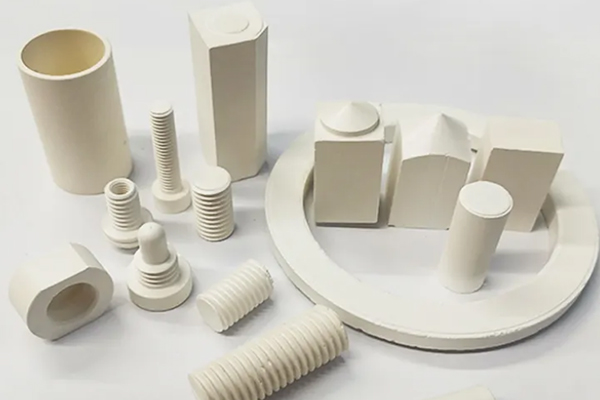
10 Surprising Facts About Ceramics
- They don't mind hot temperatures. Some ceramics do not melt even at temperatures above 2,000°C (3,600°F). This property of ceramics makes them very important in space satellites and jet engines.
- Harder than steel in some areas. Silicon carbide and boron carbide are among materials that are harder than steel. They are not as hard as diamonds but are close.
- Lightweight armor. Lightweight body armor can now be realized with the development of advanced ceramics that use the components alumina and boron carbide. This body armor combines lightness with the power to deflect bullets.
- Biomedical implants are body-friendly. Zirconia ceramic and hydroxyapatite ceramic have been used for making dental crowns, joint replacement, and bone transplants because of their compatibility and hardness.
- They come in see-through varieties. There exist transparent ceramics called aluminum oxynitride (ALON), which have properties stronger than glass, suitable for armored windows and advanced optical systems.
- They are used to power electronics. Your smartphone, computer, and television all use ceramic devices such as capacitors, semiconductors, and insulators due to the high electric resistance
- One of the oldest known man-made materials. Ceramics have been produced by humans for over 10,000 years, ranging from pottery to writing surfaces.
- You can also make these materials much harder. Ceramics are fragile materials, but engineered ceramics can be made impact-resistant. Hence, engineered ceramics are used in space and military applications.
- They assist in combating pollution. Ceramic filters purify water and air, and in cars, there are catalytic converters that use ceramics to lower emissions.
- Some materials possess the ability to self-repair. Researchers are working on self-healing materials that will be able to repair minute cracks in ceramic materials, which has potential applications in aircraft.
Note: The explanation provided beefed up on why each ceramic is preferred over the others in certain uses. For additional information, you may visit Stanford Advanced Materials (SAM).
Advanced Ceramics: Alumina, Zirconia, and Other Varieties
Alumina
Alumina, or aluminum oxide, is a common name in the field of advanced ceramics. The compound is highly valued for its hardness, wear resistance, and electrical insulation properties. It is resistant to high temperatures and is often used in the manufacture of components for furnaces and other refractory items. In the electronic industry, it is a stable base material used to make integrated circuits. In the medical fields, it is implanted due to its biocompatibility.
Zirconia
Zirconia, also commonly called "ceramic steel," has the attractive properties of strength, ductility, and inability to brake or shatter. Although non-biodegradable and relatively expensive, zirconia finds very important applications as structural ceramics, dental crowns, and hip joints that withstand cyclic stressing and are strong enough to withstand continuous stressing without braking or shattering.
Boron Nitride
Boron nitride has high thermal conductivity combined with high electrical insulation; it is often referred to as "white graphite." Boron nitride is highly resistant to oxidation until 1000°C. It acts as a lubricant and mold release agent when used in high-temperature applications like metal working and glass working.
Boron Carbide
Boron carbide is one of the hardest known materials, which earns it its place in armor plating, bullet-proof vests, and vehicle armor. Its relative lightness, coupled with its hardness, also makes it a crucial compound in abrasive blasting, cutting tools, and the like.
Frequently Asked Questions
What are the reasons why ceramics are used in medical implants?
Ceramics such as alumina or zirconia are biocompatibility materials, corrosion resistant, non-abrasive, and thus suitable for applications in implants.
Are all ceramics brittle in nature?
Conventional ceramics are inherently brittle, yet modern or engineered ceramics, especially zirconia, are designed to have less brittleness and enhanced toughness.
How is Boron Nitride different from Graphite?
Boron nitride is an excellent electrical insulator, unlike graphite. It retains the same level of lubricity and thermal conductivity.
Why is Boron Carbide used in making armor?
Its properties of being very hard and ballistic-resistant make it exceptionally good at shock energy absorption and dissipation.
Will ceramics conduct electricity?
Ceramics are mostly insulators, but there are conductive oxides which are capable of conducting electricity well.
 Chin Trento