
 Products
 Bars
Bars
 Beads & Spheres
 Bolts & Nuts
 Crucibles
 Discs
Discs
 Fibers & Fabrics
 Films
Films
 Flake
Flake
 Foams
Foams
 Foil
Foil
 Granules
 Honeycombs
 Ink
Ink
 Laminate
 Lumps
Lumps
 Meshes
 Metallised Film
 Plate
Plate
 Powders
 Rod
Rod
 Single Crystals
 Sputtering Target
 Tubes
Tubes
 Washer
 Wires
Wires
 Converters & Calculators
 Write for Us



Ceramics 101: A Beginner's Guide

Description
Ceramics are inorganic and non-metallic materials produced by consolidating usually natural or synthetic substances under heat, often at high temperatures to get strength, durability, and desired properties. Today, ceramics also include the advanced technical varieties such as alumina, zirconia, boron nitride, and boron carbide, each recognized for its special properties and wide industrial applications.
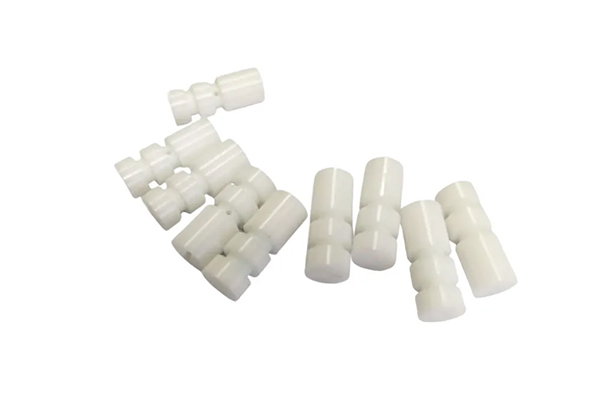
What Are Ceramics?
It consists of hard, brittle, and heat-resistant materials obtained by processing raw materials consisting of clay, minerals, and other inorganic compounds at very high temperatures. The resulting products, upon firing, became solid and durable, thus capable of withstanding extreme conditions. The distinctive feature that is unique to ceramics is their resistance against breakdown, even under harshest conditions; hence, these materials have found their application in items ranging from conventional pottery to state-of-the-art aerospace components.
The most common types of ceramics are made from natural materials like clay and silica; however, modern ceramics also require the involvement of synthetic compounds due to specific industrial requirements. They usually possess a crystalline structure that gives them strength and brittleness. Ceramics could be divided into traditional and advanced, according to their uses and methods of production.
Types of Ceramics:
1. Traditional Ceramics:
These are primarily made from natural raw materials such as clay, earthen minerals, and silica. Examples include pottery, tiles, bricks, and porcelain. Although the properties may differ based on the composition, they find general application in construction, art, as well as everyday products such as dishes and vases.
2. Advanced Ceramics:
These are engineered to meet the demands of high-performance applications in industries such as aerospace, electronics, and biomedicine. Examples of advanced ceramics include alumina, zirconia, and silicon carbide. These ceramics boast superior strength, wear resistance, and electrical properties.
3. Refractory Ceramics:
These ceramics are designed to handle high temperatures and are often used within industrial furnaces, kilns, and other similar environments where materials may be in contact with extreme heat. Materials such as fireclay and alumina are common examples for refractory products like bricks, kiln linings, and crucibles.
4. Glass Ceramics:
Hybrid materials between glass and ceramics combine the transparency and workability of glass with the strength and durability of ceramics. Examples include materials like Pyrex, commonly used in cookware, and certain types of optical components that require the properties of both glass and ceramics.
Properties of Ceramics:
Ceramics are treasured because of the unique combination of physical and chemical properties they possess, which makes them suitable for a wide range of industrial and consumer applications:
- High Heat Resistance: Ceramics can resist very high temperatures without deforming or losing their strength. For example, alumina withstands temperatures as high as 2000°C, hence is perfectly suitable for high-temperature applications such as in kilns and furnaces, among others, and in space applications.
- Hard and Brittle: Ceramics are hard and rigid but tend to be brittle and prone to fracture under tensile stress or impact. This is due to the crystalline nature in their structure, which does not allow room for flexibility.
- Corrosion and Chemical Resistance: Ceramics are highly resistant to corrosion, oxidation, and degradation resulting from exposure to chemicals, moisture, and environmental elements. For instance, zirconia is used in highly chemically active environments because it resists corrosion by acids and alkalis.
- Electrical Insulation: Most ceramics are actually good insulators since they don't conduct electricity. For this reason, they become very important in electronics, mainly used in capacitors, insulators, and semiconductors. For instance, common electrical insulators employed in electronic devices include boron nitride and alumina.
- Aesthetic Versatility: Ceramics find their application in decoration due to their versatility in shape, color, and texture. Examples of widely used ceramics in the sphere of art and home decor include porcelain, pottery, and fine china.
Applications of Ceramics:
Their characteristics vary, making ceramics ideal for use in many different applications:
- Construction: Conventional ceramics serve as structural materials in the form of bricks, tiles, and cements for building construction, roads, and infrastructure.
- Electronics: Ceramics find their applications in everything starting from simple electronics to highly advanced ones. Insulating materials like alumina and boron nitride are very crucial in manufacturing capacitors, resistors, and semiconductors in devices such as smartphones, computers, and television.
- Medical Field: With their biocompatibility and mechanical properties, ceramics find their application in medical implants, including dental implants, hip replacements, and bone grafts. Alumina and zirconia are commonly used due to their wear resistance and durability for biomedical applications.
- Aerospace & Automotive: Industry-wide usages of ceramics are seen in applications requiring high-performance materials, including heat-resistant coatings, turbine components, and parts used in engines. For example, zirconia is used in turbine blades because it can resist extreme thermal stress.
- Art & Homeware: For centuries, traditional ceramics include pottery, dishes, and decorative items; modern ceramics continue to be important in producing items that are generally pleasing and practical in our everyday life.
Key Ceramic Materials:
- Alumina (Al₂O₃):
It finds applications in electronic components, heat exchangers, and cutting tools due to its hardness and resistance to wear, as well as very good thermal and electrical insulating properties. Alumina is also biocompatible, making it especially suitable for medical implants, such as artificial hip joints.
- Zirconia:
Zirconia is tough and highly resistant to fracture, hence it finds application in cutting tools, dental implants, thermal barrier coatings, etc., requiring superior mechanical properties. Its aesthetic appeal also makes it a popular material for high-quality jewelry.
- Boron Nitride (BN):
Sometimes referred to as "white graphite" because it has a layered structure, boron nitride is a very good thermal conductor and electrical insulator. Applications of it in high-temperature environments include heat sinks, lubricants, and aerospace, where thermal shock resistance is required and stability at extreme conditions is expected.
- Boron Carbide:
Being one of the hardest materials available, boron carbide is primarily used in applications requiring extreme abrasion resistance, like ballistic armor, cutting tools, and wear-resistant coatings. Its lightweight property, combined with its hardness, makes it highly suitable for protection gear in military and aerospace industries.
Property and Use Data Table
The following table summarizes critical properties and common uses of the ceramic materials discussed:
|
Ceramic Material |
Density (g/cm³) |
Hardness (Mohs) |
Thermal Conductivity (W/m·K) |
Primary Uses |
|
Alumina |
3.95 |
9 |
30 |
Electrical insulation, biomedical implants, chemical equipment |
|
Zirconia |
5.68 |
8 |
2 |
Cutting tools, dental implants, jewelry, thermal coatings |
|
2.25 |
2 |
600 |
Electrical insulation, heat sinks, lubricants, aerospace components |
|
|
2.52 |
9.5 |
30 |
Ballistic armor, abrasive materials, cutting tools, aerospace shielding |
For more information, please check Stanford Advanced Materials (SAM).
 Chin Trento