
 Products
 Bars
Bars
 Beads & Spheres
 Bolts & Nuts
 Crucibles
 Discs
Discs
 Fibers & Fabrics
 Films
Films
 Flake
Flake
 Foams
Foams
 Foil
Foil
 Granules
 Honeycombs
 Ink
Ink
 Laminate
 Lumps
Lumps
 Meshes
 Metallised Film
 Plate
Plate
 Powders
 Rod
Rod
 Single Crystals
 Sputtering Target
 Tubes
Tubes
 Washer
 Wires
Wires
 Converters & Calculators
 Write for Us



Heat-Resistant Polymers: Polyethylene Terephthalate and Polyimide Films

Introduction
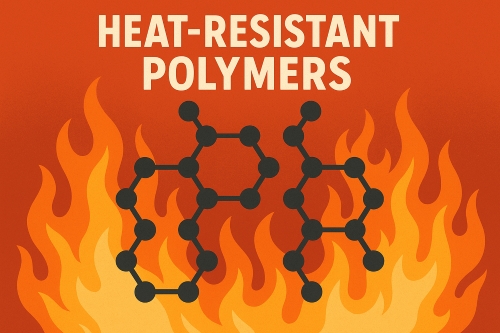
Heat-resistant polymers are the pillar of modern engineering and electronics. Polyethylene terephthalate films and polyimide films have been the scientists' and engineers' best friend for decades. These films are extremely resilient, possess improved heat resistance, and are extremely light. We will try to understand what these films are and how they protect electronics.
What Are Polyethylene Terephthalate and Polyimide Films
Polyethylene terephthalate films are made of a common thermoplastic polymer. They find applications in packaging and even flexible displays. Polyethylene terephthalate films can sustain moderate temperatures and possess good mechanical properties. They possess strength transparence balance.
Polyimide films themselves possess excellent thermal stability. Polyimide films are employed where the temperature is greater than 400°C. Polyimide films are typically flexible printed circuitry or insulation on sensitive components in space vehicles. Their molecular structure gives them exceptional heat and chemical resistance.
Both of these film materials have been in existence for decades. Their history has been one of continuous innovation. The difference in their properties is that they are different in their molecular make-up. Simply stated, polyethylene terephthalate is built from repetitive ester linkages. Polyimide is comprised of unique imide rings that create stronger linkages, thereby making it have superior heat performance. Both polymers are greatly appreciated by engineers because of the unique advantages that each possesses.
How Polyimide and Polyethylene Terephthalate Films Shield Electronics
Electronic devices generate heat during operation, and even minimal temperature increase affects performance. Polyethylene terephthalate films are heat rise diffusing and reducing insulation layers. In cold applications, the films deflect short circuits and protect sensitive wiring.
Polyimide films are used where the environment is more aggressive. They are used as heat shields. Polyimide films electrically and thermally insulate in flexible electronics. Polyimide films possess a high melting point and can thus endure extreme conditions. This type of protection is required in such products as high-performance equipment and even in aerospace, where a malfunction would lead to costly or dangerous outcomes.
The role of such films is obvious. They isolate components from heat but permit sufficient flow of signals. They also guard against chemical and water contact. The synthesis of properties makes them commonly applied in a variety of industries.
STEM Experiment: Thermal and Electrical Insulation of Polyethylene Terephthalate and Polyimide Films
One of the best ways to understand these polymers is through experimentation. By carrying out thermal resistance, electrical insulation, and mechanical strength tests, you are able to see how each film reacts under stress. These tests enable you to learn by doing and compare the two materials.
Physics and Engineering
• Thermal Resistance Test:
Place a sample of each film across a heat source such as a lamp or heating plate. Measure the surface temperature with a thermometer against time. Polyethylene terephthalate films will register an increase in temperature sooner. Polyimide films will be at lower temperatures as the molecular structure prevents the transfer of heat. Observe the temperature changes at regular intervals. The test is an imitation of what happens in an electronic device.
• Electrical Insulation Experiment:
Take a reading of the resistivity of each film using a multimeter. Place the device on the high resistance scale and press the probe into the film's surface. The reading gives an indication of dielectric strength. Polyimide films will have a reading of higher resistance. The lesson this exercise teaches is why they are used in circuits that must endure electrical breakdown.
• Mechanical Strength Comparison:
Conduct a trial on both films to contrast tensile strength. Clamp both films in position and apply weights gradually. Identify which sample extends less when subjected to tension. Polyethylene terephthalate films can be quite flexible, but polyimide films will retain their shape under stress. A pull test can reveal a lot about both materials' integrity.
Chemistry
• Molecular Structure Investigation:
Build models of the simple tools such as paper or clay. Each repeating unit is demonstrated. Models of polyethylene terephthalate are long chains of ester groups connecting them. Models of polyimide have aromatic rings and imide groups. Building these models can anticipate how and why a given structure is better for withstanding heat.
• Heat Stability and Decomposition
Slowly demonstrate how each film reacts to more than its tolerance of heat. Polyethylene terephthalate will degrade at approximately 250°C. Polyimide films, however, will resist temperatures over 400°C before degrading. This is something that should be done with care. Act in a controlled environment and with all protective equipment.
• Polymerization Simulation:
Demonstrate the polymerization process by using actual objects like paper clips or tiny beads linked together in a chain. Show how individual monomers are combined to produce long chains. The demonstration shows why the polyimide chain structure is so robust. Model solids provide such abstract concepts a tangible form.
Technology and Applications
• Real-World Connections
Flexible displays and packages in everyday life utilize polyethylene terephthalate films. You are probably reading from a touch screen or plastic bottle that utilizes the films. Polyimide films are used in applications where high temperatures are the norm. A good example is flexible printed circuit boards, as well as spacecraft insulation parts.
• STEM Challenge:
Design a challenge where you have to build a "heat shield." Use polymer film strips to protect a small sensor from a heat source. Take measurements to see which film offers more protection. The challenge is a mix of design and scientific testing and offers a real sense of what engineering is about.
• Data Recording
Introduce equipment like thermocouples or basic Arduino sensors to record variations in temperature in experiments. This gives a technological twist to experiments. It is feasible to instruct the principles of data recording. It combines components of physics, chemistry, and computer coding in one laboratory exercise.
Conclusion
Polyethylene terephthalate and polyimide films are essential materials utilized in the heat-sensitive electronics of the present. The film molecular structure makes them suitable for numerous applications in electronics. Two experiments can easily show how they are various from each other regarding thermal resistance, electric insulation, and mechanical strength. The practical experiments assist in bridging theory with real-world applications. For more information and STEM experiments, please check Stanford Advanced Materials (SAM).
Frequently Asked Questions
F: What is the major difference between polyethylene terephthalate and polyimide films?
Q: Polyethylene terephthalate films are suitable for moderate heat, while polyimide films are suitable for high heat.
F: Are the two films suitable in flexible electronics?
Q: Yes, polyethylene terephthalate is common in flexible displays and polyimide in printed circuit boards.
F: Why do the electronic devices need to use the films?
Q: They provide protection against heat for components, provide electrical insulation, and improve device reliability overall.
 Dr. Samuel R. Matthews