
 Products
 Bars
Bars
 Beads & Spheres
 Bolts & Nuts
 Crucibles
 Discs
Discs
 Fibers & Fabrics
 Films
Films
 Flake
Flake
 Foams
Foams
 Foil
Foil
 Granules
 Honeycombs
 Ink
Ink
 Laminate
 Lumps
Lumps
 Meshes
 Metallised Film
 Plate
Plate
 Powders
 Rod
Rod
 Single Crystals
 Sputtering Target
 Tubes
Tubes
 Washer
 Wires
Wires
 Converters & Calculators
 Write for Us



Polylactic Acid and Polyhydroxyalkanoates Pellets

Global Plastic Pollution and the Need for Sustainable Alternatives
Plastic waste fills landfills and pollutes oceans globally. Abandoned plastics are an increasing problem in most countries, where they harm wildlife and natural habitats.
Recycling is partially helpful but not entirely a solution to the issue. In most places, plastics that are recycled still lose their quality after a few cycles. The widespread use of fossil fuels in plastic production today calls for eco-friendly alternatives. Biodegradable alternatives present a promising solution. Plastics that can naturally break down could reduce the burden on our ecosystem and lead to cleaner ecosystems.
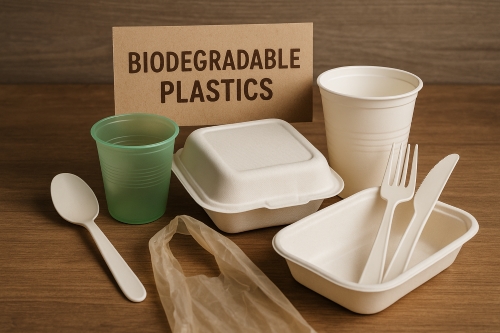
Biodegradable Plastics: Polylactic Acid and Polyhydroxyalkanoates
Polylactic acid and polyhydroxyalkanoates are two of the most popular biodegradable plastics. They are both made by different natural processes. Polylactic acid is made from renewable resources such as corn and sugar cane. Polyhydroxyalkanoates are made from microbial fermentation. Both of these materials degrade without leaving behind harmful residues. Their chemical structure allows beneficial organisms or the natural environment to break them down into simpler forms. The majority of researchers and engineers consider these plastics a suitable replacement for traditional plastics.
Why Polylactic Acid and Polyhydroxyalkanoates Are Considered to be Environmentally Friendly
Polylactic acid is degraded by industrial composting. It needs heat and water in order to degrade into carbon dioxide and water. Polyhydroxyalkanoates are special in that most forms naturally break down in soil and water. They do this through the assistance of common bacteria.
Both plastics have a lower carbon footprint than conventional plastics, which are produced from oil. They use renewable raw materials for their production processes. This means less consumption of fossil fuels.
Many tests have also shown that these materials release fewer toxic chemicals once they have degraded. They do not leave any toxic chemicals behind that can hurt the local flora or fauna. The fact that nature can deal with these plastics so easily gives us a ray of hope for a cleaner and waste-free future.
What Happens When these Pellets Come in Contact with Soil, Water, or Microbes
Polylactic acid and polyhydroxyalkanoates pellets break down when they come into contact with water, soil, or microbials. Polylactic acid breaks down slowly into lactic acid when it comes into contact with water and the right temperature. For polyhydroxyalkanoates, naturally occurring bacteria play an important part. Bacteria secrete enzymes which break up the long polymer chains into shorter ones. These are further broken down into water and carbon dioxide. The process mimics natural degradation, like that of plant material. The degradation rate of these pellets is dependent on environmental conditions. Temperature, moisture, and microbial population all affect the degradation rate. In ideal conditions, some polyhydroxyalkanoates fully degrade in weeks to months. In cooler or drier areas, however, the process is more sluggish.
Polylactic Acid versus Polyhydroxyalkanoates Comparison
Polylactic acid and polyhydroxyalkanoates share many positive qualities. They also have a few important differences. Polylactic acid needs more heat to degrade properly. It works best in controlled heat and moisture conditions such as in industrial composting facilities. Polyhydroxyalkanoates degrade more naturally. They work well under various conditions, such as in natural soil and water environments. Mechanical properties also vary. Polylactic acid is generally stronger and stiffer. This makes it suitable for items such as cutlery and packaging. Polyhydroxyalkanoates are more flexible. They are typically used in medical devices and films. The cost of production and the processes also differ. Polylactic acid has reached the level of large-scale production. Polyhydroxyalkanoates are still more specialized and sometimes more expensive to produce.
Applications and Impact
These biodegradable pellets find application in various uses. In the food industry, polylactic acid is used in disposable cutlery, cups, and containers. The packaging industry exploits its strength and clarity. Polyhydroxyalkanoates are well regarded in the medical industry. They are made into drug delivery systems, sutures, and wound dressings. Some manufacturers use them to make agricultural films. Their environmental benefits reduce soil pollution when used. Cities and municipalities can experience fewer waste management problems with these materials. Generally, in most cases, products made from these polymers help lower the environmental impact. Real-world tests showed that replacement of fossil fuel plastics with these biodegradable plastics lowers greenhouse gas emissions. As more companies turn green, these biodegradable plastics are at the forefront of advancing a greener economy.
STEM Experiment Idea
A simple experiment illustrates the degradation process. Procure a small amount of polylactic acid pellets and the same of polyhydroxyalkanoates pellets. Place each in jars with moist soil. Keep the jars at a warm constant temperature. Note any changes in material consistency over several weeks. Note shape, color, and weight changes. Signs such as fragment appearance or softening can be observed. A quick test with a simple pH test kit will also show changes as organic acids are formed.
The experiment offers a practical way of viewing material breakdown and enables students to see natural processes. It is well-suited to school projects or a school science club, and it reinforces major concepts in environmental science and materials engineering.
Conclusion
Biodegradable plastics are a promising alternative in a planet swamped with traditional plastic waste. Polylactic acid and polyhydroxyalkanoates are two such benefits in practice. Both are produced from renewable feedstocks and can naturally degrade when subjected to the right conditions. They both reduce the consumption of fossil fuels and the stress on our planet. For more information and STEM experiments, please check Stanford Advanced Materials (SAM).
Frequently Asked Questions
F: What do they use to produce polylactic acid pellets?
Q: They are made from renewable plant resources like corn and sugar cane.
F: How do polyhydroxyalkanoates break down in the environment?
Q: Natural bacteria secrete enzymes that degrade the polymer to carbon dioxide and water.
F: What are the benefits of these biodegradable plastics?
Q: They reduce the consumption of fossil fuels, greenhouse gas emissions, and environmental pollution.
 Dr. Samuel R. Matthews