Products
 Bars
Bars
 Beads & Spheres
 Bolts & Nuts
 Crucibles
 Discs
Discs
 Fibers & Fabrics
 Films
Films
 Flake
Flake
 Foams
Foams
 Foil
Foil
 Granules
 Honeycombs
 Ink
Ink
 Laminate
 Lumps
Lumps
 Meshes
 Metallised Film
 Plate
Plate
 Powders
 Rod
Rod
 Single Crystals
 Sputtering Target
 Tubes
Tubes
 Washer
 Wires
Wires
 Converters & Calculators
 Write for Us



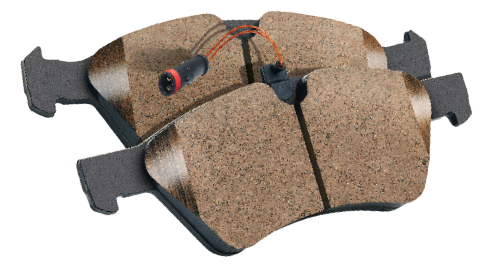
What is a Ceramic Brake Pad?

Ceramic brake pads have revolutionized the traditional concept of brake systems by incorporating advanced materials and technologies. Unlike traditional ceramic brakes, which are made of ceramic fibers (primarily alumina), fillers without iron, adhesives, and small amounts of metal, ceramic brake pads offer superior performance and durability.
Mechanism of Action
Many consumers initially mistake ceramic brake pads for purely ceramic products, but they are based on the principle of metal ceramics. When braking at high speeds, the friction surface of the brake pad generates high temperatures, leading to a metal-ceramic sintering reaction. This reaction provides good stability to the brake pad. In contrast, traditional semi-metal brake pads, composed mainly of iron powder and coarse steel velvet, do not undergo sintering at such temperatures. As a result, the surface material of these pads melts and can create an air cushion, drastically reducing braking performance after continuous use.
Composition
Ceramic brake pads include a combination of:
- Ceramic Fibers: Primarily alumina, providing high thermal stability and durability.
- Mineral Fibers: Adding strength and resilience to the brake pad structure.
- Aramid Fibers: Known for their high strength and heat resistance, improving overall pad performance.
These components make ceramic brake pads lighter in color compared to other types.
Advantages of Ceramic Brake Pads
- No Metal Loss: The absence of metal in the composition prevents metal loss during use, reducing wear and tear.
- Low Noise: Ceramic brake pads operate quietly, producing minimal noise even under heavy braking conditions.
- High Temperature Resistance: The ceramic material can withstand high temperatures without significant changes in the friction coefficient, ensuring consistent performance.
- Longer Service Life: Ceramic brake pads last over 50% longer than ordinary semi-metal brake pads, reducing the frequency of replacements and maintenance costs.
- Mechanical Strength: High mechanical strength allows ceramic brake pads to endure significant pressure and shear force, with efficient heat dissipation preventing brake fade.
- Improved Safety: Enhanced thermal decay performance reduces brake oil temperature rise during intense braking, ensuring quicker and more reliable braking response, thus increasing overall safety.
Disadvantages of Ceramic Brake Pads
Ceramic brake pads are generally more expensive than other types of brake pads. The higher cost can be attributed to the advanced materials and manufacturing processes involved.
Comparison with Other Brake Pads
Traditional Semi-Metal Brake Pads:
- Composed of iron powder and steel fibers.
- Higher noise levels and more wear on rotors.
- Less effective at high temperatures due to potential melting and air cushion formation.
Organic Brake Pads:
- Made from materials like rubber, glass, and Kevlar.
- Quieter operation but shorter lifespan and lower performance at high temperatures.
Low-Metallic NAO Brake Pads:
- Contains small amounts of metal to improve braking performance.
- Higher noise levels and more dust production than ceramic pads.
Conclusion
Ceramic brake pads are an advanced alternative to traditional brake pads, offering enhanced performance, longevity, and safety. Despite their higher cost, the benefits of ceramic brake pads make them a preferred choice for many consumers seeking reliable and efficient braking solutions. The combination of high-temperature resistance, low noise, and extended lifespan provides a significant advantage over traditional braking materials.
 Chin Trento