
 Products
 Bars
Bars
 Beads & Spheres
 Bolts & Nuts
 Crucibles
 Discs
Discs
 Fibers & Fabrics
 Films
Films
 Flake
Flake
 Foams
Foams
 Foil
Foil
 Granules
 Honeycombs
 Ink
Ink
 Laminate
 Lumps
Lumps
 Meshes
 Metallised Film
 Plate
Plate
 Powders
 Rod
Rod
 Single Crystals
 Sputtering Target
 Tubes
Tubes
 Washer
 Wires
Wires
 Converters & Calculators
 Write for Us



Cesium Carbonate: Properties, Applications, and Synthesis

Introduction
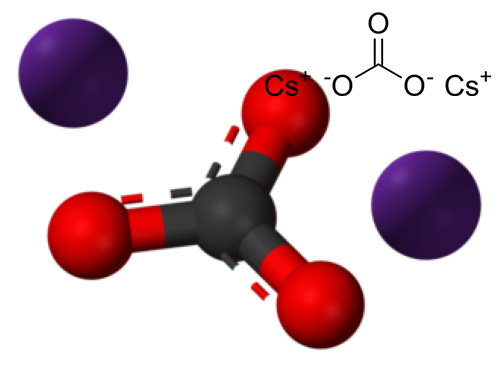
Cesium carbonate (Cs2CO3) is an inorganic compound with a broad range of applications in chemistry, materials science, and industrial processes. It is a white, hygroscopic powder that is highly soluble in water and organic solvents. Due to its strong basicity and solubility properties, cesium carbonate is widely used as a catalyst, a reagent in organic synthesis, and an additive in various electronic and optical applications.
 [1]
[1]
Chemical and Physical Properties
Cesium carbonate has the molecular formula Cs2CO3 and a molar mass of 325.82 g/mol. It appears as a white, deliquescent solid, meaning it readily absorbs moisture from the air. It is highly soluble in water and forms a strongly basic solution, making it useful in reactions requiring strong bases. The compound has a melting point of approximately 610°C and decomposes upon further heating.
Key Properties:
- Molecular Formula: Cs2CO3
- Molar Mass: 325.82 g/mol
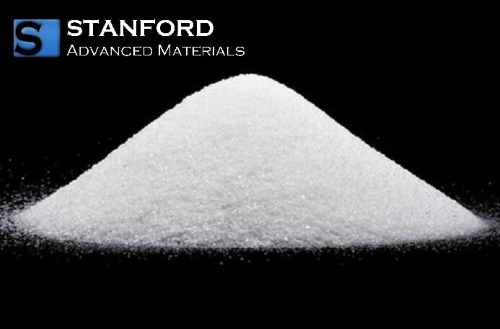
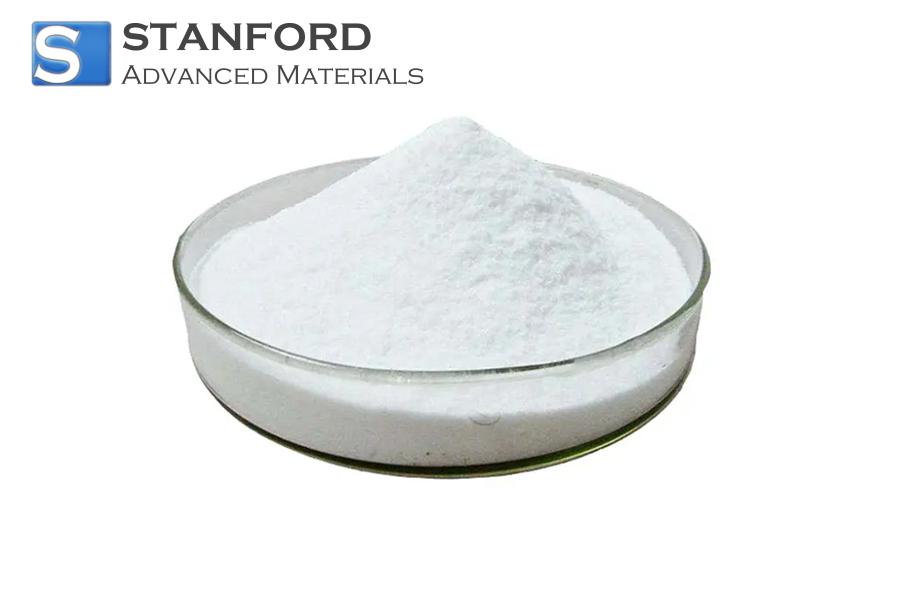
- Appearance: White, hygroscopic powder
- Solubility: Highly soluble in water, methanol, and other polar solvents
- Basicity: Strong base with a pKa value suitable for deprotonation reactions
- Decomposition: Decomposes at high temperatures, releasing CO2
Synthesis of Cesium Carbonate
Cesium carbonate can be synthesized through several methods, including direct reaction and precipitation techniques:
- Reaction of Cesium Hydroxide with Carbon Dioxide:
- CsOH + CO2 → Cs2CO3 + H2O
- This process involves bubbling carbon dioxide gas through a cesium hydroxide solution, leading to the precipitation of cesium carbonate.
- Reaction of Cesium Compounds with Alkali Carbonates:
- CsCl + Na2CO3 → Cs2CO3 + NaCl
- This method involves reacting cesium chloride with sodium carbonate, followed by purification steps to obtain pure cesium carbonate.
Applications of Cesium Carbonate
Due to its strong basicity, solubility, and catalytic properties, cesium carbonate is utilized in various fields, including organic synthesis, electronics, and pharmaceutical research.
1. Organic Synthesis
Cesium carbonate is a widely used base in organic chemistry, particularly in reactions that require non-nucleophilic, strong bases. Some of its key roles include:
- Catalyst in Coupling Reactions: It is commonly used in palladium-catalyzed cross-coupling reactions, such as Suzuki, Heck, and Sonogashira reactions. These reactions are essential for synthesizing complex organic molecules in pharmaceutical and material sciences.
- N-Alkylation and O-Alkylation Reactions: Cesium carbonate facilitates the alkylation of amines, alcohols, and phenols, leading to the formation of ethers and secondary amines.
- Cyclization Reactions: It is useful in promoting intramolecular cyclization reactions to create heterocyclic and macrocyclic structures.
2. Electronic and Optical Applications
Cesium carbonate plays a crucial role in advanced material sciences, particularly in the production of optoelectronic devices.
- Organic Light-Emitting Diodes (OLEDs): Cs2CO3 is used as an electron injection layer (EIL) material in OLEDs, improving electron transport and efficiency.
- Perovskite Solar Cells: It serves as an additive in perovskite solar cells, enhancing their efficiency and stability.
- Thin-Film Transistors: Cesium carbonate is employed as a dopant or interlayer material in thin-film transistor technologies, aiding in charge transport.
3. Pharmaceutical Industry
- Drug Synthesis: Cesium carbonate is used in pharmaceutical research for developing novel drug molecules. It is particularly useful in reactions requiring selective deprotonation or nucleophilic substitutions.
- Peptide Coupling Reactions: In certain peptide bond formations, cesium carbonate can be employed to enhance the reaction yield and selectivity.
4. Polymer Chemistry
- Polymer Functionalization: Cs2CO3 is used to modify polymer surfaces and structures, improving their conductivity, thermal stability, and mechanical properties.
- Catalyst for Polymerization Reactions: It can act as a catalyst in polymerization reactions, aiding in the formation of high-performance polymer materials.
Safety and Handling
While cesium carbonate is generally considered safe for handling in laboratory and industrial settings, some precautions should be taken:
- Hygroscopic Nature: It absorbs moisture from the air, so it should be stored in airtight containers to prevent degradation.
- Strong Alkalinity: It is a strong base and can cause skin and eye irritation. Proper personal protective equipment (PPE) such as gloves, goggles, and lab coats should be worn.
- Environmental Considerations: Disposal of cesium carbonate should comply with local regulations to prevent contamination of water sources and ecosystems.
Summary Table of Cesium Carbonate
|
Property/Application |
Details |
|
Chemical Formula |
Cs2CO3 |
|
Molar Mass |
325.82 g/mol |
|
Appearance |
White, hygroscopic powder |
|
Solubility |
Soluble in water, methanol, and polar solvents |
|
Basicity |
Strong base |
|
Decomposition |
Releases CO2 at high temperatures |
|
Main Applications |
Organic synthesis, electronics, pharmaceuticals, polymers |
|
Key Reactions |
Cross-coupling, alkylation, cyclization |
|
Safety Precautions |
Hygroscopic, strong base, requires PPE |
Conclusion
Cesium carbonate is a versatile compound with significant applications in organic synthesis, electronics, pharmaceuticals, and materials science. Its strong basicity, high solubility, and catalytic properties make it a valuable reagent in various chemical transformations.
Stanford Advanced Materials (SAM) offers high-purity cesium carbonate (Cs2CO3) for a wide range of applications, including organic synthesis, electronics, and pharmaceuticals. With exceptional solubility and strong basicity, SAM’s cesium carbonate ensures high performance in catalytic and optoelectronic applications. Choose SAM for superior-quality cesium carbonate tailored to your needs.
Reference:
[1] Caesium carbonate. (2025, January 9). In Wikipedia. https://en.wikipedia.org/wiki/Caesium_carbonate
 Chin Trento