
 Products
 Bars
Bars
 Beads & Spheres
 Bolts & Nuts
 Crucibles
 Discs
Discs
 Fibers & Fabrics
 Films
Films
 Flake
Flake
 Foams
Foams
 Foil
Foil
 Granules
 Honeycombs
 Ink
Ink
 Laminate
 Lumps
Lumps
 Meshes
 Metallised Film
 Plate
Plate
 Powders
 Rod
Rod
 Single Crystals
 Sputtering Target
 Tubes
Tubes
 Washer
 Wires
Wires
 Converters & Calculators
 Write for Us



Top 4 Key Metals in Nuclear Energy

Description
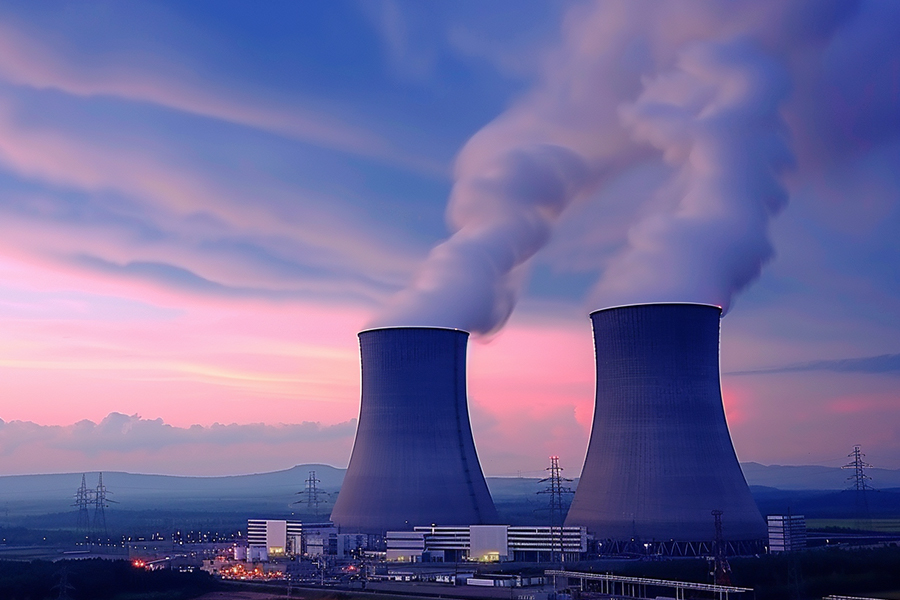
Nuclear energy has been a vital part of power production for many years. In our reactors, certain metals play unique roles. Each metal has special properties. They help maintain a controlled and safe nuclear reaction. The article covers metals used as fuel, as components to build reactor parts, and as aids in controlling the reaction.
Uranium: The Primary Fuel Source
Uranium stands at the heart of nuclear energy. Its isotopes, uranium-235 and uranium-238, drive the process of nuclear fission. When uranium-235 atoms split, they release energy. A typical nuclear reactor uses enriched uranium. This means the uranium is processed to increase the concentration of uranium-235. Enrichment levels usually range from 3 percent to 5 percent. These numbers ensure a steady chain reaction.
The physical properties of uranium are remarkable. It is a heavy metal with a high density. This quality allows it to store a large amount of energy in a small volume. In practical cases, nuclear plants built in the 1970s and 1980s made extensive use of uranium fuel. In recent decades, technology has improved safety methods when using uranium.
Zirconium: A Crucial Reactor Component
Zirconium plays an important role in the construction of nuclear reactors. Its low neutron absorption is a prized feature. Reactor designers use zirconium alloys when cladding the fuel rods. Cladding protects the fuel from corrosion and prevents radioactive contamination. One example is the use of Zircaloy in many light-water reactors. These alloys perform well under high temperatures and pressure.
Zirconium’s resistance to corrosion is another strong point. In many cases, reactor cooling systems depend on materials that remain stable over long periods. With several decades of service history, zirconium alloys have proven their worth. The reactor components made of zirconium ensure safety and efficiency.
Hafnium: The Neutron Absorber
Hafnium is a metal known for its ability to absorb neutrons. It is used in control rods in nuclear reactors. Control rods help regulate the fission chain reaction. Hafnium’s high neutron absorption cross section makes it ideal for this purpose. In many designs, control rods made of hafnium adjust the reactor’s power levels by absorbing stray neutrons.
In typical control rod designs, hafnium is inserted between fuel assemblies. When control rods are lowered, they absorb more neutrons. This slows or temporarily stops the chain reaction. In facilities where safety is foremost, hafnium control rods have proven effective. Engineers have used hafnium in both commercial power plants and advanced research reactors. Its performance has been noted in several technical case studies from the past decades.
Beryllium: Enhancing Reactor Performance
Beryllium is a light metal with a significant role in reactor performance. It often serves as a reflector or moderator. Neutron reflectors bounce escaping neutrons back into the reactor core. Moderators slow down fast neutrons to a speed where fission is more likely to occur. These functions improve the overall efficiency of the reactor.
For instance, beryllium is sometimes used around the reactor core. Its low absorption of neutrons and high scattering cross section are its main advantages. In historical reactor tests, beryllium has helped increase the rate of fission. Its performance in providing a balanced neutron economy is well documented. Many reactor designers have counted on beryllium to maximize output while keeping the reactor safe.
Conclusion
The metals discussed in this article form the backbone of nuclear energy. Uranium provides the fuel needed for the chain reaction. Zirconium builds the fuel rod cladding needed for safety and stability. Hafnium is used in control rods to moderate the strength of the reaction. Beryllium enhances performance as a reflector and moderator.
Together, these metals ensure that nuclear reactors remain a reliable source of energy. They have been tested, trusted, and improved over many years. These key metals have been a cornerstone of nuclear power and will likely remain so for many years to come.
Frequently Asked Questions
F: What is uranium mainly used for in nuclear energy?
Q: In nuclear reactors, uranium acts as the fuel that powers the nuclear
fission process.
F: Why is zirconium important in reactor design?
Q: Zirconium forms cladding for fuel rods, offering strength, low neutron
absorption, and resistance to corrosion.
F: How does hafnium help control nuclear reactions?
Q: Hafnium absorbs extra neutrons, thus regulating the chain reaction and
contributing to reactor safety.

 Chin Trento